Madina M
December 1, 2025
5
min. read
and updated on:
February 25, 2026

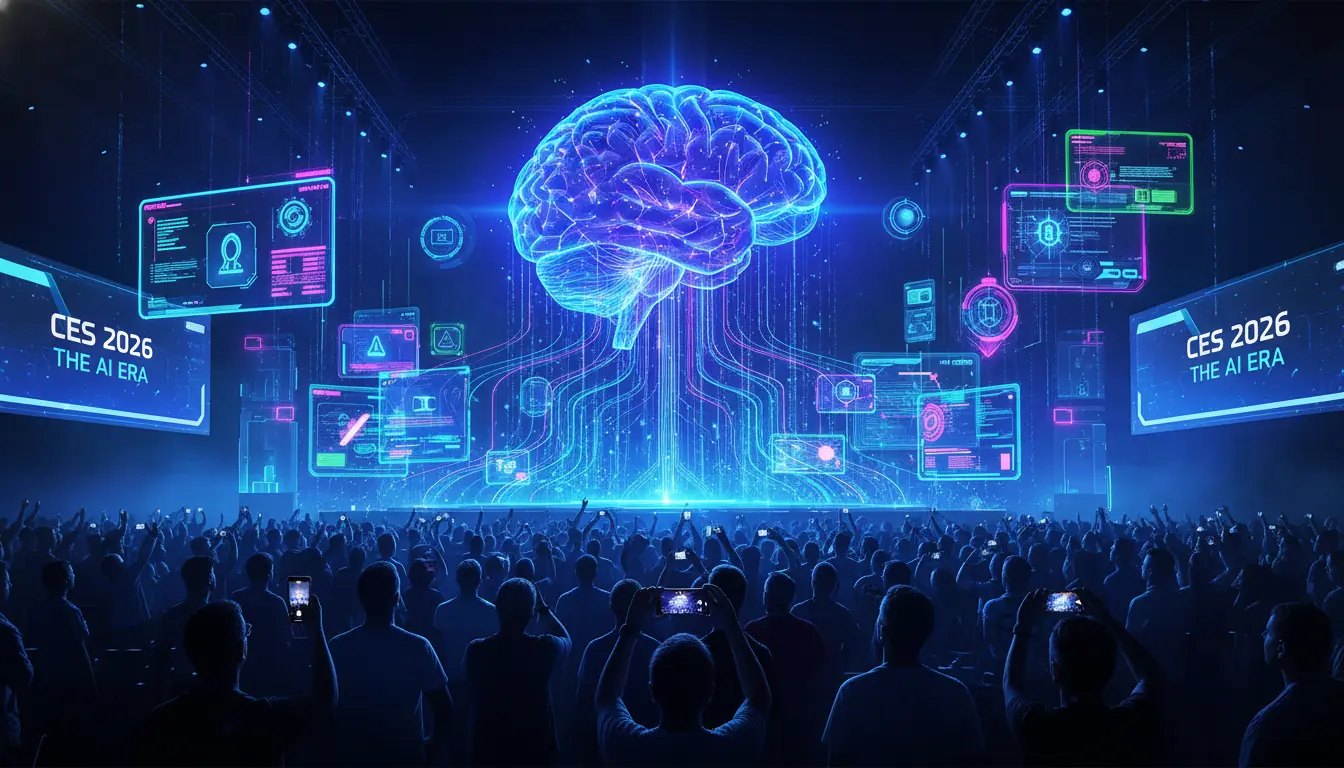
With just weeks to go before CES 2026 opens its doors in Las Vegas, one thing is already clear: artificial intelligence isn’t just another tech theme this year – it is the show. From industrial giants to consumer brands, nearly every major keynote and product preview centers on AI’s growing influence across every corner of the tech ecosystem.
For developers, founders, and product teams, this year’s CES isn’t just a showcase of shiny hardware. It’s a preview of how AI will reshape user expectations, app design, and the competitive landscape in 2026 and beyond.
Historically, CES has served as a barometer for where global technology is heading. In 2026, the message is unmistakable: AI is moving from novelty to necessity.
Keynotes from Siemens, Caterpillar, AMD, Lenovo and others all highlight the same direction – deep AI integration across manufacturing, infrastructure, mobility, consumer computing, and enterprise workflows.
Siemens plans to demonstrate how AI, digital twins, and automation can transform industrial systems. AMD will showcase how its newest hardware and software ecosystems are designed to “solve the world’s most important challenges.” And Lenovo is bringing the largest-ever Lenovo Tech World event to the iconic Las Vegas Sphere to show off its next wave of AI-powered devices.
AI isn’t just a feature anymore. It’s the backbone of the next generation of hardware, software, and cloud services.
Every year, the technologies unveiled at CES quickly set new expectations for users – especially around speed, intelligence, convenience, and personalization.
If AI becomes the core of devices showcased this year, users will expect:
This means app developers will face pressure to keep up with fast-moving hardware and system-level AI improvements.
After a strong presence at CES 2025, Chinese hardware and AI companies are expected to make another major showing this year. Their contributions span smart devices, robotics, mobile hardware, and AI accelerators – many of which will set new benchmarks for performance and value.
This affects app developers in real ways:
App companies that adapt quickly will benefit the most.
One of the biggest shifts expected at CES 2026 is the rise of on-device AI. Thanks to advances in mobile chipsets, sensor fusion, and neural engines, devices will increasingly run AI models locally:
This reduces latency, improves privacy, and opens new opportunities for mobile apps to deliver previously impossible experiences.
Developers should pay close attention – CES 2026 is signaling clear changes ahead.
Whether it's chat, personalization, or automation, apps without AI risk feeling outdated.
Apps combining text, voice, images, maps, and video will become the norm.
Lower latency and privacy benefits will push developers to adopt hybrid AI designs.
Phones, wearables, home devices, and cars will increasingly share context through AI ecosystems.
Developers will need to iterate more quickly to match user expectations shaped by new devices.
CES 2026 is shaping up to be the most AI-heavy tech conference yet. But behind the press releases and product demos lies a deeper message: AI isn’t just transforming gadgets – it’s reshaping the entire software ecosystem.
For app developers and companies building digital products, the next year will bring both unprecedented opportunities and increased competitive pressure. Apps that embrace intelligence, personalization, and seamless interaction will stand out. Those that don’t may fall behind fast.
CES will show us where the world’s technology is heading. It’s up to developers to build the apps that keep up.