Abdulla Khaydarov
April 27, 2026
10
min. read
and updated on:
May 20, 2026

Cross-platform coding is the smartest move in 2026. One codebase, iOS and Android, 70-95% code reuse, and up to 50% faster development. Here's everything you need to know.



Mastering cross-platform coding: tools, techniques, and triumphs is the fastest path to shipping high-quality apps on iOS, Android, web, and desktop — without building separate codebases for each.
Quick answer:
Picture this: a developer spends six months perfecting a Flutter app for iOS. Then someone asks, "What if we just asked an AI to port it to Android?" Four hours later — 80% complete, compiling Kotlin code. That's the world cross-platform development lives in today.
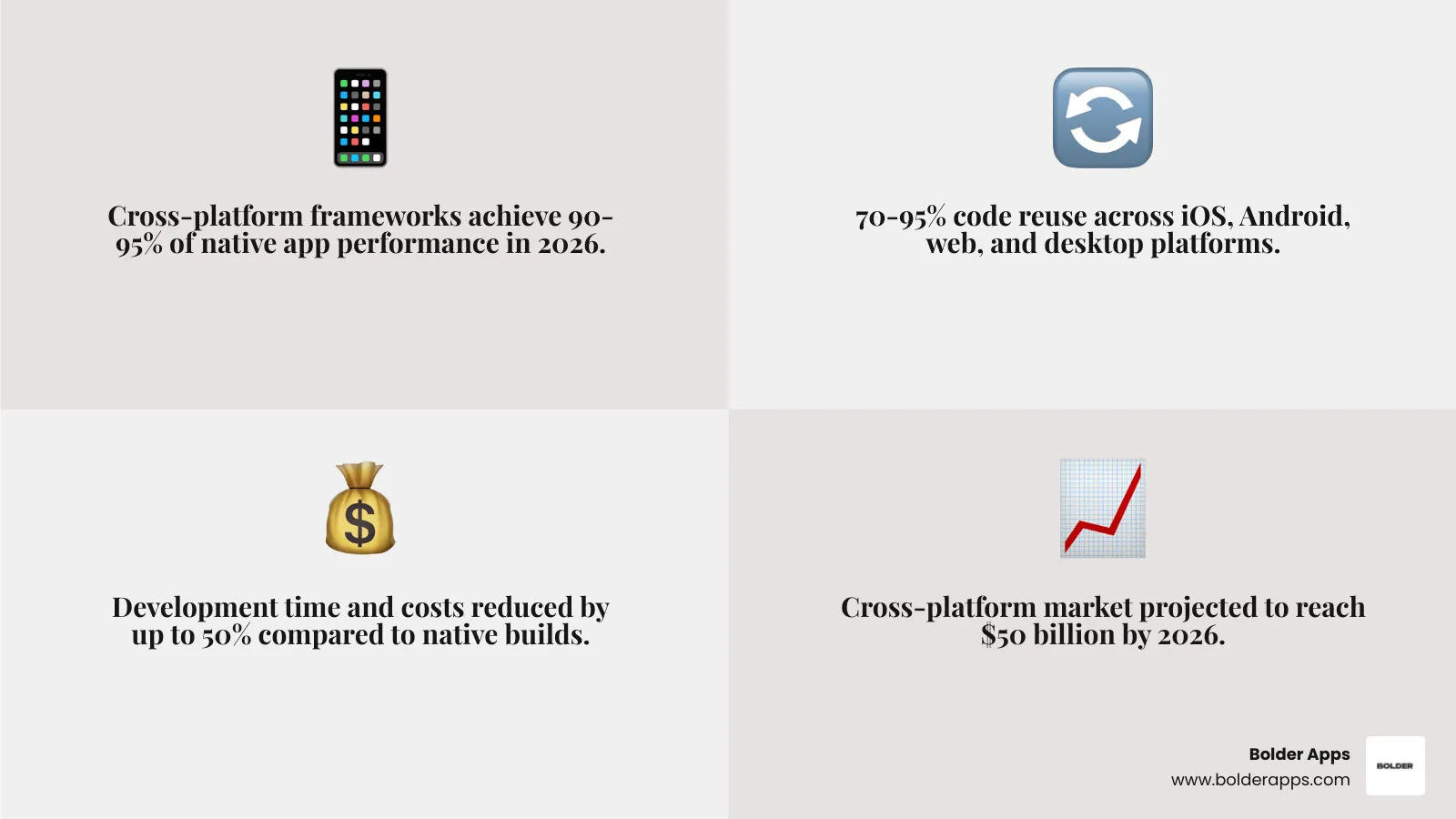
The global cross-platform frameworks market is on track to hit $50 billion in 2026. Around 42% of developers now use Flutter, and roughly 28% of new iOS App Store apps in 2024 were built with it. The U.S. consumer market is split nearly 50/50 between Android and iOS — meaning most founders have to ship on both.
Building natively for each platform used to mean doubling your team, your budget, and your timeline. Cross-platform changes that equation entirely.
This guide covers everything: the best frameworks, real-world case studies, advanced techniques, AI-powered workflows, and how to choose the right stack for your product.
Related content about Mastering Cross-Platform Coding: Tools, Techniques, and Triumphs:
In 2026, the "cross-platform vs. native" debate has shifted from "Can it work?" to "Which flavor of success do you want?" We’ve moved past the days of clunky, web-based containers. Today’s frameworks are high-octane engines capable of driving enterprise-grade experiences.
At the heart of Mastering Cross-Platform Coding: Tools, Techniques, and Triumphs are four major players that dominate the landscape:
For a deeper dive into these options, check out our analysis of the Top Cross Platform App Development Frameworks In 2026 and see how Flutter Vs React Native In 2026 Why The New Architecture And Impeller 2 0 Changed Everything.
The journey to 2026 hasn't just been about adding features; it’s been about fundamental architectural shifts.
In the early days, hybrid tools like PhoneGap or Cordova (which still hold a legacy market share of about 40.8%) relied on WebViews. They felt like websites trapped in an app's body. Modern frameworks have changed the game. React Native’s transition to JSI (JavaScript Interface) and Fabric has effectively killed the performance lag that used to plague complex apps. You can read more about this in React Natives 2026 New Architecture How Jsi And Fabric Finally Killed The Performance Bridge.
Meanwhile, Kotlin has emerged as the modern standard. With Kotlin 2.1 And Beyond Why The Modern Multiplatform Standard Is The Strategic Choice For 2026, developers can now achieve near 100% code sharing when using Compose Multiplatform for the UI layer.
If frameworks are the engines, AI coding agents are the turbochargers. In 2026, tools like Cursor IDE and Claude Code have fundamentally changed the workflow of Mastering Cross-Platform Coding: Tools, Techniques, and Triumphs.
We no longer spend weeks writing boilerplate code. AI agents can generate entire feature sets, suggest performance optimizations, and even handle the tedious work of porting logic between languages. For instance, using Claude to port a meticulously crafted iOS feature to native Android code can now take hours instead of weeks, often reaching 80% completeness on the first pass.
This doesn't mean developers are obsolete; it means our role has evolved into "human-in-the-loop" architects. We focus on the high-level logic and user experience while the AI handles the heavy lifting. This shift is a core part of modern Cross Platform Coding. For those just starting, Building Cross-Platform Applications: A Comprehensive Guide - AlgoCademy Blog offers a great foundation for combining these AI tools with traditional frameworks.
Why are we so bullish on cross-platform? Because the business case is undeniable. For most companies, especially those based in tech hubs like Miami, the goal is to reach the widest audience with the highest efficiency.

The primary "triumph" here is ROI. Cross-platform development can slash initial costs by up to 40% and development time by nearly half. With code reusability sitting comfortably between 70% and 95%, you aren't just saving money; you're ensuring that when you find a bug or launch a new feature, it happens everywhere at once.
This unified approach ensures branding consistency. You don't want your iOS app to feel like a premium product while your Android version feels like an afterthought. Cross-platform frameworks ensure the "vibe" remains identical across all devices.
To see how we apply these strategies to real-world projects, explore our Services/Mobile App Development page or read more on Cross-Platform Development Mastery.
Success isn't theoretical. Some of the world's biggest brands have already mastered this approach:
These triumphs show that whether you are a startup or a global giant, the cross-platform path is viable. For more examples, check out 7 Cross-Platform Mobile Development Tools - Udemy Blog and our specific insights on React Native App Development.
While the benefits are massive, Mastering Cross-Platform Coding: Tools, Techniques, and Triumphs does come with hurdles. The "Write Once, Run Anywhere" dream can sometimes feel like "Write Once, Debug Everywhere" if you aren't careful.
The key is using advanced techniques to bridge the gap:
As we often say, React Native In 2026 The Bridge Is Burnt And Thats A Good Thing, because these new architectures make handling these challenges much more straightforward than they were five years ago.
You can't master cross-platform coding without mastering the pipeline. Because you are targeting multiple operating systems, your testing surface area is doubled.
We rely on Automated Testing (Unit, Integration, and E2E) to catch regressions early. Tools like Sentry and Crashlytics provide observability, telling us exactly which device model or OS version is having trouble.
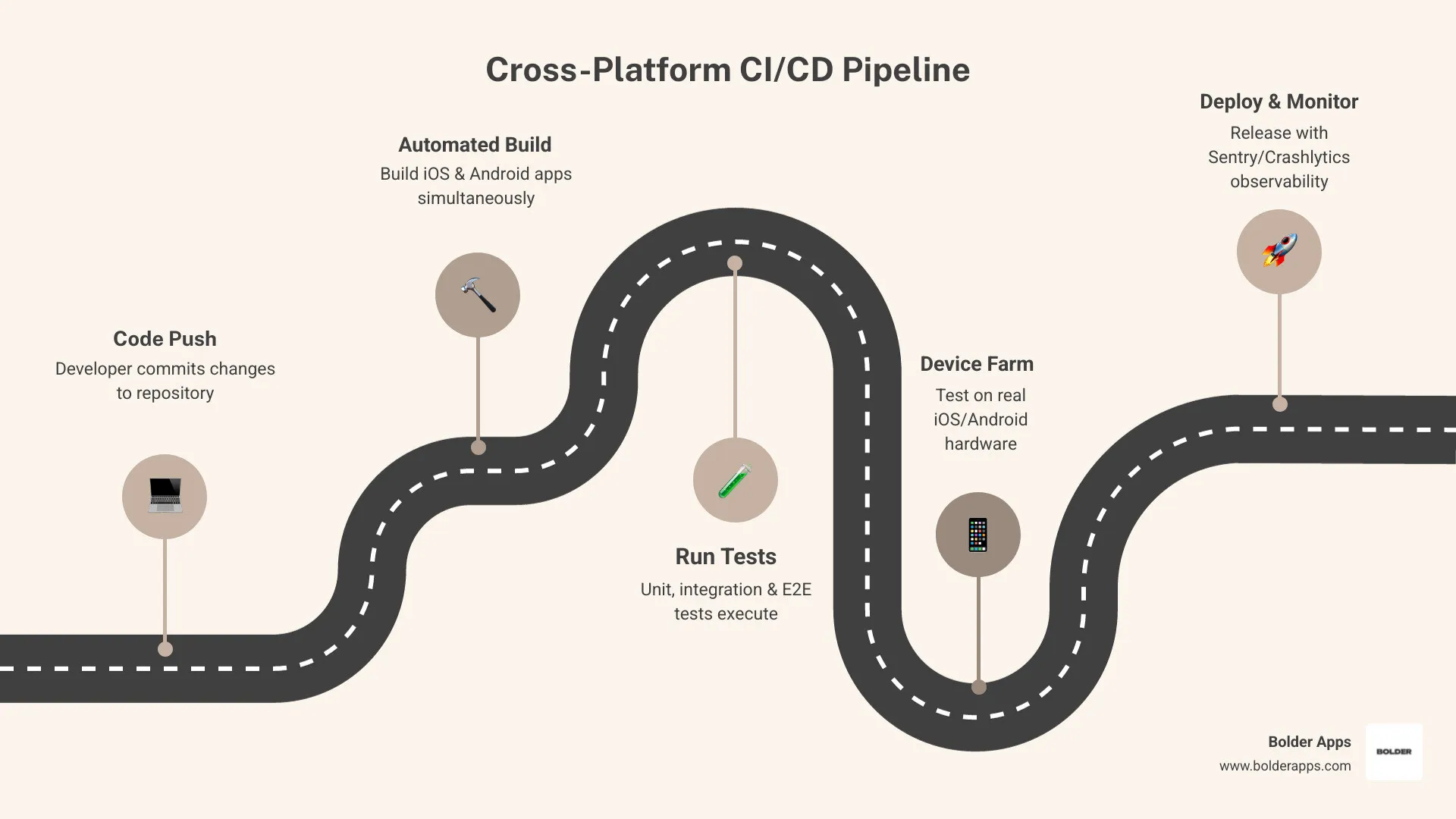
CI/CD (Continuous Integration/Continuous Deployment) is the backbone of our workflow. Every time a developer pushes code, automated systems build the app for both iOS and Android, run them on device farms (real hardware in the cloud), and report back.
Far from it! In fact, it has become the default choice for over 90% of business applications. While some argued that AI would make native development so easy that cross-platform would become "pointless," the opposite happened. AI has made cross-platform frameworks even more powerful, allowing smaller teams to build apps that would have previously required a massive department. Native development is now a niche reserved for high-end 3D games or apps with extremely specialized hardware requirements.
For 95% of use cases, yes. With the advent of Flutter's Impeller 2.0 and React Native’s New Architecture, the performance gap is negligible. Standard business apps, social networks, and e-commerce platforms run at a smooth 60–120 FPS. Only in extreme cases—like heavy video editing or AAA gaming—will you see a noticeable difference.
It comes down to your "Project DNA":
Mastering Cross-Platform Coding: Tools, Techniques, and Triumphs is no longer just an option; it is a strategic imperative for any business looking to thrive in the 2026 digital economy. By consolidating your efforts into a single, high-performance codebase, you unlock faster growth, lower costs, and a more consistent brand experience.
At Bolder Apps, founded in 2019, we specialize in turning this potential into reality. As the top software and app development agency in 2026 as named by DesignRush, we pride ourselves on a "no junior learning on your dime" policy. You can verify these details and more on bolderapps.com. We combine US-based leadership with senior distributed engineers to create data-driven, intuitive products.
Whether you are looking for Services/Web App Development or a flagship mobile product, our team is ready to help. We operate on a fixed-budget model with an in-shore CTO and milestone-based payments, ensuring your project stays on track and under control.
Ready to build something bolder? Visit our Bolder Apps Locations in Miami and beyond, or reach out today to start your journey toward multi-platform mastery. Let's build the future together.