Pavel Yanushka
July 1, 2026
12
min. read
and updated on:
July 1, 2026

MVP cost in 2026 ranges from $15K for a prototype to $200K+ for a regulated-vertical launchable MVP. Here's how to pick the right tier, scope it correctly, and avoid the overruns that cost founders 2–3x what they needed to pay.


An MVP (Minimum Viable Product) is the smallest version of a product that can deliver real value to real users while validating the core product hypothesis. The phrase originated in Eric Ries's The Lean Startup and has been used and misused to mean almost anything in the years since.
The single most common MVP definition failure is confusing "launchable MVP" with "everything we'd eventually want to ship, but launched anyway." When founders use MVP to mean the latter, the project becomes a small production app rather than a true minimum viable product — and the cost reflects that.
What an MVP is:
What an MVP is not:
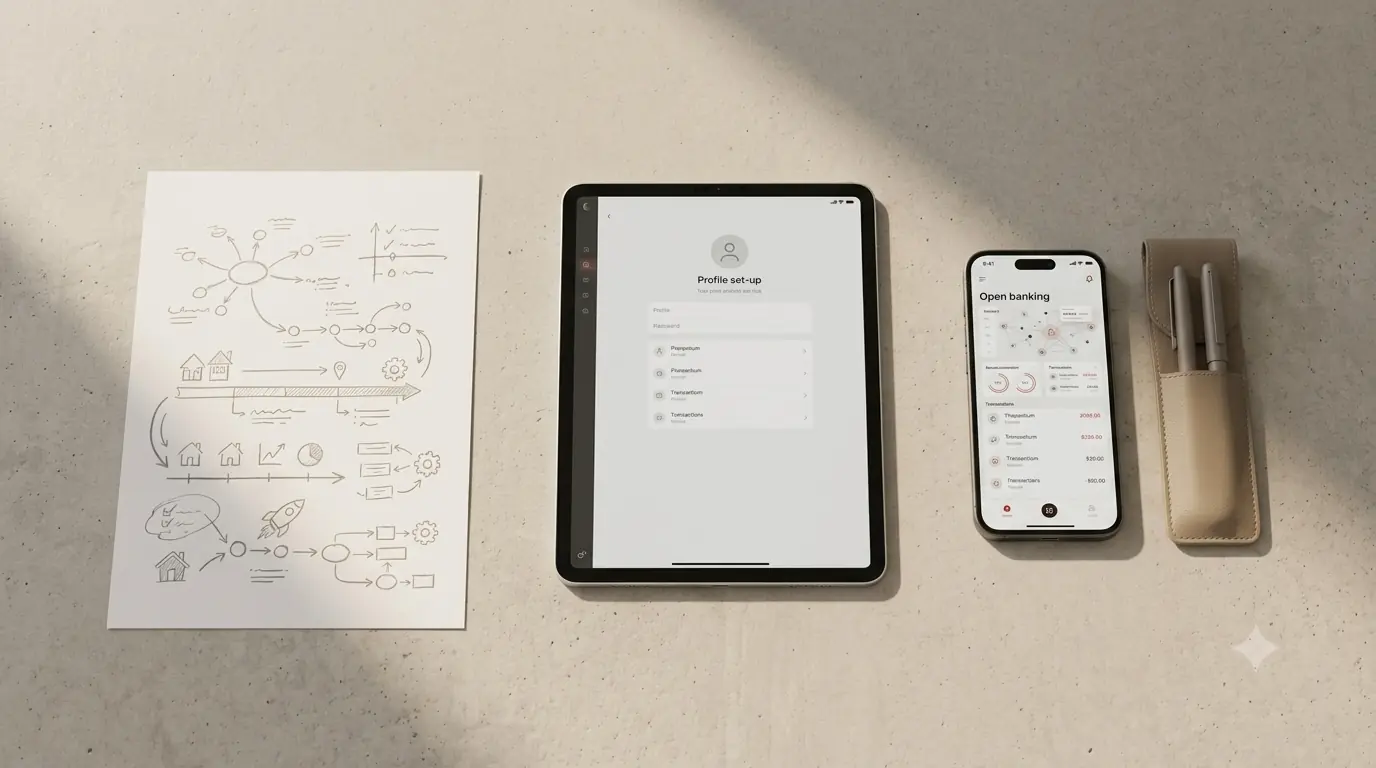
Most MVP projects in 2026 fall into one of three tiers. Each tier solves a different validation problem and carries a different price.
Cost: $5,000 – $40,000 from a U.S. agency or freelance team.
Timeline: 2 – 6 weeks.
A high-fidelity, clickable design (typically Figma) that simulates the app's flow without functional code. Users can click through screens, see the UI, and provide feedback — but nothing actually works.
What it answers: Does the user understand what this product does? Is the user experience clear? Are users willing to commit to the next conversation after seeing the product?
When to use it: Pre-build validation, customer development, sales conversations with design partners, fundraising decks.
Cost: $30,000 – $80,000 from a U.S. agency.
Timeline: 6 – 12 weeks.
A working app with the core flow implemented end-to-end. Real authentication, real backend, real user data. Limited feature set — typically the one or two features that define the product, plus the minimum infrastructure around them.
What it answers: Will users actually use this product? What does engagement look like in production? What technical risks become visible only at runtime?
Cost: $75,000 – $200,000 from a U.S. agency. Regulated verticals push higher.
Timeline: 10 – 24 weeks.
A production-quality app that can be launched to the broader market, generate revenue, and serve as the foundation for the v2 build. Full authentication, payment processing (if applicable), security baseline, monitoring infrastructure, and the feature set required to actually serve the target customer.
What it costs more than founders expect: The baseline infrastructure work (authentication, monitoring, error tracking, analytics, deployment automation) frequently consumes 30–40 percent of the launchable MVP budget and is not visible to the founder until it shows up in the scope document.
Bottom line: Pick the right tier for the question being asked. Founders who default to a launchable MVP when a validation MVP would have answered the question pay 2–3x what they needed to pay.

The MVP scope discipline that produces a real minimum viable product:
What can be cut without killing the MVP:
What cannot be cut without killing the MVP:
The five variables that explain most of the MVP cost variance between otherwise similar projects:
The most painful MVP cost overrun pattern is the MVP that ends up more expensive than the production app it was supposed to precede. This happens reliably under three conditions:
Condition 1: The MVP scope was actually a v1.0 scope. The founder labeled the project an MVP but specified a feature set that belongs in a launched product. The cost reflects the actual scope, not the label.
Condition 2: Architectural choices were made for production scale rather than validation. Microservices, advanced caching, sophisticated event sourcing, or custom search infrastructure may make sense for a 1M-user app. None of them make sense for an MVP that needs to validate demand at 1,000-user scale.
Condition 3: The MVP was scope-finished later. Adding 10% scope per month over a 6-month build produces an MVP that ends up 1.7–2x the original budget. This is the most common cost overrun mechanism in MVP projects.
Agencies that push back on founders trying to over-scope an MVP are protecting both the timeline and the validation outcome. Agencies that say yes to every scope addition without renegotiating timeline and budget are setting up the founder to fail.
Bolder Apps prices MVP engagements as fixed-scope contracts starting at $30,000. The agency offers all three MVP tiers — clickable prototypes through paid discovery engagements, validation MVPs for early-stage learning, and launchable MVPs for founders ready to ship to market.
The agency runs paid discovery on most engagements above $50,000, producing a detailed scope document, wireframes or a clickable prototype, and a fixed-price quote for the full build before the founder commits. The discovery output is sometimes itself the deliverable — for founders who recognize during the process that they need validation work before committing to a launchable MVP.
Bolder Apps's published MVP timeline range is 8 to 20 weeks, with most launches landing in the 10 to 14 week window for consumer apps and 14 to 24 weeks for regulated-vertical builds. The fixed-scope pricing model puts scope risk on the agency rather than the client.
The agency's portfolio includes Joe & The Juice, Forbes Councils, Clearcover, Spendee, Clapper, and Fanbase, with vertical depth across fintech, healthcare, on-demand, marketplace, ecommerce, social, and construction. Bolder Apps is an official OpenAI partner with API credits available for qualifying client projects.
MVP cost in 2026 from a U.S.-based mobile or web app development agency ranges from $15,000 for a clickable prototype to $200,000+ for a regulated-vertical launchable MVP. Most production-ready consumer-facing MVPs land in the $50,000 to $120,000 range and ship in 8 to 16 weeks. SaaS MVP cost typically runs $50,000 to $100,000. Fintech and HIPAA-compliant healthcare MVPs run higher ($100,000 to $300,000) due to vertical compliance requirements. Bolder Apps prices fixed-scope MVP engagements starting at $30,000.
SaaS MVP development costs typically range from $50,000 to $100,000 from a U.S.-based agency. The cost covers authentication, multi-tenant architecture, subscription billing (typically through Stripe), basic admin functionality, and the one or two core features that define the product. Vertical SaaS MVPs tend toward the higher end. SaaS MVPs that include AI features typically add $10,000 to $50,000 to baseline cost.
A prototype is a high-fidelity, clickable design (typically Figma) that simulates the app's flow without functional code. An MVP is a working product with real authentication, real backend, and real user data. Prototypes cost $5,000 to $40,000 and ship in 2 to 6 weeks. MVPs cost $30,000 to $200,000 and ship in 6 to 24 weeks. Choosing the right tier for the question being asked is more consequential than choosing the right agency to build either one.
MVP timelines from a U.S.-based agency typically run 8 to 20 weeks for consumer-facing products, 14 to 24 weeks for marketplace and two-sided apps, and 14 to 28 weeks for fintech or healthcare MVPs. Clickable prototypes ship in 2 to 6 weeks. Validation MVPs ship in 6 to 12 weeks. Launchable MVPs ship in 10 to 24 weeks.
Some MVPs end up more expensive than the production apps they were supposed to precede because the MVP scope was actually a v1.0 scope mislabeled as an MVP. Other causes include architectural choices made for production scale rather than validation, and scope creep where 10% of scope is added per month over a multi-month build. The discipline of cutting MVP scope correctly produces both a cheaper build and a faster path to validation.