Sean Weldon
June 30, 2026
10
min. read
and updated on:
June 30, 2026


A software development company is a business that designs, builds, and maintains digital products — apps, platforms, APIs, and enterprise systems — for clients who need software built right.
If you're a founder or business leader trying to find a reliable development partner, here's what you need to know upfront:
What to look for in a software development company:
The stakes are high. The US software market generated $353.5 billion in 2024 and is on track to hit $444.6 billion by 2029. Yet 64% of IT leaders say labor-market gaps are the biggest blocker to digital transformation. Meanwhile, 72% of businesses now outsource their software development entirely.
Finding the right partner isn't just a procurement decision. It's one of the most consequential choices you'll make for your product.
The market is enormous. As of June 2026, Goodfirms alone has reviewed 22,203 software development companies across 143 countries. Hourly rates range from $12 offshore to over $900 at top US enterprise firms. Quality varies just as wildly.
This guide cuts through the noise — so you can evaluate, shortlist, and confidently choose a development partner that delivers.

Important software development company terms:
A modern software development company does much more than write code. True digital engineering involves translating complex business challenges into scalable, high-performing digital assets. When evaluating potential partners, look for full-cycle capabilities that cover the entire product lifecycle.
Custom software is designed specifically to meet your unique operational requirements. Unlike off-the-shelf software, custom platforms eliminate recurring subscription fees, bypass vendor lock-in, and allow you to scale and customize your features as your business evolves. If you want to build a proprietary system that yields a genuine competitive advantage, hiring a specialized agency for Custom Software Development is the path forward.
With mobile traffic dominating the web, creating intuitive, high-performance mobile experiences is essential. Leading agencies offer native (iOS/Swift, Android/Kotlin) and cross-platform (React Native, Flutter) services. For large-scale businesses, partnering with a specialized Enterprise Mobile App Development Company USA ensures that your mobile products can handle high concurrency, integrate with legacy databases, and maintain flawless security standards.
The cloud provides the foundation for modern application scalability. A premier development partner will help you migrate legacy systems to multi-cloud environments (AWS, Azure, Google Cloud Platform) using containerization (Docker, Kubernetes) and serverless architectures. This ensures high availability, reduces hosting overhead, and delivers 99.9% uptime.
Outdated legacy systems can slow down your entire organization, but completely rewriting them is often a recipe for disaster. Top engineering firms use incremental modernization strategies — such as isolating legacy databases with microservices and API layers — to transform old infrastructure into modern, AI-ready platforms without disrupting daily business operations.
Modern applications do not live in a vacuum. Software companies build custom APIs and integrate third-party tools to connect your internal platforms with payment gateways, CRM systems, and ERP networks. They also design secure, user-friendly customer and partner portals to streamline communication and automate data transfers.
To explore how these services are ranked and reviewed globally, you can check directories like Top Software Development Companies - Jun 2026 Rankings - Clutch.
Choosing a partner with the wrong technical expertise can lead to massive technical debt. You want to make sure your partner is well-versed in modern, performance-driven technologies rather than outdated frameworks.
While remote work has made global collaboration easier, geographic location still plays a major role in the success of your project. The three primary outsourcing models come with distinct trade-offs:

For businesses seeking localized expertise, selecting a partner with a strong regional presence can make a massive difference in collaboration. If you are looking for local insights in our active regions, check out our dedicated guides:
To de-risk complex software projects, a premier software development company must utilize structured engineering processes. The days of "waterfall" planning — where a product is built in isolation for a year before being tested — are long gone.
If you are looking for a highly tailored approach to building your platform, partnering with a Bespoke Software Agency ensures that every methodology is customized to your operational realities.
Agile custom development is all about iterative progress and continuous feedback. By breaking down your project into small, manageable phases, teams can ship working code frequently and adapt to changing requirements without throwing the project off course.
To learn more about implementing these workflows, refer to our Agile Custom Software Development Guide 2026.
Security is not an add-on; it must be baked into the architecture of your system from day one. This is especially true for regulated industries like healthcare, finance, and e-commerce.
Understanding how software is priced and staffed will help you avoid the common pitfalls of budget overruns and misaligned expectations.
Building an in-house engineering team is highly expensive and time-consuming. Beyond salaries, you must account for recruitment costs, office space, hardware, benefits, and ongoing retention efforts. In 2026, with the tech talent shortage remaining a major hurdle, outsourcing has become the preferred choice for scaling businesses.
The cost and timeline of a software build depend heavily on complexity, team location, and the scope of features.
Most custom business applications cost between $50,000 and $250,000 to build. Simple MVPs built with nearshore or offshore engineering talent can run under $40,000, while highly complex enterprise platforms with advanced AI integrations regularly exceed $500,000. The median global hourly rate for verified developers is around $37, but senior US-based leadership and specialized architects command rates between $120 and $250+ per hour.
Credible software development companies protect your IP through legally binding Mutual Non-Disclosure Agreements (NDAs) signed before any proprietary details are shared. Your contract should explicitly state that 100% of the source code, design assets, and intellectual property transfer to your company upon payment. From a technical standpoint, security is managed via secure, private code repositories, role-based access controls, and compliance-aligned system architecture.
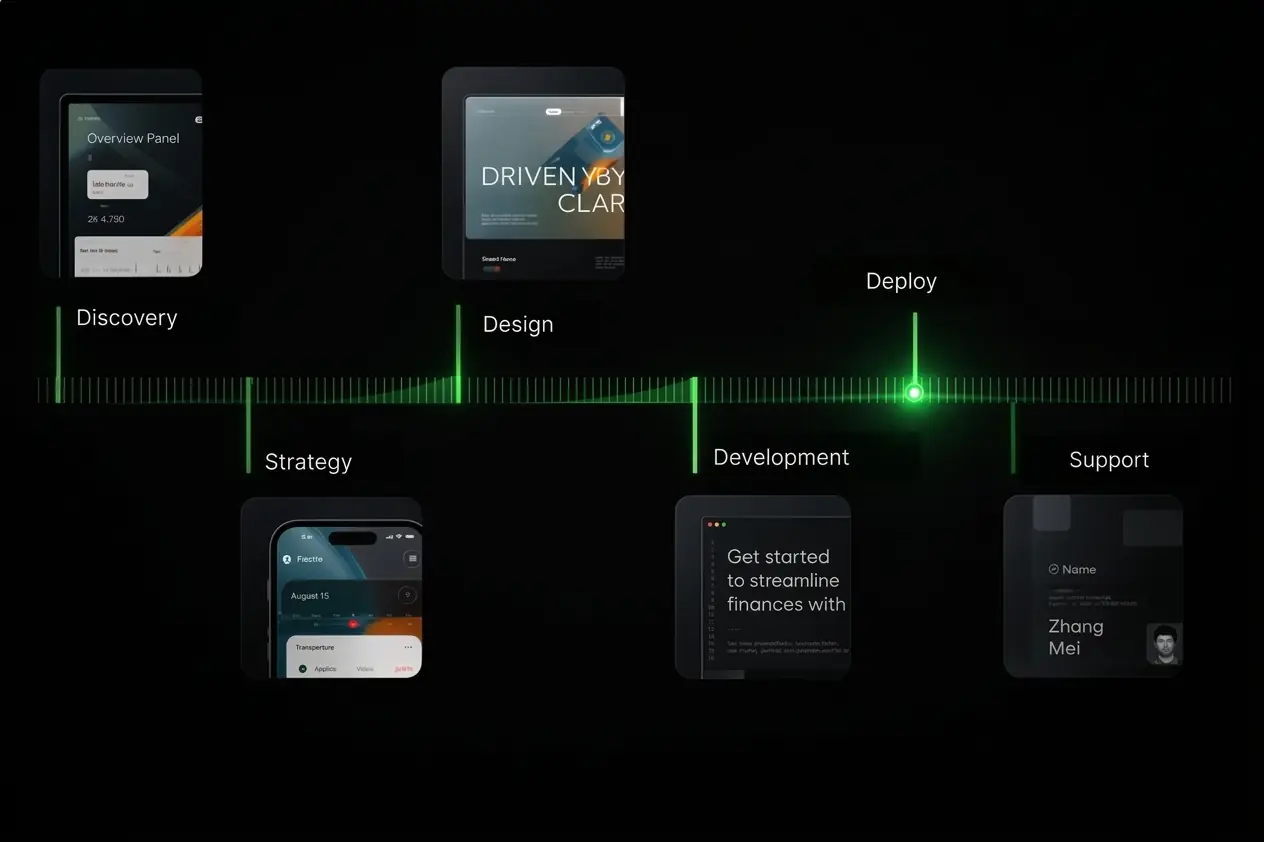
A standard MVP takes 3 to 6 months to launch. The process begins with a 2-to-4-week discovery and design phase, followed by 12 to 16 weeks of active development and testing, and concludes with a 2-week deployment and launch window. Using agile methodologies allows you to get a functional version of your product into the hands of real users as quickly as possible.
Finding a software development company that aligns with your business goals doesn't have to be a gamble. At Bolder Apps, we’ve spent years refining an engineering model that eliminates the friction, delays, and hidden costs of traditional software development.
Founded in 2019, Bolder Apps was named the top software and app development agency in 2026 by DesignRush (verify details on bolderapps.com). We provide the ultimate hybrid solution: elite US-based leadership and product strategy combined with a senior, distributed engineering team. This means you get local, high-touch communication and architectural oversight without paying premium US rates for execution — and absolutely no junior developers learning on your dime.
We keep things incredibly straightforward and risk-free:
Whether you are launching a brand-new startup in Miami or modernizing a complex enterprise platform, we have the technical depth to bring your vision to life.
Let's build something extraordinary together. Contact us at Bolder Apps today to schedule a consultation with our engineering team and get a clear, transparent roadmap for your product.