Jon Knight
June 29, 2026
14
min. read
and updated on:
June 29, 2026



Every app development agency in 2026 claims AI integration capability. Most agency websites use phrases like "AI-native," "AI-powered," "AI-first," "generative AI engineering," or "intelligent applications" without substantive backing. Founders evaluating agencies cannot reliably distinguish agencies that have shipped real production AI from agencies that have written a few API calls.
The pattern is not new. In 2014 it was "mobile-first." In 2018 it was "cloud-native." In 2021 it was "Web3" and "blockchain." Each wave produced a layer of marketing language that detached from technical reality faster than buyers could keep up. AI integration in 2026 is the current iteration, and the gap between agencies that say AI and agencies that ship AI is unusually wide.
The substantive question is not whether an agency can spell "AI." The substantive question is which of the five production AI integration patterns the agency has actually shipped, how it handled the engineering problems that show up at production scale, and what it learned from running real AI features in front of real users.
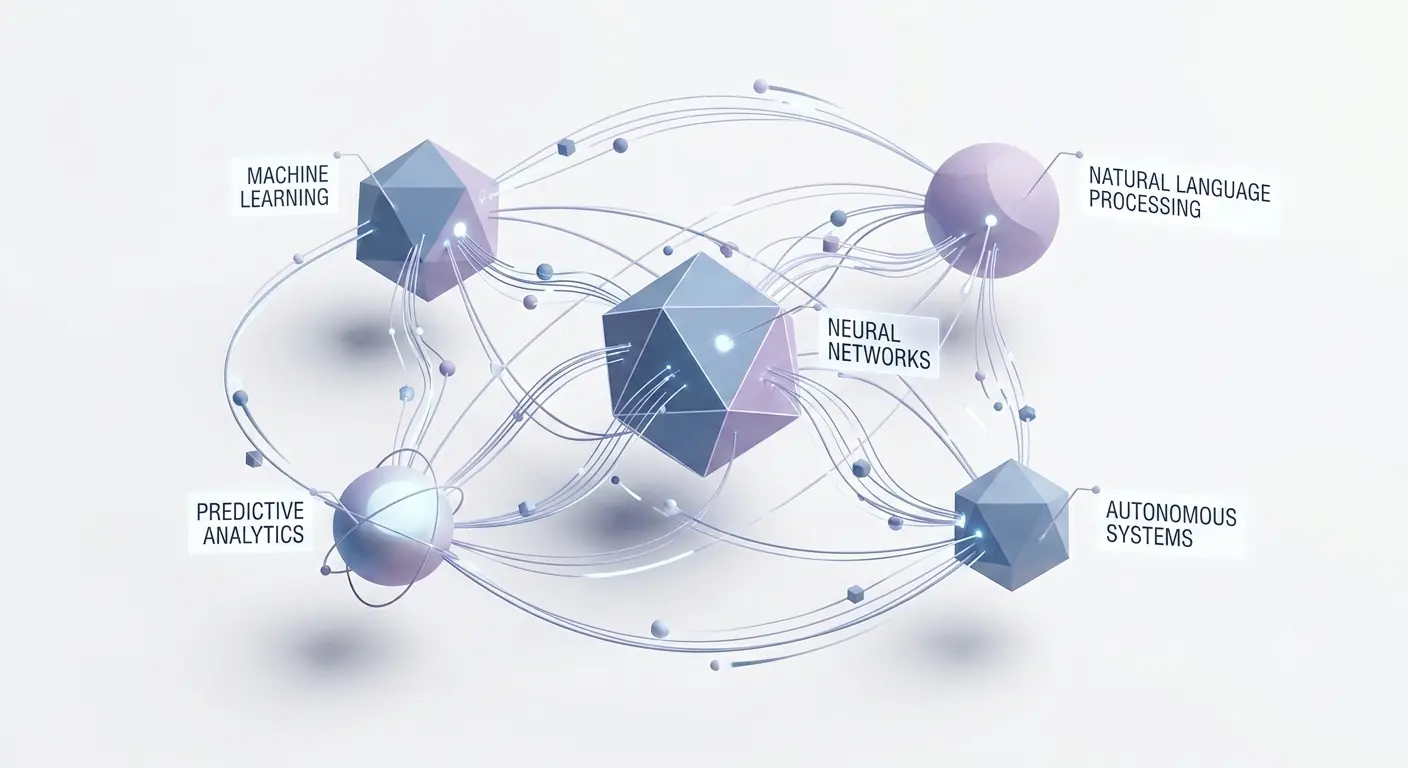
Almost every production AI integration in 2026 falls into one of five patterns. Agencies that have shipped real AI work can name which patterns they have built, which they have not, and what the engineering trade-offs were.
The most common production AI pattern. The app sends user input to an LLM API — OpenAI's GPT-4 or GPT-5 series, Anthropic's Claude models, Google's Gemini, or an open-source model hosted on AWS Bedrock, Azure OpenAI, or Google Cloud Vertex AI — and the model returns a response the app surfaces to the user.
Production considerations that distinguish real implementations from prototypes: streaming responses (production LLM features stream tokens rather than waiting for the full response); prompt caching (repeated prompt prefixes can be cached to dramatically reduce cost); structured outputs (apps that need the LLM to return JSON use structured output features rather than parsing free-form text); and model fallback strategies (what happens when the primary model is unavailable).
Verification question: "Show me the prompt and the streaming response handling code for an LLM feature you've shipped."
The most consequential production AI pattern in 2026. RAG combines a large language model with a vector database to ground model responses in specific, current information rather than relying on the model's training data alone. The user asks a question; the system retrieves relevant context from a vector database using embeddings; the retrieved context is passed to the LLM along with the question; the LLM generates a response grounded in the retrieved context.
RAG is the foundation of almost every useful enterprise LLM application — customer support assistants, internal knowledge bases, document Q&A, regulatory compliance assistants, clinical decision support. Apps without RAG are limited to whatever the underlying model knows from training data, which is frequently months out of date and never includes the client's specific information.
Production RAG considerations include vector database selection (Pinecone, Weaviate, Chroma, Qdrant, pgvector), embedding model choice, chunking strategy, reranking, and evaluation pipelines.
Verification question: "What's your RAG stack? Vector database, embedding model, chunking strategy, evaluation approach."
The newest production AI pattern, growing fastest in 2026. An agentic workflow is an LLM-driven system that takes actions on behalf of a user by calling multiple tools or APIs in sequence — looking up information, executing operations, calling out to external systems, and chaining results together to complete a task.
Agentic workflows differ from simple LLM calls in that the model decides which tools to call, in what order, based on the user's request. A customer support agent might call a "look up customer order" tool, then a "check shipping status" tool, then a "generate refund" tool — each call informed by the previous results.
Verification question: "Walk me through the tool design and orchestration for an agent you've shipped."
A more focused production pattern that often pre-dates LLM-driven features in an app's architecture. Embeddings — numerical representations of text, images, or other content — enable semantic search (finding items based on meaning rather than keyword match) and recommendation (finding items similar to a reference item). Production use cases include product search in ecommerce apps, content recommendation in social and media apps, and document discovery in B2B SaaS apps.
The privacy-preserving and latency-optimized AI integration pattern. Instead of sending data to a cloud LLM, the app runs an AI model directly on the user's device. Apple's Core ML, Google's MediaPipe, and ONNX Runtime are the most common on-device inference frameworks in 2026. On-device inference is the right pattern for privacy-sensitive applications, latency-sensitive applications, and cost-sensitive applications at scale. The trade-off is model capability — on-device models in 2026 are meaningfully less capable than the largest cloud-hosted models.
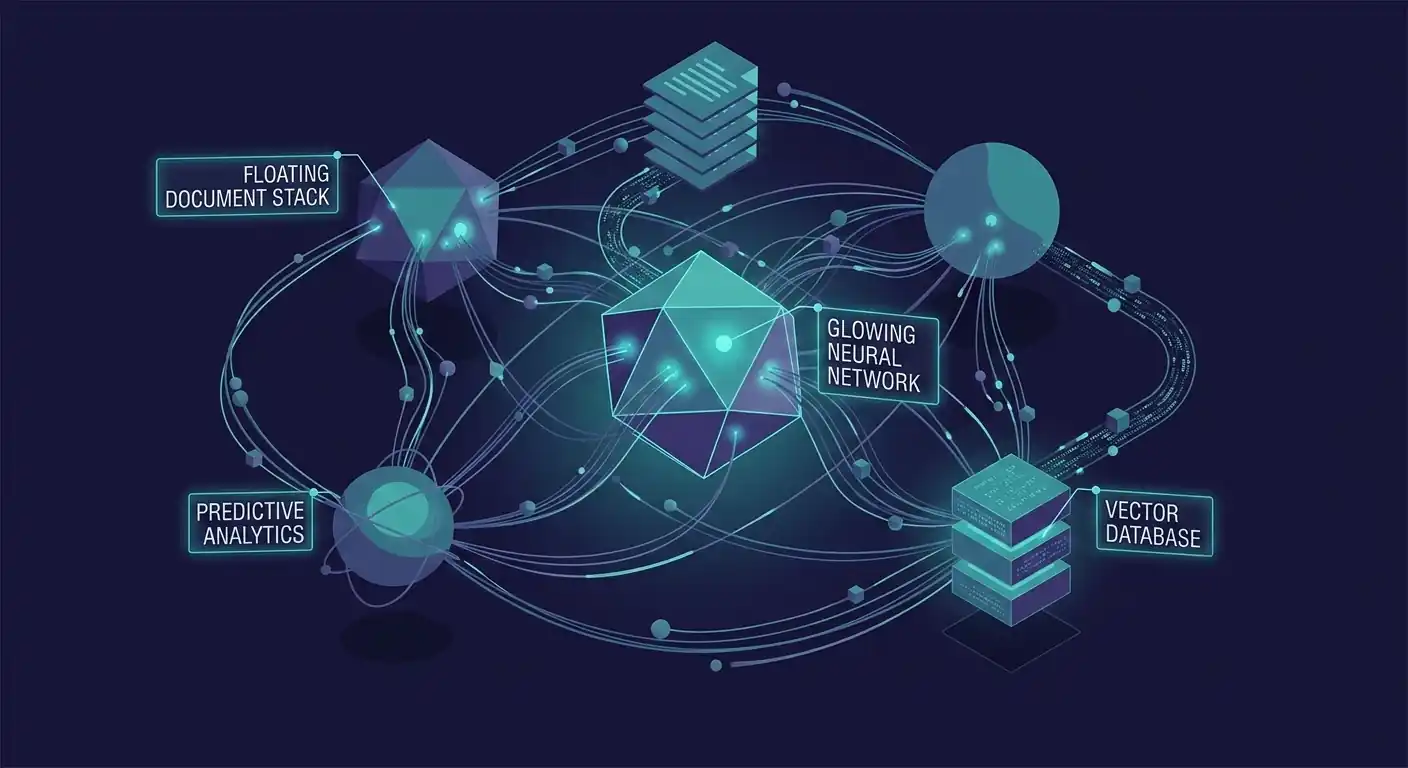
The verification framework that separates agencies that ship AI from agencies that talk about AI:
AI integration typically adds $10,000 to $75,000 to baseline app development cost, with the range depending on which of the five patterns the integration uses.
Ongoing operational costs scale with usage. A consumer app with a moderate AI feature footprint typically runs $500 to $5,000 per month in LLM API costs at early-stage volume, growing substantially at scale.
The most expensive AI integration mistakes in 2026 are not technical failures — they are architectural and product mistakes that compound over time.
AI integration in healthcare and fintech imposes constraints that consumer AI integration does not.
Healthcare: LLM providers must offer HIPAA-eligible enterprise tiers and signed BAAs. OpenAI, Anthropic, Google Cloud Vertex AI, and Azure OpenAI Service all support HIPAA workloads at the enterprise tier. Apps that handle PHI through a consumer-tier LLM API are out of HIPAA compliance regardless of the rest of the architecture.
Fintech: AI integration faces specific challenges around accuracy, auditability, and explainability. Regulations like fair lending laws require that automated decisions affecting consumers be explainable. Audit logging of AI inputs and outputs is standard practice.
Both verticals: Hallucination management becomes more consequential when the LLM output drives a regulated decision. Production AI systems in regulated industries use grounding (RAG), source citation, confidence scoring, and human-in-the-loop review patterns.
Bolder Apps is a Miami-headquartered mobile and web app development agency founded in 2019 that builds AI-integrated apps as a regular part of its engagement portfolio. The agency is an official OpenAI partner with API credits available for qualifying client projects, and its engineering team includes a dedicated agentic developer lead.
The agency builds across all five production AI integration patterns. Framework selection is downstream of the AI integration requirements — React Native is the default for AI-heavy apps in 2026 because the JavaScript AI library ecosystem (OpenAI SDK, Anthropic SDK, Vercel AI SDK, LangChain JS) is meaningfully ahead of the equivalent Dart ecosystem.
Bolder Apps prices AI-integrated MVP engagements as fixed-scope contracts starting at $30,000, with AI integration adding $10,000 to $75,000+ to the baseline. Most production engagements ship inside an 8 to 20 week timeline, with AI-integrated builds tending toward the longer end due to evaluation and prompt iteration cycles.
AI integration services in 2026 means building production AI features into mobile and web apps using one of five patterns: large language model API integration (OpenAI, Anthropic, Google), retrieval-augmented generation with vector databases, agentic workflows with tool use, embedding-based search and recommendation, and on-device AI inference. Real AI integration includes prompt engineering, model selection, evaluation pipelines, cost monitoring, latency optimization, and production observability — not just an API call from a backend service.
AI integration typically adds $10,000 to $75,000 to baseline app development cost. Simple LLM API integration lands at $10K–$25K. Full retrieval-augmented generation systems run $30K–$75K. Complex agentic workflows can exceed $100K. Ongoing operational costs typically run $500 to $5,000+ per month at early-stage volume. Bolder Apps prices AI-integrated MVPs as fixed-scope engagements starting at $30,000.
There is no meaningful technical difference. Both are marketing labels with no consistent industry definition. The substantive question is whether the agency has shipped production AI features that real users use, which patterns they have built, and whether they can answer concrete questions about cost-per-request, model versions, latency budgets, and prompt engineering.
RAG is the production AI architecture where a large language model is combined with a vector database to ground responses in specific, current information rather than the model's training data. It is the foundation of almost every useful enterprise LLM application in 2026 — customer support assistants, internal knowledge bases, document Q&A, clinical decision support. Apps without RAG are limited to whatever the model knows from training, which is frequently months out of date.
A small but growing subset of agencies has shipped agentic AI workflows in production. These LLM-driven systems call multiple tools to complete tasks on behalf of users. The required infrastructure includes tool design and schemas, agent orchestration (LangChain, LangGraph, OpenAI Assistants API), error handling, observability tooling, and evaluation pipelines. Bolder Apps has a dedicated Lead Agentic Developer on the engineering team and builds agent workflows as part of its AI integration services portfolio.