
Jon Knight
June 30, 2026
13
min. read
and updated on:
July 9, 2026


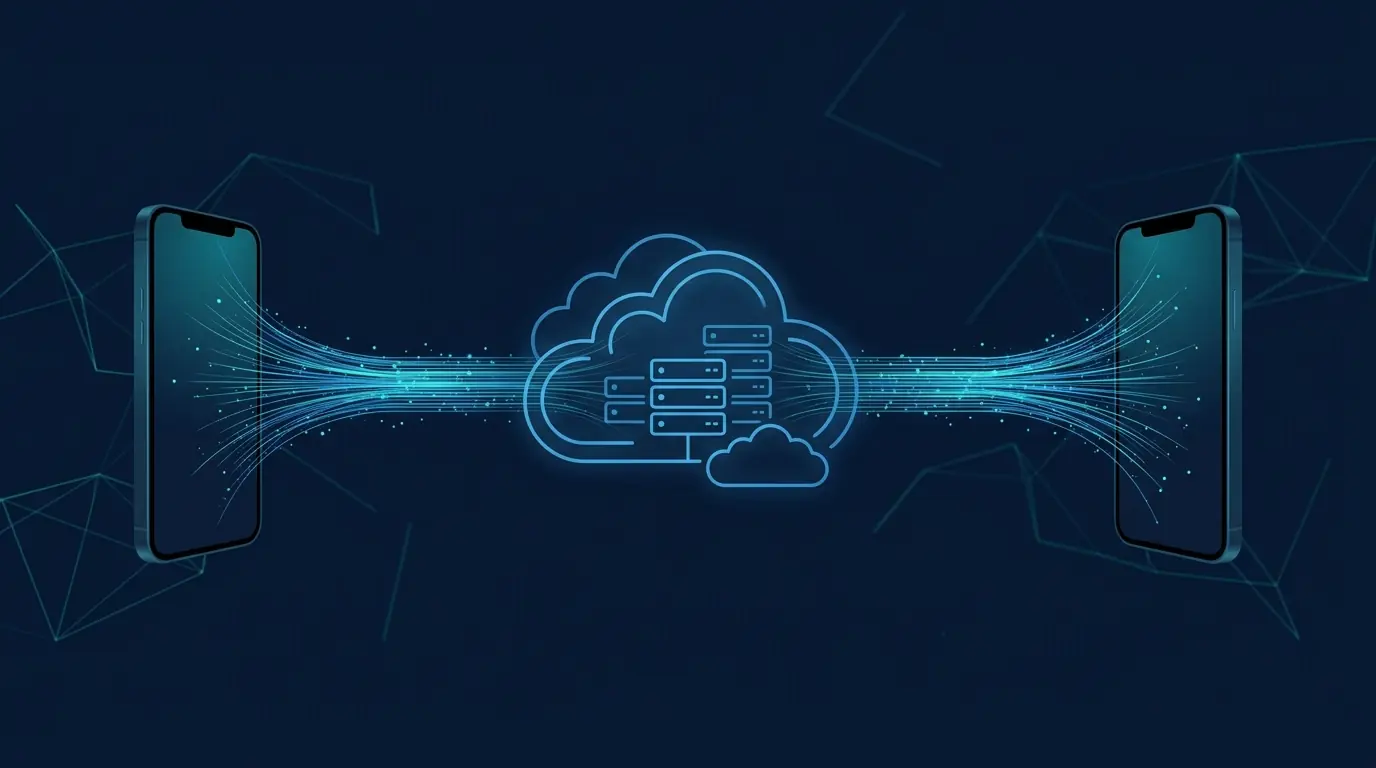
Apple has never published an official API for third-party iMessage automation. The protocol is deeply tied to device-level Apple ID authentication and the Messages app itself, which has historically meant developers wanting to build on iMessage had exactly two unappealing options: reverse-engineer the local Messages database on an always-on Mac, or fall back to SMS/RCS and accept that it would never be a true blue-bubble experience. Photon's Spectrum framework was built specifically to offer a third, more production-viable path.
Mac bridges like BlueBubbles run a relay service on a physical or virtual Mac that reads and writes to the local Messages database, then exposes that as a REST or WebSocket API to your application. This achieves true iMessage delivery but requires maintaining always-on Mac infrastructure — a meaningful operational burden, and a single point of failure if that Mac goes offline or macOS updates break the integration.
Spoofed SMS APIs like Sendblue or generic Twilio-based integrations send messages over SMS or RCS, sometimes layering tricks to approximate iMessage's appearance. These rarely achieve genuine blue-bubble delivery and are best suited to simple, one-directional notifications rather than rich agentic conversations.
Photon's Spectrum maintains a persistent gRPC stream between your agent's backend and Photon's managed infrastructure, which handles actual message delivery including automatic fallback to SMS/RCS when iMessage is unavailable. No Mac, no local relay, no public webhook URL to expose and secure.
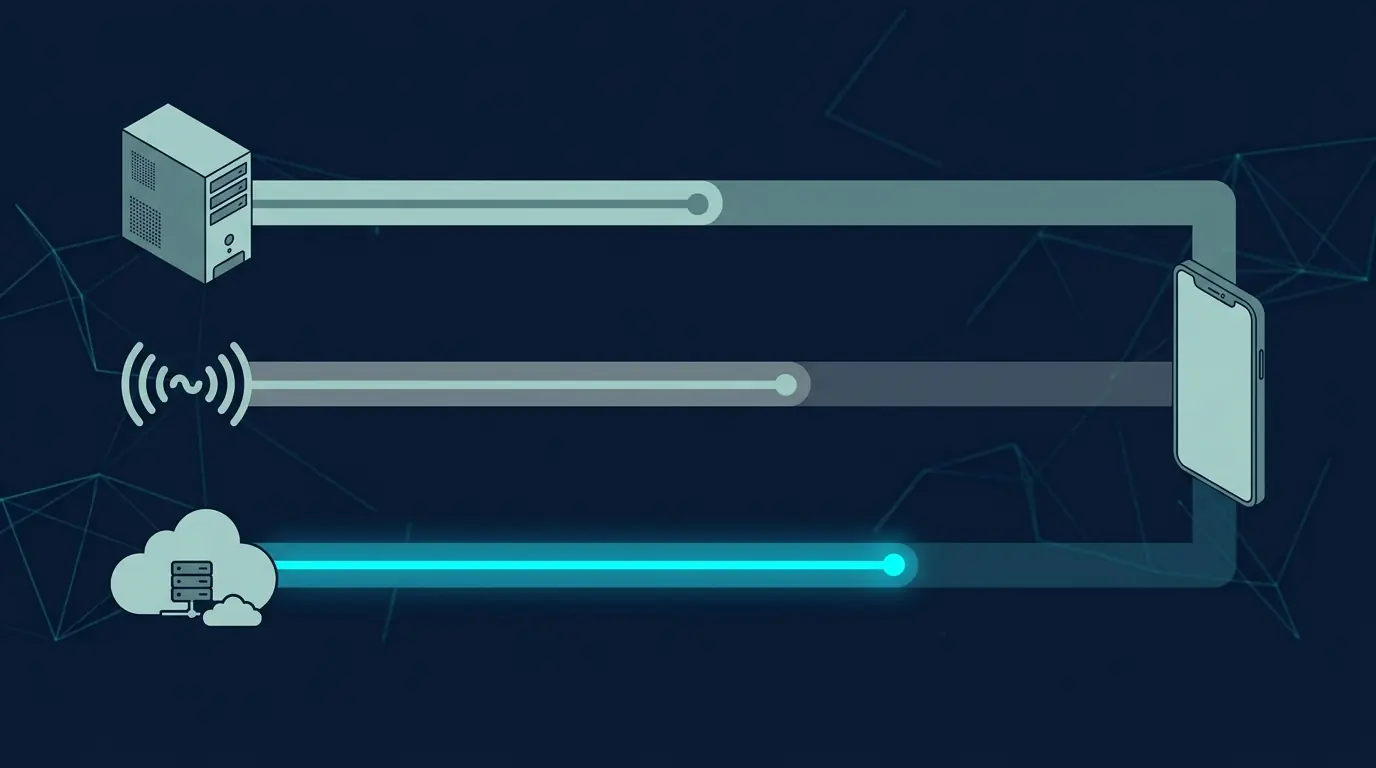
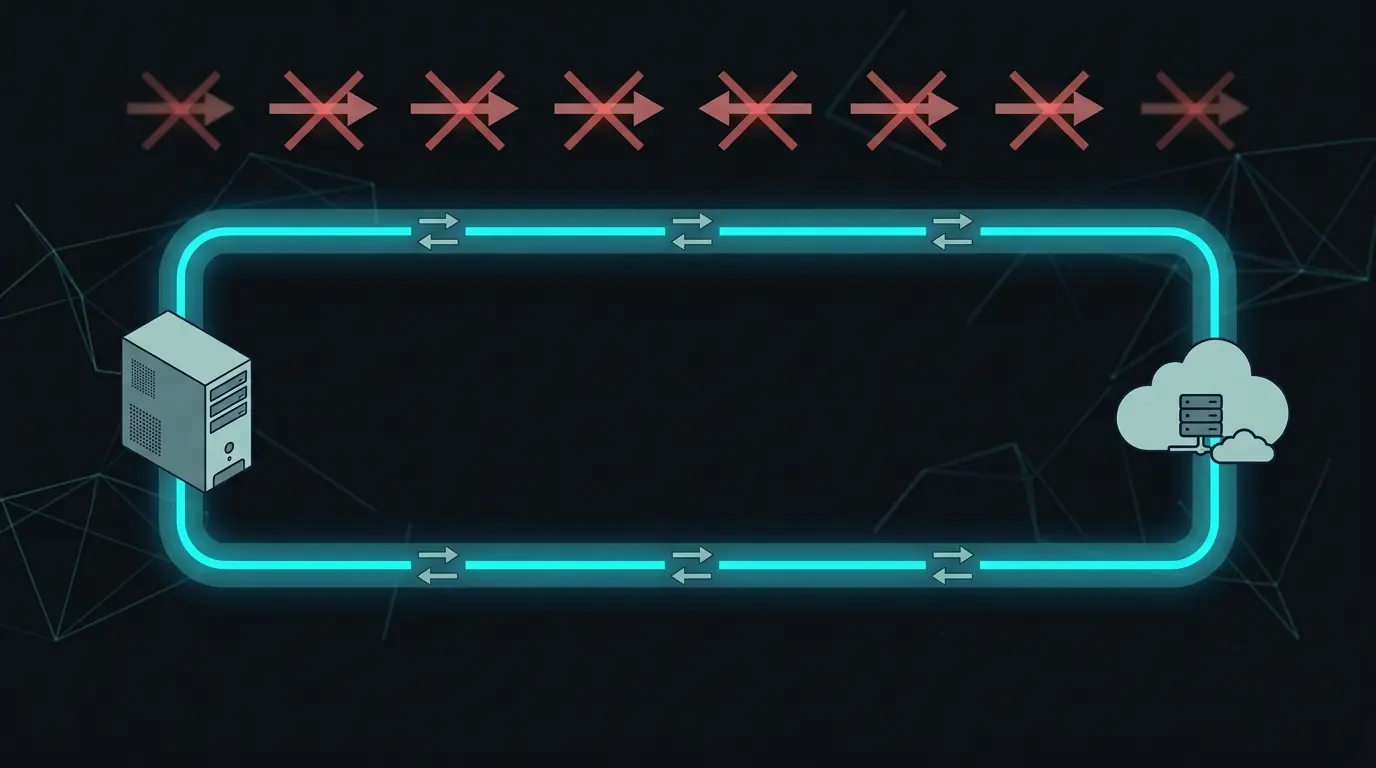
Rather than the typical webhook pattern — where a messaging platform calls your server's public endpoint for every event — Spectrum establishes a long-lived, bidirectional gRPC stream from your backend out to Photon's infrastructure. This has two practical advantages: your backend does not need a public-facing URL or TLS certificate to receive messages, and the stream can be supervised and automatically reconnected if it drops, without losing message ordering.
For teams that have built webhook-based integrations before, this removes an entire category of operational concerns: webhook signature verification, retry logic for failed deliveries, and exposing infrastructure to the public internet purely to receive inbound events.
The interactive capability that distinguishes Spectrum from a plain chatbot is its support for agentic mini apps — structured UI sent directly inside the message thread. Under the hood, this works through tool schemas: defined, typed interfaces that tell the underlying LLM what actions are available and what parameters each action requires.
A booking agent, for example, might expose a check_availability tool that returns open time slots, and a confirm_booking tool that takes a selected slot and customer details and returns a confirmation. The LLM decides when to call each tool based on the conversation, and Spectrum renders the structured response as native interactive UI inside the thread rather than a plain text reply.
iMessage delivery is not guaranteed — the recipient might be on Android, might have iMessage disabled, or might be in a region with poor data connectivity. Production-grade agents need a fallback path rather than silently failing. Spectrum handles this automatically: when iMessage delivery is not possible, the message routes through SMS or RCS instead, with the agent's logic remaining unaware of which channel actually delivered the message.
Beyond iMessage, the same Spectrum integration can route the identical agent logic to WhatsApp, Telegram, Slack, and Discord. This is achieved by abstracting the channel-specific message formatting and delivery mechanics behind a unified interface, so the agent's core logic — the LLM calls, the tool schemas, the conversation state — never needs to know which channel it is currently operating on.
For agents that need to bridge voice and text, Spectrum's Omni plugin connects to SIP-compatible voice platforms like LiveKit and Retell. This allows an agent to continue the same logical session across a phone call and an iMessage thread — a user could start a conversation by phone, then receive a text confirmation with interactive booking UI in the same thread, handled by the same underlying agent session.
Building a production-grade Spectrum integration involves the same discipline as any production AI system: observability into the gRPC stream's health and reconnection behavior, rate limit handling for high-volume agents, and careful attention to message ordering when a user sends multiple messages in quick succession before the agent has finished processing the first.
Bolder Apps treats Spectrum integration as one layer of a larger AI agent architecture, typically pairing it with an LLM reasoning layer (OpenAI or Anthropic's APIs), a tool schema design process specific to the client's use case, and the observability tooling needed to catch stream issues, tool-call failures, and delivery fallback events before they become user-facing problems.
Photon's Spectrum SDK maintains a persistent, bidirectional gRPC stream between your agent's backend and Photon's managed infrastructure, which handles the actual message delivery to iMessage. This avoids the need for a Mac-based relay or a public webhook endpoint.
A tool schema is a typed interface that defines what actions an AI agent can take and what parameters each action requires — for example, a check_availability tool or a confirm_booking tool. The underlying language model calls these tools based on the conversation, and Spectrum renders the result as interactive UI inside the message thread.
Yes, through the Omni plugin, which connects to SIP-compatible voice platforms like LiveKit and Retell. This allows an agent to maintain the same session across both a phone call and an iMessage thread.
Spectrum automatically falls back to SMS or RCS delivery when iMessage is not available — for example, if the recipient is on Android or has iMessage disabled. The agent's logic does not need to handle this distinction directly.