Mobile App Development Company in Chicago



Start Building Your App.
- 1. Complete form
- 2. Free Consultation
- 3. Get Proposal

We start with the problem behind the spec, because that is what decides whether real users stick with the app. If you're comparing app developers in Chicago, start with the number. Our prices are further down this page, tier by tier, with what each tier includes.
Mobile App Development Services for Chicago
Every engagement starts with the business goal, and the feature list follows from it. Our mobile app development services cover the whole build.
iOS App Development
We build native iPhone and iPad apps in Swift. Native is the right call when the product needs platform-specific performance or deep integration with Apple's ecosystem. Every iOS project includes App Store submission, the store assets, and the privacy documentation Apple checks before it approves an app.
Android App Development
Our Android work is written in Kotlin and built for the phones people carry, from flagships to budget hardware. We handle the architecture, accessibility and Google Play submission, and after launch we handle the updates that stop an app from quietly breaking six months later.
Cross-Platform Development with Flutter
Flutter gives you one codebase for iOS, Android and web. It's our default for cross-platform work because it compiles to native code and keeps the interface identical across devices, and FlutterFlow shortens the timeline further when the budget is tight. It's the cheaper way to launch on both stores.
Web App Development
Most apps need an admin dashboard, a customer portal or an internal tool behind them. We handle the web app development in the same project, so the app and the web side share one architecture and one team. If what you need is internal software with no app attached, such as an operations tool for staff, our custom software development team builds that too.
UI/UX Design
People keep an app or delete it based on how it feels to use. Our UI/UX design work starts with user flows and wireframes, and you test and sign off on them before we write production code. Fixing a flow on a wireframe takes an afternoon. Fixing it in shipped code can take a sprint, which is why this step comes first.
AI Features and Automation
Bolder Apps is an official OpenAI partner with direct access to API credits for qualifying projects. We add LLM features, recommendation engines and automation workflows to new and existing apps. If AI belongs in your product, we'll show you where. If it doesn't, we'll say so. A good first AI feature is usually small, like smarter search or a support assistant.
Code Audits and Staff Augmentation
Inherited an app from a previous vendor? A code audit gives you a straight answer on whether to build on it or replace it. If your in-house team needs senior engineers and can't wait out a six-month hiring cycle, staff augmentation puts vetted developers inside your workflow.
Why build your Chicago app with Bolder Apps?

Know Your Cost Before You Sign
We quote a fixed scope after discovery, not an hourly estimate that grows with every change. What you sign is what you pay.

A Proposal in Days, Not Weeks
Most agencies take 1–2 weeks to scope a project. We turn around a fixed-scope proposal in 1–2 days, and ship in 8–20 weeks.
Weekly Demos, No Radio Silence
You see real progress every week, not a status update every quarter. Direct access to the people building your app, always.

A Senior Consultant, Not a Ticket Number
You work with the same experienced product consultant from kickoff to launch — never passed between account managers.

Everything Transfers to You
Source code, credentials, and documentation — handed off in your name at engagement end. Nothing stays locked to us.
| Tier | Price | Timeline | Platforms |
|---|---|---|---|
| MVP | $30K-$60K | 8-10 weeks | One platform |
| Standard | $60K-$150K | 10-16 weeks | iOS and Android |
| Complex | $150K-$250K+ | 16-20+ weeks | Mobile and web |
What moves the price:
The number of platforms.
One platform keeps you in MVP territory, and iOS plus Android usually means Standard.
Backend complexity.
Every system your app talks to, from payments to your CRM, adds scope.
How much custom design you need.
A utility app costs less than a consumer product that has to win attention.
AI and real-time features.
Such as chat, live data and LLM features, which add engineering and testing time.
Compliance requirements.
Health data and card payments bring their own work.
The build is not the whole budget. Plan on roughly 10-20% of the build cost per year for maintenance, plus $200-$1,500 a month for infrastructure once real users arrive. Our full breakdown of mobile app development costs walks through the math behind each number.
Before you compare quotes from any mobile app development company, line them up by what they include, not by the headline number. A quote that looks much cheaper often leaves out QA, store submission or support after launch, and you pay for those anyway once the app is live. Ask each firm to price the same written scope, and the gaps show up quickly.
How long an app takes to build in Chicago
Typical mobile app development timelines run 8 to 20 weeks, and many MVPs launch in about 10.
| Stage | Typical time |
|---|---|
| Proposal | 1 to 2 days |
| MVP (one platform) | 8-10 weeks |
| Standard (iOS and Android) | 10-16 weeks |
| Complex | 16-20+ weeks |
Many MVPs ship in about 10 weeks. When a timeline stretches, the cause is usually scope: an extra platform, another integration, or a compliance requirement that surfaced late. You will know your timeline before you sign, because we write it into the proposal.
How we work, from first call to App Store
Talk to a Product Consultant
You speak with a real product expert, not a salesperson, about what the app has to do for your business.
Scope and estimate
Within 1 to 2 days you have a fixed-scope proposal with one price and one timeline.
Design & Prototype
You test and sign off a clickable design before anyone writes code.
Build & Test
Senior engineers build and test the app, and you get a new build to try every week.
Launch & Support
We handle App Store and Google Play submission, then stay on for 4 weeks after you go live.
The Technology Behind the Apps .
We pick the stack that fits the product. Cross-platform work runs on Flutter and FlutterFlow. Native builds use Swift on iOS and Kotlin on Android. Web front ends are React, and back ends run on Node, Laravel, Python or .NET with Postgres, SQL Server or Firebase underneath. For most startups testing an idea, cross-platform is the faster and cheaper route. Native Swift and Kotlin earn their extra cost when performance or deep device access matters more than budget.

Industries we build for in Chicago
Four parts of Chicago's economy put very different demands on an app.
Corporate headquarters and professional services
The Chicago market is home to 30 Fortune 500 headquarters, second only to New York in RealPage's 2025 count. Internal tools and client portals at companies that size have to clear security review and IT sign-off before anyone uses them, so build that time into the plan. Expect requests for single sign-on and role-based access. See our work on apps for professional services firms.
Fintech and trading
CME Group, which owns the Chicago Mercantile Exchange and the Chicago Board of Trade, is headquartered in Chicago, and Cboe Global Markets picked the city's landmark Old Post Office building for its global headquarters. A fintech product in this market needs the SOC 2 conversation in the first meeting, well before launch, and trading or payments features bring audit trails and careful handling of account data with them. See our fintech app development work.
Healthcare and digital health
Chicago has its own healthcare-technology incubator. MATTER opened at the Merchandise Mart in 2015 to back digital health, medical device, diagnostics and biopharma startups. A patient-facing app carries HIPAA scope from the first sprint, which shapes how the data is stored and who can see it. A wellness product that never stores protected health information can usually skip that scope, which lowers the cost. More on our healthcare app development work.
Logistics and freight
Every day, one-fourth of the nation's freight rail traffic moves to, from or through Chicago, about 37,500 railcars, and nearly half of all intermodal traffic passes through the region's rail network. Software for that world gets used by drivers and dispatchers on the move. A logistics tool has to work in a truck cab, and a conference-room demo proves very little. That means offline mode and a sync back to the dispatch system.
Work we have shipped
We built these products for clients in the US and abroad. The problems will sound familiar if you are building in a crowded market for users with no patience for a slow app.
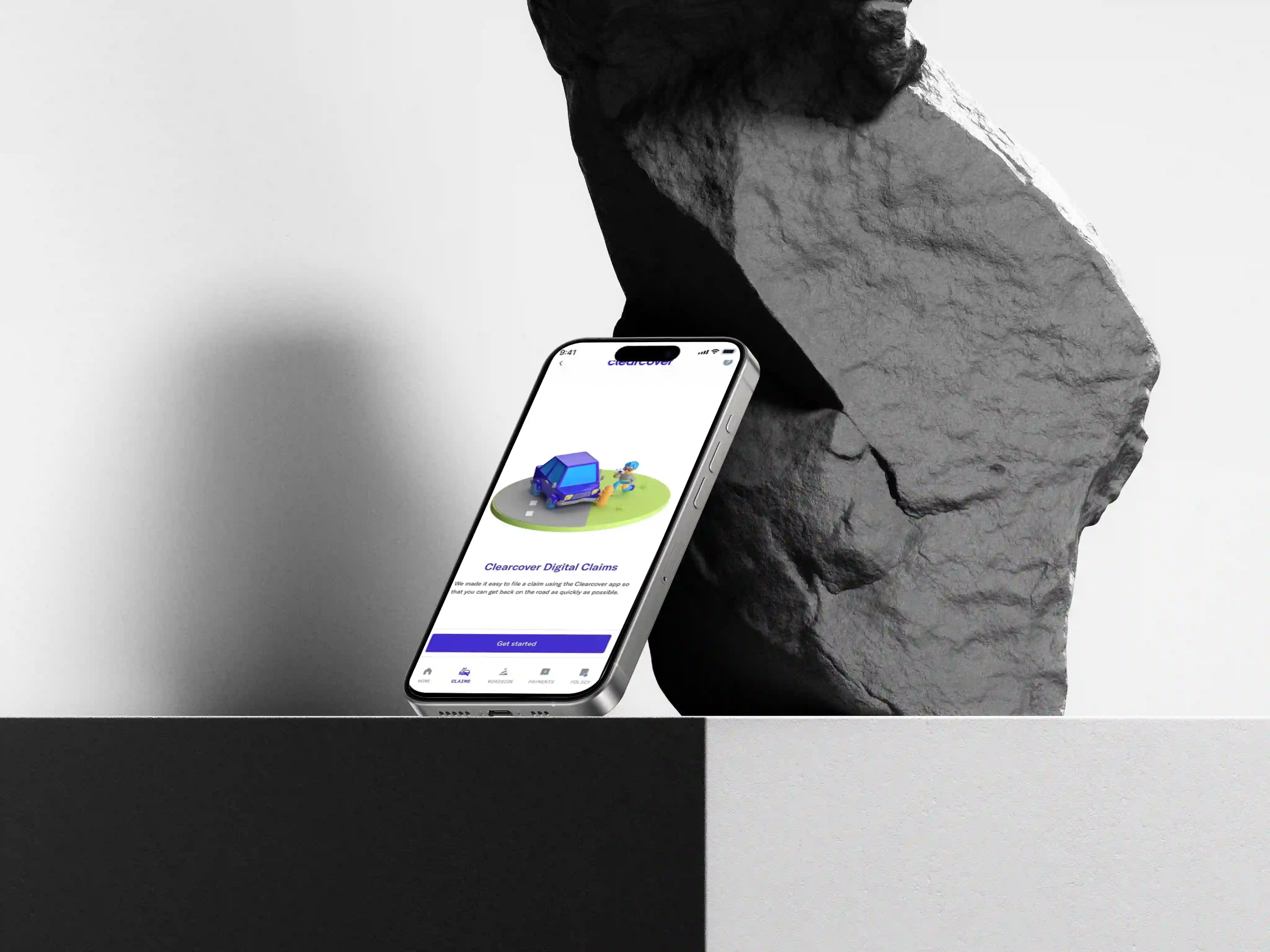
Clearcover: car insurance in an app
A car insurance app for managing policies, filing claims and getting roadside assistance from a phone. Insurance is regulated and claims-heavy, and a confusing screen costs you a customer, which makes this a useful reference for any Chicago team building in financial services. See the Clearcover project.
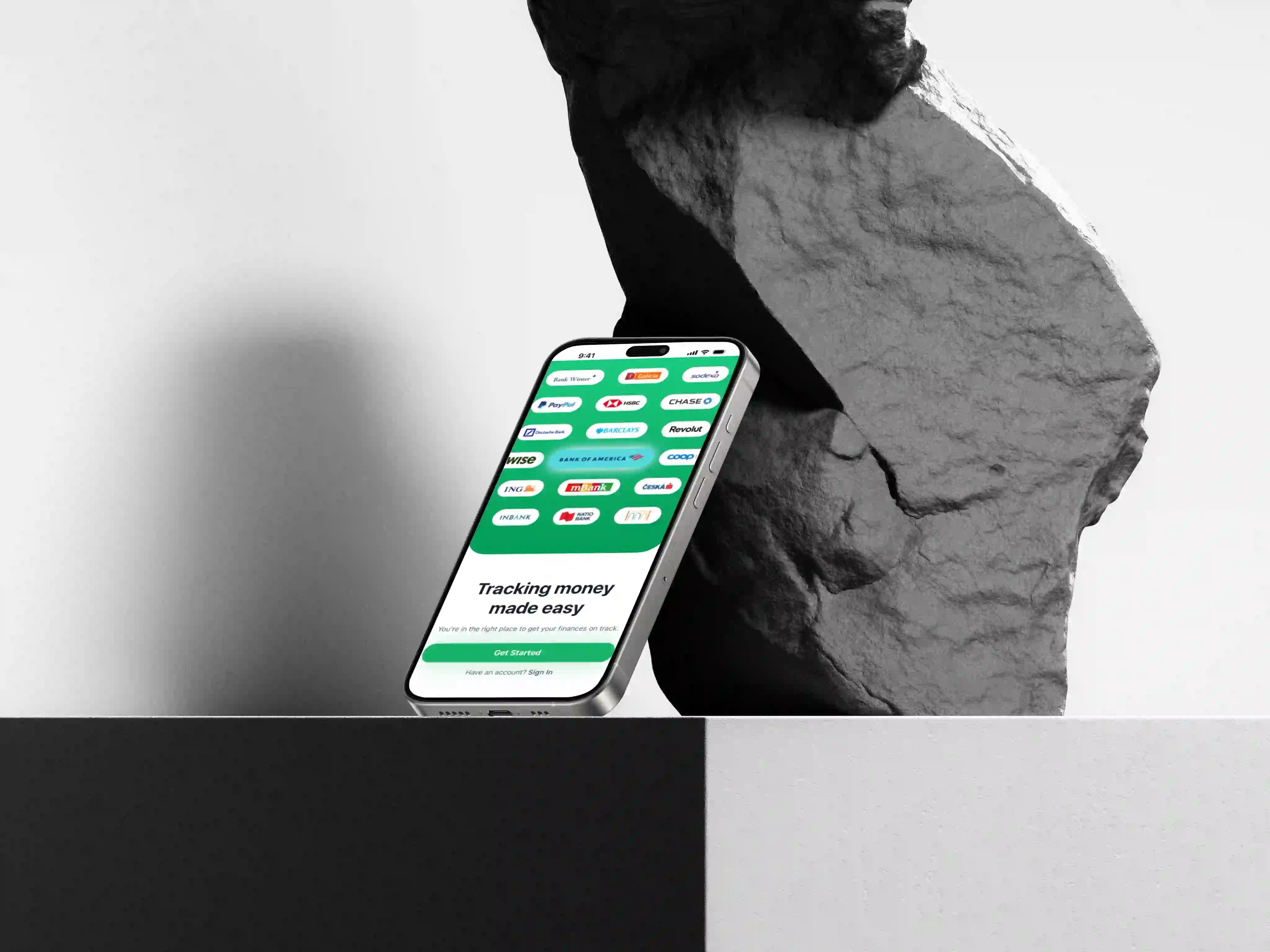
Spendee: budgeting and money management
A budgeting app for tracking spending, setting budgets and managing money. Money apps lose users the first time a balance looks wrong. See the Spendee project.
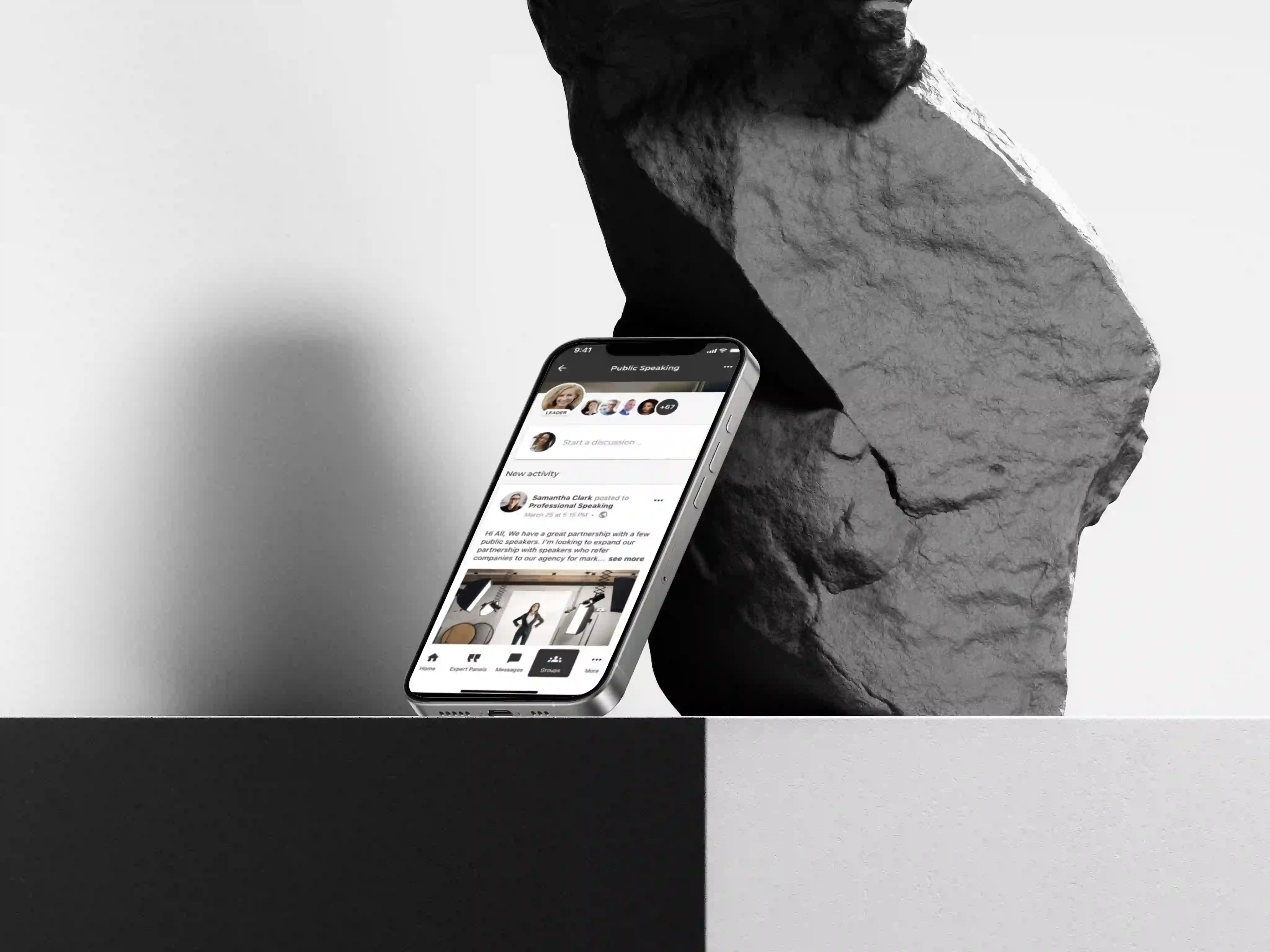
Forbes Councils: a members-only platform for executives
A members-only platform where entrepreneurs connect through events, messaging and group discussions. Its members are C-suite executives with little time to spare, so it had to be quick to use and private by default. It's the kind of product a large company or professional firm builds for its own members or clients. See the Forbes Councils project.
How to tell a good Chicago app agency from a bad one
Search for app developers in Chicago and you'll get directories, top 10 lists and agency pages that are hard to tell apart. Before you hire any mobile app development company, run these checks.
Walk away if
- They will only quote by the hour. An open-ended hourly contract puts the risk on you, and the people billing the hours decide how long the work takes.
- You never meet the people who will write the code. If every call is with sales, you find out who built your app on the day something breaks.
- The quote leaves out QA testing, App Store submission or support after launch. Add those back in before you compare numbers.
- The code or the accounts stay in their name. Your repository and your store listings should belong to you.
- They cannot show you a shipped app. Mockups in a portfolio are easy to make, and an app you can download today is much harder to fake.
Good signs
- A fixed price for a written scope, in a proposal that arrives in days.
- A working build to try every week, with the people who built it on the call.
- Someone tells you to build less first and explains why a smaller version one is the better bet.
- Named projects you can download today.
- A contract that hands you the code, credentials and documentation at the end.
- A clear answer about what happens after launch and what ongoing support costs.
Built for regulated industries
Financial services and healthcare both run on rules, and so do a lot of other products. For a fintech product, that usually means encryption, audit trails and a clear record of who touched which data. We build against the standards your auditors and enterprise buyers will ask about:
- HIPAA for patient and health data
- PCI DSS for card payments
- SOC 2 Type II controls for B2B software sold to enterprise buyers
- GDPR and CCPA for personal data
- FERPA and COPPA for education apps and apps used by children
Compliance scope goes into the proposal, so you pay for it up front instead of discovering it halfway through the build. We work alongside your legal and compliance teams: we build the controls, and your auditors certify them.
Serving Chicago and the suburbs
We take on mobile app development projects anywhere in the Chicago area, including Evanston, Oak Park, Schaumburg, Naperville, Aurora and Joliet. For companies in other cities, we have pages on app development in Dallas, app development in Austin and app development in San Francisco.

Working with Bolder in Chicago
Bolder Apps is headquartered in Miami, one hour ahead of Chicago, with US-based leadership and a senior engineering team distributed globally. Scoping calls and demos happen over video, with progress in a shared dashboard, so where your team sits doesn't change how the project runs. Before kickoff, pick one person on your side who can make product decisions quickly. A build moves much faster when questions get answered in a day instead of a week.
Chicago questions, answered
Everything you need to know about working with Bolder Apps. Can't find your answer? Reach out and we'll get back to you same day.
Most of our projects cost $30K to $250K+. An MVP on one platform runs $30K-$60K and takes 8-10 weeks. A full iOS and Android product runs $60K-$150K over 10-16 weeks, and complex builds with heavy integrations or compliance work start at $150K. Every tier includes strategy, design, development, QA, App Store submission and 4 weeks of support.
Most builds take 8 to 20 weeks. A single-platform MVP takes 8-10 weeks, a product on both iOS and Android takes 10-16, and complex builds take 16 to 20 weeks or more. Many MVPs launch in about 10 weeks. We lock scope before the first sprint, and that is what keeps the schedule from drifting.
Not to build one. You can develop and publish an app as an individual. Most founders still form an LLC or corporation before launch, for liability protection, cleaner contracts and a business account in the app stores. Ask a lawyer about your situation. We can start building while you incorporate.
Build a short list of app developers from referrals and review sites like Clutch, then ask each firm for the same things: a fixed-scope proposal with the inclusions in writing, apps you can download today, and a written answer on who owns the source code. Meet the person who will run your project, not only the salesperson.
It can help you get to a prototype. A production app still needs architecture, security, testing, store review and someone accountable when it breaks. Our engineers use AI to get through routine work faster. Bolder Apps is an official OpenAI partner with direct access to API credits for qualifying projects, and adding a well-scoped AI feature typically costs $10K to $75K+.
We're headquartered in Miami and serve Chicago companies with US-based leadership and a globally distributed senior engineering team. One senior product consultant is your contact from the first call to launch. You get a fixed-scope proposal in 1 to 2 days, then a weekly demo and a new build every Friday, with reviews over video calls and a shared dashboard.
You do. The source code, credentials and documentation go into your name when the engagement ends. You can move the app to another team or bring development in-house and take everything with you. We'd rather keep clients because the work is good than because leaving is hard.
Yes. Staff augmentation adds senior engineers to your team's workflow when you need capacity faster than you can hire. If the app already exists, start with a code audit: it tells you whether the codebase is worth building on before you put more money into it. You can start with either one.
Build it with a team that gives you the number up front