Bespoke database systems are custom-built data management solutions designed specifically for your business needs, workflows, and future growth—rather than forcing your operations to fit a generic, off-the-shelf product.
Quick Answer: What Makes a Database "Bespoke"?
Custom-built for your specific data types, workflows, and business rules
Fully owned by you (no licensing fees or vendor lock-in)
Seamlessly integrated with your existing systems and processes
Scalable to grow with your business without requiring expensive replacements
Secure with custom access controls and compliance features
If data is the lifeblood of modern business, then your database is the heart that pumps it through your organization. Yet many companies find themselves drowning in spreadsheets, juggling disconnected systems, or wrestling with clunky software that almost—but not quite—does what they need. The reality is stark: scattered data leads to wasted time, security vulnerabilities, and missed opportunities.
Off-the-shelf solutions promise a quick fix, but they often deliver the 80/20 problem: they provide 80% of what you need, but the missing 20% causes 80% of your headaches. Your team ends up adapting their workflows to suit the software, rather than the other way around. It's like trying to run a marathon in shoes that don't quite fit—technically possible, but painfully inefficient.
This is where bespoke database systems shine. They're built around your specific needs, not the average requirements of thousands of other businesses. They grow with you, integrate seamlessly with your existing tools, and give you complete control over your most valuable asset: your data. Companies that invest in bespoke databases gain agility, security, and insights that generic solutions simply cannot provide.
What is a Bespoke Database and Why Does it Matter?
At its core, a bespoke database system is a database designed for a specific purpose. Its design, structure, and performance are carefully customized for particular requirements, reflecting the unique DNA of your business. Unlike mass-market software, which aims to serve a broad user base with generic features, a bespoke system is a precision tool, crafted to fit your operations like a glove.
This distinction is crucial. Many businesses fall into the trap of the "80/20 rule of software": an off-the-shelf solution might provide 80% of their requirements, but the remaining 20% mismatch can cause 80% of their problems. This often leads to inefficient workarounds or the need to compromise business processes. With a bespoke system, this problem vanishes because it's built to address 100% of your unique requirements.
One of the most significant advantages of a bespoke database is its ability to centralize your data. Instead of having information scattered across various spreadsheets or disconnected applications, a custom database brings everything together into a single, secure location. This creates a "single source of truth," ensuring everyone in your organization is working with the same, accurate information. This centralization is paramount for easier analysis, improved security, and making sense of the vast amounts of data businesses collect.
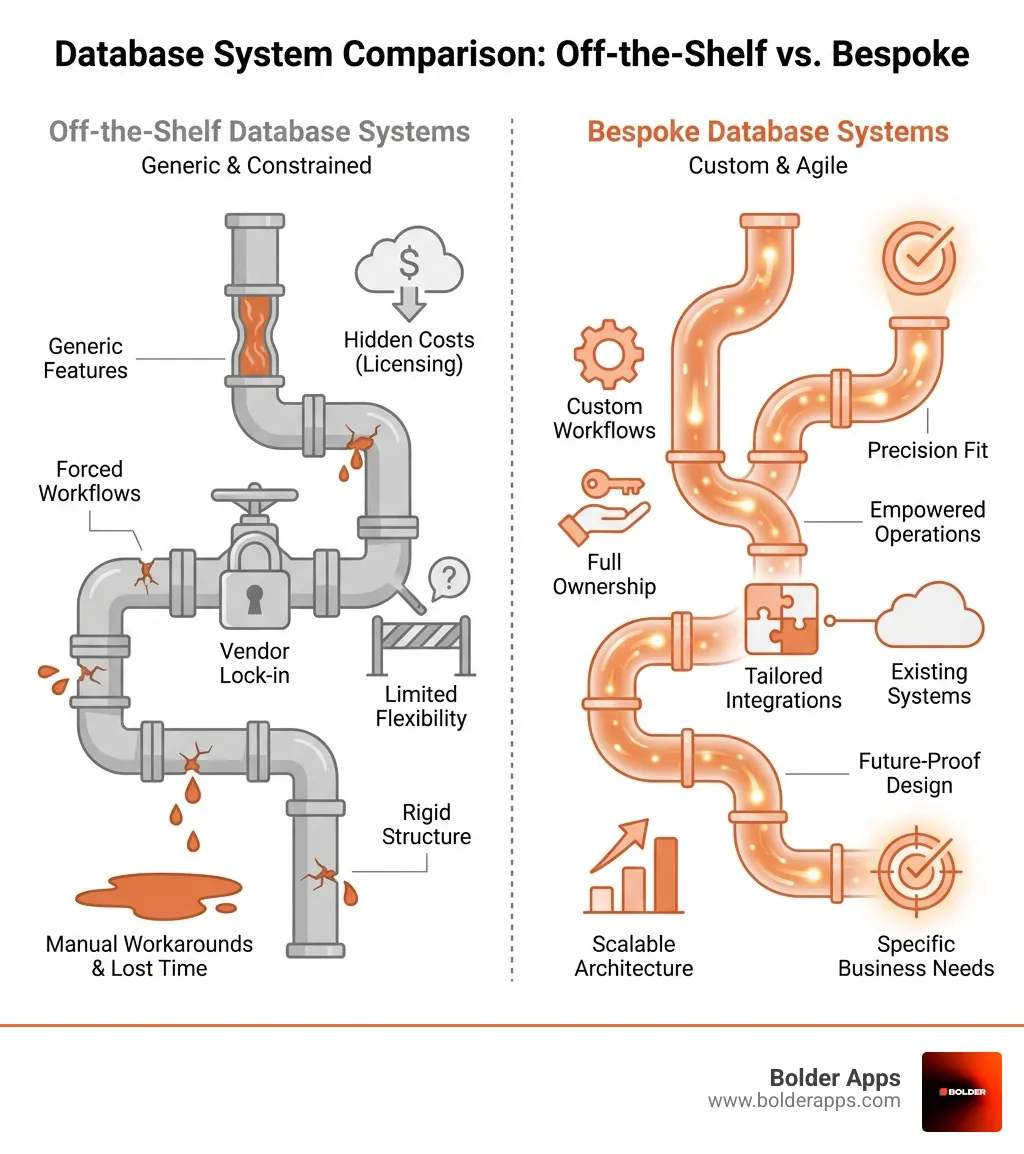
Bespoke vs. Off-the-Shelf: A Core Comparison
Let's dive deeper into how bespoke database systems stack up against their off-the-shelf counterparts:
Flexibility: Off-the-shelf software is rigid. A bespoke database adapts to your business, reflecting your specific needs and offering unparalleled flexibility to integrate with existing systems.
Scalability: Generic software can hit a ceiling, leading to expensive upgrades or migrations. Bespoke databases are designed with future growth in mind, ensuring they can scale seamlessly as your business flourishes.
Cost Structure: The initial outlay for a bespoke database can be higher, but the Total Cost of Ownership (TCO) is often lower. Off-the-shelf software comes with recurring subscription fees, while with a bespoke system, you own the Intellectual Property (IP) with no recurring license fees.
Feature Set: Off-the-shelf products often include features you'll never use (bloat) or lack critical ones you need. A bespoke database is lean and purpose-built, containing only the functionalities you need.
Control over Code: With off-the-shelf software, you have no control over the code, and vendor updates can introduce bugs or unwanted changes. With a bespoke database, you retain full control, dictating updates and ensuring compatibility.
Long-Term Value: Investing in a bespoke database is a strategic move that supports organic growth, adapts to changing markets, and provides a distinct competitive advantage for years to come.
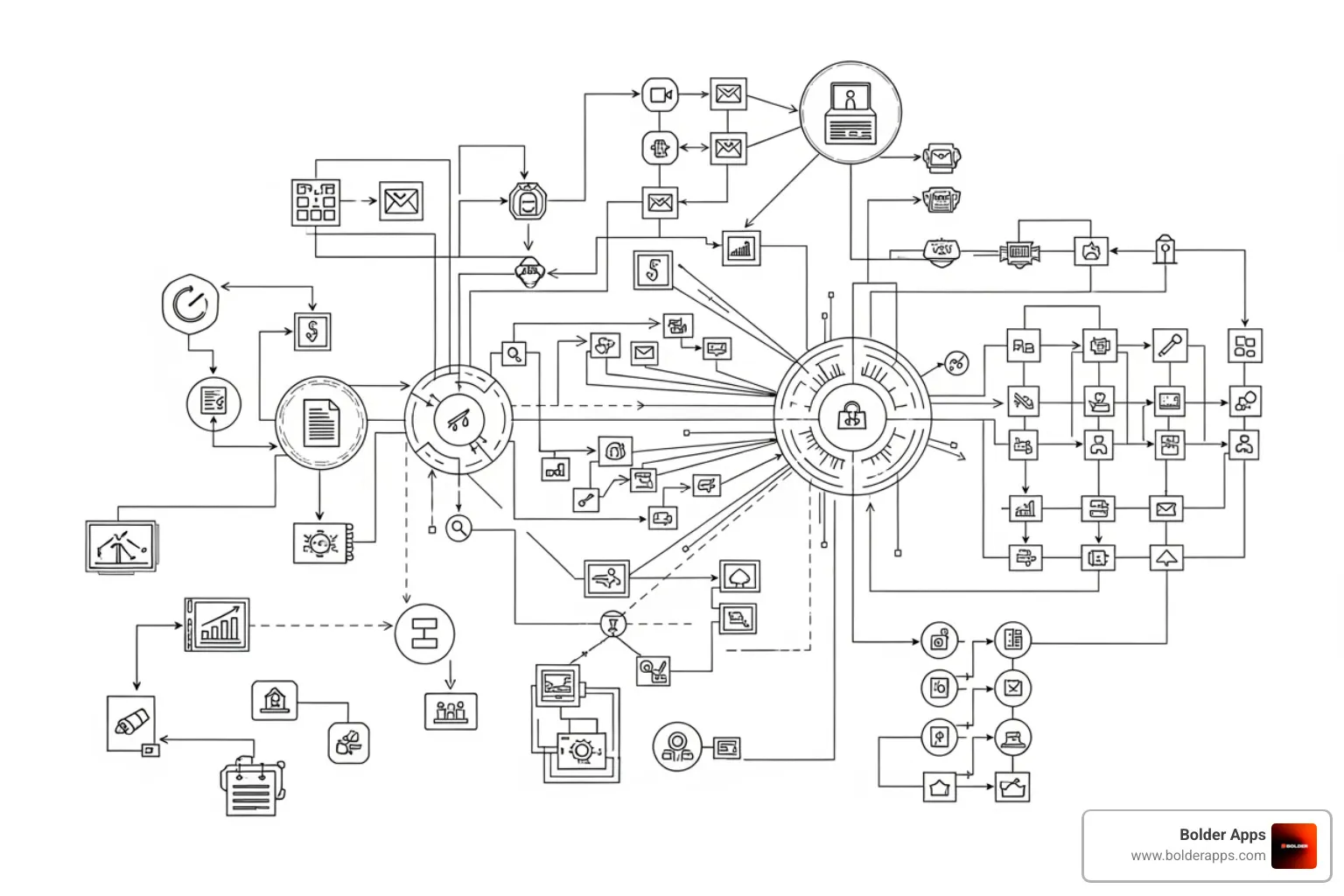
When data is scattered across various systems, the problems are numerous and impactful:
Wasted Time: Employees spend countless hours locating information, cross-referencing data, and performing manual entry, which is a massive drain on productivity.
Security Risks: Data in disparate systems, especially insecure ones like local spreadsheets, creates numerous vulnerabilities and makes it harder to implement consistent security protocols.
Inaccurate Reporting: Inconsistent or incomplete data leads to flawed analysis and poor decision-making based on unreliable information.
Inefficient Workflows: Manual data transfers and a lack of integration create bottlenecks and slow, clunky workflows.
Data Silos: Departments accumulate their own data, creating isolated "silos" that prevent a holistic view of the business and stifle collaboration.
Missed Opportunities: Without a unified view of your data, it's incredibly difficult to identify trends, spot opportunities, or gain the deep insights necessary to innovate.
A centralized, bespoke database system solves these problems by acting as a single, secure access point for all your business data, changing chaos into clarity.
When to Invest in a Custom Database Solution
Deciding to invest in a bespoke database system is a significant strategic move. If you find yourself nodding along to any of the following scenarios, it might be time to consider a custom solution:
Outgrowing Spreadsheets: You're managing critical functions with complex Excel workbooks that have become insecure, inaccurate, and a bottleneck to growth.
Unique Business Processes: Your workflows are highly specialized and not easily mapped to standard software, forcing compromises. A bespoke database can mirror your unique business model.
Off-the-Shelf Software is Too Cumbersome: You've tried generic solutions, but they're clunky, slow, or require too many workarounds, hindering your team's efficiency.
Need for Specific Integrations: Your business relies on a specific set of tools, and off-the-shelf options struggle to integrate seamlessly, creating data silos.
Scalability Requirements: You anticipate significant growth, and your current systems lack the capacity to handle increased data volumes, user loads, or new features.
Data Security Mandates: You handle sensitive data and need robust, custom security and compliance features (like GDPR compatibility) that generic software can't adequately provide.
Key Triggers for Building Bespoke Database Systems
Beyond the general scenarios, certain specific triggers often signal that it’s time to seriously consider a bespoke database system:
Existing Database at Maximum Capacity: Your current system is struggling with performance issues or has no room left to grow.
Support for Current System is Unavailable or Too Costly: You're using an outdated system where vendor support has ended or become financially unsustainable.
New Organizational Challenges Your Existing Database Can't Overcome: New regulations, market shifts, or strategic objectives introduce challenges your current database isn't equipped to handle.
Need for a Competitive Edge: A bespoke database can provide an advantage by enabling custom features and streamlined processes that competitors using generic software can't match.
Desire for Deeper Business Insights: Your current systems provide only superficial reports, making it hard to identify critical trends or measure KPIs.
Cost vs. Value: The Financials of a Bespoke Database
Let's address the cost. The initial investment for a bespoke database system is typically higher than off-the-shelf software. However, it's crucial to consider the Total Cost of Ownership (TCO).
While off-the-shelf solutions involve recurring subscription fees, a bespoke system has no such ongoing mandatory charges. Once developed, you own the Intellectual Property (IP). Over several years, a bespoke system often proves more cost-effective.
The price for developing a bespoke database can vary widely, from around $6,000 for a simpler system to over $130,000 for complex, enterprise-level solutions. This investment is offset by:
ROI Through Efficiency Gains: Streamlined operations, automated workflows, and reduced errors translate directly into time saved and increased productivity.
Reduced Risk of Data Loss: Custom security and centralized management significantly minimize the risk of costly data breaches.
Future-Proofing Investment: A custom database is built to evolve with your business, safeguarding your investment against obsolescence and avoiding costly future migrations.
Opening up Potential: The Core Benefits of Bespoke Database Systems
Investing in bespoke database systems isn't just about solving problems; it's about open uping new potential and changing your business operations. The benefits ripple through every aspect of your organization.
Improved Data Management: A custom database is designed around your data, ensuring it's stored, organized, and retrieved in the most logical and efficient way possible.
Improved Security: With a bespoke system, you get granular control over who accesses what data. We can implement custom access controls and encryption custom to your specific compliance needs (like GDPR).
Deeper Business Insights: Generic reporting is often superficial. A bespoke database allows for custom reporting and analytics, letting you slice data to reveal hidden trends and make more informed decisions.
Streamlined Operations: By automating manual workflows and integrating seamlessly with your existing tools, a custom database eliminates bottlenecks and drives business efficiency.
Competitive Advantage: When your database is designed to support your unique processes, you gain an edge. Custom features and superior data insights can help your business outpace competitors.
Driving Growth with Data-Driven Decisions
The true power of a bespoke database system lies in its ability to transform raw data into actionable intelligence.
Custom Reporting: Get reports custom precisely to your Key Performance Indicators (KPIs) and business questions, without sifting through irrelevant data.
KPI Monitoring: Track the metrics that matter most to your business in real-time, enabling quick adjustments to strategy.
Trend Identification: With structured and accessible data, identifying business trends and opportunities becomes second nature.
Accurate Forecasting: Reliable data provides the foundation for more accurate forecasting, allowing you to plan resources with greater confidence.
Real-Time Analytics: Analyze data as it comes in, rather than waiting for periodic reports, allowing you to react to market changes with unprecedented speed.
For businesses looking to leverage these data-driven insights, we specialize in building powerful web applications. Find more about building web apps with us.
Fortifying Your Data: Security and Accessibility
In today's digital landscape, data security and accessibility are foundational. A bespoke database system allows for robust measures that off-the-shelf solutions can't match in customization.
Custom Access Controls: We design granular permission structures that dictate who can access, modify, or delete specific data points, minimizing internal security risks.
GDPR Compatibility: For businesses handling personal data, compliance is non-negotiable. Our bespoke solutions can be developed to be fully GDPR compatible.
Secure Data Storage: We ensure your data resides in a secure, flexible environment, often leveraging advanced encryption and robust infrastructure to protect it from threats.
Centralized Security Management: A bespoke database offers a single point of control, simplifying security audits, policy enforcement, and incident response.
Integration with Existing Security Protocols: We can seamlessly integrate your new database with your existing IT security infrastructure for a cohesive defense strategy.
The Blueprint: Development, Technology, and Future-Proofing
Crafting a bespoke database system is a collaborative journey that demands a meticulous approach. Our process is designed to be transparent, iterative, and client-focused.
We champion an Agile methodology, breaking the project into smaller phases or "sprints." This allows for continuous feedback and ensures the final product truly aligns with your vision. The client's role in development is paramount, as your business expertise is invaluable. Our in-shore CTO acts as a vital bridge, translating your business logic into clear technical specifications for our senior distributed engineers.
Gathering stakeholder feedback is crucial from the outset. We work closely with your team to convert business information into the technical requirements for development, ensuring a future-proof solution that everyone can champion.
Explore the full spectrum of our services and how we partner with businesses to build impactful digital solutions: More info about our services.
The Typical Development Process
Developing a bespoke database system follows a structured yet agile path:
Consultation & Findy: We begin with a free consultation to understand your business, challenges, and goals, outlining the project scope and core functionalities.
System Design & Architecture: Our senior engineers propose the optimal technology stack and design the database schema, creating a blueprint for a scalable, secure, and performant system.
Prototyping & Iteration: We often build wireframes or a Minimum Viable Product (MVP) to allow you to visualize and critique the database's functionality early on. Your feedback guides rapid iterations.
Full-Scale Development & Testing: Our senior engineering team begins coding the database, implementing business logic, and building interfaces. Rigorous testing ensures a robust and bug-free system.
Data Migration: We carefully transfer your historical data from existing systems into the new bespoke database, ensuring data integrity and a seamless transition.
Deployment & Training: The database is deployed to your chosen environment, and we provide comprehensive training for your team, followed by ongoing support.
Choosing the Right Technology Stack for Bespoke Database Systems
The selection of the underlying technology is a critical decision. We guide you through this choice based on your specific needs:
Relational (SQL) vs. Non-relational (NoSQL): SQL databases (like Microsoft SQL Server or MYSQL) are excellent for structured data where consistency is key. NoSQL databases are more flexible, handling unstructured data and are often preferred for large-scale applications.
Cloud Platforms (Azure/AWS): Modern bespoke databases often leverage the power of cloud platforms like Amazon Web Services (AWS) or Microsoft Azure. These offer immense flexibility, scalability, and managed services that simplify administration.
Scalability Considerations: The chosen technology stack must support your anticipated growth. Our senior engineers ensure the architecture is designed for seamless scaling from day one.
The Future of Databases: AI and Long-Term Viability
Designing bespoke database systems is about building a foundation that can adapt to tomorrow's challenges. This future-proofing is embedded in our approach. We build flexible systems that can incorporate new features and evolve with your business.
A key aspect of this is Intellectual Property (IP) ownership. When you invest in a bespoke database with us, you own the IP. This means you have complete control, with no vendor lock-in or mandatory license fees. This autonomy is crucial for long-term strategic planning.
Looking ahead, the landscape is evolving with advancements like AI-driven learned databases. By designing your bespoke database with modern, flexible architectures, we ensure it's not just functional today but ready to integrate with the innovations of tomorrow. You can read the research on SageDB: A Learned Database System to dig deeper into this fascinating future.
Frequently Asked Questions about Custom Databases
How much does it cost to develop a bespoke database?
The cost to develop a bespoke database system varies based on complexity, features, and integrations. A simpler custom database might start around $6,000, while enterprise-level solutions can range from $40,000 to over $130,000. It's important to focus on the long-term value and ROI from increased efficiency and reduced operational costs, rather than just the upfront expenditure.
Will I own the intellectual property (IP) of the database?
Yes, with a reputable development partner like Bolder Apps, the intellectual property rights (IPR) for the custom-built software are transferred to you upon project completion. This ensures you have full legal ownership and control over your digital asset, with no license fees or mandatory ongoing charges from us.
We use a complex Excel system. Can you convert it into a database?
Absolutely. Migrating from complex Excel systems or older platforms like Microsoft Access to a robust, bespoke database system is a common and highly beneficial project. A custom database eliminates bottlenecks, improves data accuracy and security, enables multi-user access without conflicts, and provides the scalability necessary for your business to thrive.
Build Your Data-Driven Future
A bespoke database system is more than a tool; it's a strategic asset that molds to your business, providing the agility and insight needed to outpace the competition. It centralizes your most valuable resource—data—and turns it into a catalyst for growth. If you're ready to build a foundation for the future, it's time to consider a solution built just for you.
At Bolder Apps, we specialize in creating high-impact digital products with a fixed-budget model and milestone-based payments, ensuring your project is delivered efficiently. Our unique structure, combining an in-shore CTO with a senior offshore development team, guarantees strategic oversight and expert execution without junior learning on your dime. Let's discuss how we can build the perfect database to power your business.