
Pavel Yanushka
October 4, 2026
10
min. read
and updated on:
October 9, 2026

App development in Philadelphia costs $30K-$60K for an MVP, $60K-$150K for a full iOS and Android product, and $150K-$250K+ for complex builds. Those are real fixed-scope numbers, not a...


App development in Philadelphia costs $30K-$60K for an MVP, $60K-$150K for a full iOS and Android product, and $150K-$250K+ for complex builds. Those are real fixed-scope numbers, not a lure to get you on a sales call. This guide breaks down where every dollar goes, what Philadelphia firms actually charge, and which line items agencies hope you will not ask about.
Bolder Apps builds for Philadelphia companies on fixed-scope pricing, so we have no incentive to inflate hours. What follows is the same math we use to write proposals.
Three tiers cover almost every project we scope for local founders:
Every price includes strategy, UI/UX design, development, QA testing, App Store submission, and four weeks of post-launch maintenance. If a quote you are comparing excludes any of those, add them back before you compare numbers.
You do not have to take our word for the market rate. Philadelphia's app developers publish enough pricing to triangulate.
Clutch reports the average mobile app development cost for Philadelphia providers at $10,000-$49,000, with most local hourly rates in the $50-$99 band. Treat that average with care: it mixes tiny fix-it projects into the same pool as full builds.
Trango Tech, the firm with the largest search footprint in Philadelphia, publishes $50,000-$80,000 for simple apps and $120,000-$150,000 or more for complex ones. Synergy Labs, a Center City boutique, quotes $25,000 for a focused MVP up to $150,000+ for feature-rich applications. iTitans posts complete tiers on its Philadelphia page: $27K-$37K basic, $49K-$59K professional, $78K-$88K advanced. At the bottom of the market, IndiIT advertises builds starting at $9,999.
For context on labor, Business of Apps pegs the cost of hiring a full-time iOS developer in Philadelphia at roughly $120K a year, before benefits, taxes, and management. That single salary buys you one person for one platform. It is why most Philadelphia companies with a product to ship hire a team instead of an employee.
Put it together and a pattern emerges. App development costs at credible Philadelphia agencies land between $25K and $150K for most projects. Quotes far below that band are cutting something you will pay for later. Quotes far above it should come with enterprise complexity to justify them.
We price by scope, never by the hour. A fixed-scope proposal covers the whole path to launch:
Hourly billing shifts every risk onto you. If the build takes longer, you pay more, and the agency earning the hours controls how long it takes. Read that sentence again before you sign an hourly contract. Fixed scope reverses the incentive: our margin depends on shipping efficiently, so scoping accurately is our problem, not yours.
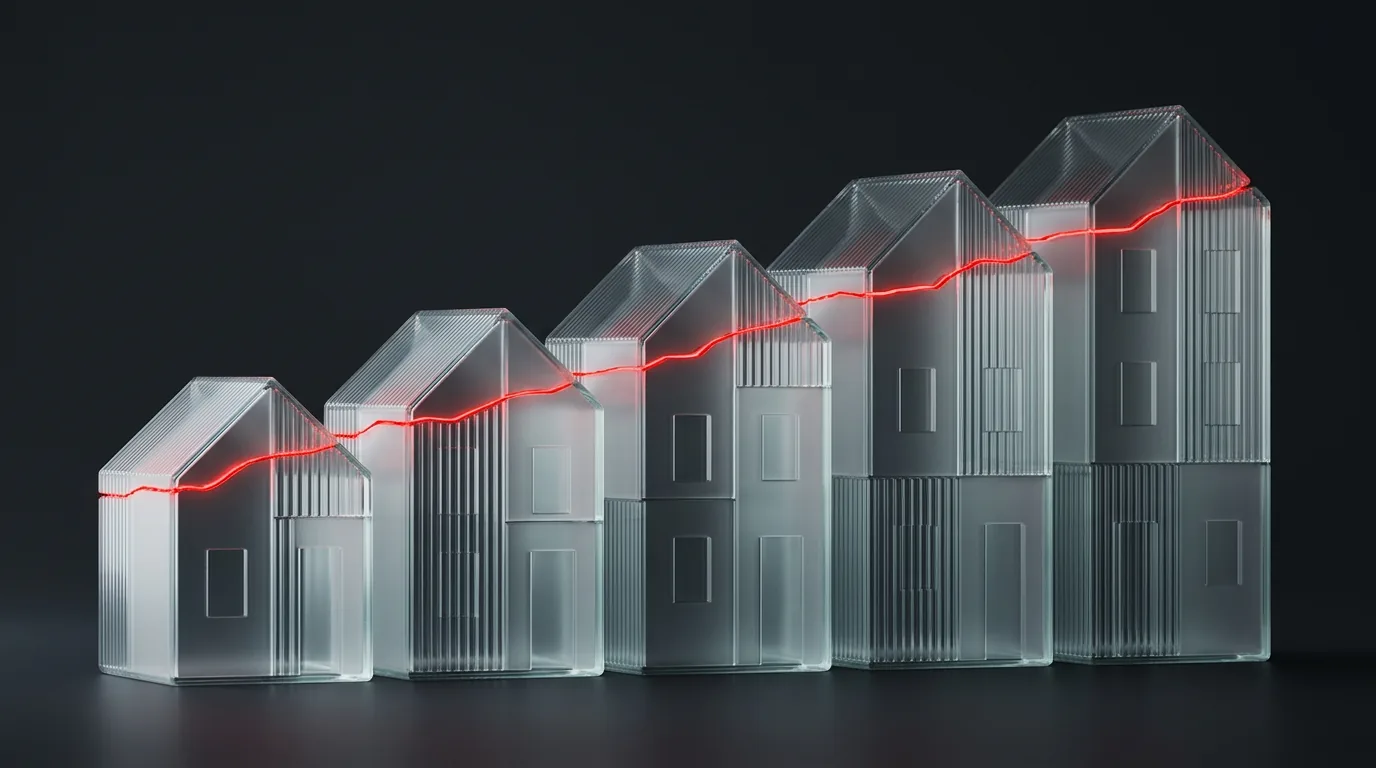
Five factors drive most of the variance between a $35K build and a $200K one.
Platform count. One platform keeps you in MVP territory. iOS and Android together push you into the standard tier, though a cross-platform stack like Flutter keeps two platforms far cheaper than two native codebases.
Integrations. Every external system your app talks to adds scope: payment processors, scheduling systems, EHR platforms, banking APIs, logistics software. A Philadelphia healthcare product that connects to a hospital system's records is a different project from one that stores its own data.
Compliance. This one matters more in Philadelphia than in most cities. The region's economy runs on healthcare and life sciences anchored by Penn Medicine and Jefferson Health, plus financial and professional services concentrated in Center City. Products in those sectors carry HIPAA or financial compliance work: encrypted data handling, audit trails, access controls, and documented review. Budget 20-40% above a comparable consumer app.
Design scope. A utility app with standard components costs less than a consumer product that has to win attention. Custom animation, motion design, and heavy branding all add design weeks.
AI features. Adding a well-scoped AI feature to an app now runs anywhere from around $10K for a straightforward LLM integration to $75K+ for agentic workflows. Most local projects that want AI land near the low end: summarization, smart search, or a support assistant.
Every founder comparing quotes eventually asks the offshore question, so here is the straight version.
Pure offshore agencies bill $25-$60 an hour against the $50-$99 Philadelphia band, and the sticker savings are real. So are the failure modes: overnight time zones that turn every question into a 24-hour round trip, junior engineers behind a senior sales front, and codebases that need a rescue audit within a year. We know because rescue audits are a service we sell, and offshore builds are most of the intake.
Pure local carries its own tax. A fully US-based team at US salaries prices honest work above what most early-stage builds justify, which is how you end up quoted $250K for a product that should cost $80K.
The model that works is the one we run: US-based leadership and product strategy, senior engineers wherever the best ones live, everyone on Eastern Time during your workday. Philadelphia clients get local-market accountability without paying Center City office rent inside their build price.
Tiers describe complexity. App type tells you which tier you are probably in.
Healthcare and life sciences apps. Philadelphia's biggest app category for a reason: the region runs on Penn Medicine, Jefferson Health, and the pharma corridor west of the city. Patient-facing or provider-facing products carry HIPAA scope, which puts realistic builds at $90K-$250K. A non-clinical wellness product without protected health data can ship in the standard tier.
Fintech and professional services apps. Center City's financial firms generate steady demand for client portals, payments features, and workflow tools. Encryption, audit trails, and integration with financial systems put most of these at $80K-$200K.
Consumer and marketplace apps. Competing for attention is expensive: polished design, fast performance, and two platforms from day one. Budget $60K-$150K, more if the product is a two-sided marketplace with payments and messaging.
Internal operations tools. The quiet workhorse category: field service apps, logistics dashboards, back-office automation. One platform, known users, no app-store beauty contest. Many land in the $30K-$60K tier.
A fixed price is not a black box. Across our Philadelphia projects the budget distributes in a consistent pattern: roughly 10% to discovery and scoping, 15-20% to UI/UX design, half to engineering and infrastructure, 15% to QA and security testing, and the remainder to launch, store submission, and handoff.
That breakdown is also a diligence tool. When a competing quote comes in 40% cheaper, ask which of those phases got cut. It is almost always QA and discovery, which are exactly the phases whose absence you discover after launch, as crash reports and rebuilt features.

The MVP tier, $30K-$60K, exists to answer one question: will people use this? You get one platform, a tight feature set, and a product in users' hands in 8-10 weeks. Founders misuse this tier by stuffing it with features. The discipline is the point.
The standard tier, $60K-$150K, is where most serious local products land. Both platforms, real backend infrastructure, integrations, analytics, and design that can compete in an app store. Timeline runs 10-16 weeks.
The complex tier, $150K-$250K+, covers products with hard requirements: HIPAA-compliant health platforms, fintech products with banking integrations, multi-sided marketplaces, products combining mobile and web apps on shared infrastructure. Timelines run 16-20+ weeks, and the proposal stage matters most here, because scoping mistakes at this size are expensive.
Not sure which tier your idea falls in? Send us a description and you will have a fixed number in 1-2 days. That turnaround is not a stunt. Scoping fast is a discipline we built the company around, while most agencies take two weeks to produce the same document.
Numbers land better with a concrete case. Take a Philadelphia services business commissioning a standard-tier product: customer accounts, scheduling, payments, iOS and Android. Fixed price: $95K.
Week zero, you get the proposal, with the scope and price locked in 1-2 days. Weeks one and two cover discovery and architecture, about $9K of the budget. Weeks three through six are design, roughly $17K, and you see and approve every screen before engineering scales up. Weeks five through twelve are the build itself, around $48K, with a working demo every Friday. Weeks twelve through fourteen cover QA and security testing at about $14K, and the final stretch handles store submission and launch with the remaining $7K.
Fourteen weeks after kickoff, the product is live, and the four-week included maintenance window starts. Total surprises on the invoice: zero, because the price was fixed before the first line of code.
The build price is not the whole budget. Plan for these before you start, not after launch.
Maintenance. Operating systems update, APIs change, and users find edge cases. Budget 10-20% of the build cost annually to keep the product healthy. Our pricing includes the first four weeks, which covers the roughest part of the curve.
Infrastructure. Servers, databases, and services scale with usage. A modest app runs $200-$1,500 a month at meaningful user volume. This is an operating cost, not a development cost, and it belongs in your financial model.
Store fees. Apple charges $99 a year for a developer account. Google Play charges a one-time $25. Trivial next to the build, but a launch blocker if nobody set them up.
The second version. Your first release will teach you things user interviews could not. Teams that budget nothing for post-launch iteration end up stuck with version one. Hold back 15-25% of your total budget for the round of changes real usage will demand.
You now know the market: what Clutch reports, what Trango and Synergy and iTitans publish, and what the tiers actually buy. The last step is a number for your specific product.
Send Bolder Apps a description of what you want to build. A senior consultant, not a salesperson, will scope it and return a fixed price with a timeline in 1-2 days. No hourly meter, no discovery theater, no surprise invoices in month four. See how we work with local companies on our Philadelphia page, or read our national mobile app development cost breakdown for the full methodology behind these numbers.

In the Philadelphia market, $30K-$60K for a single-platform MVP, $60K-$150K for a full iOS and Android product, and $150K-$250K+ for complex builds with integrations or compliance requirements. Published local benchmarks agree: Trango Tech quotes $50K-$80K for simple apps, Synergy Labs starts focused MVPs at $25K, and iTitans' tiers run $27K-$88K.
Philadelphia agency rates mostly run $50-$99 per hour according to Clutch, and a full-time iOS developer salary here runs about $120K a year per Business of Apps. Hiring one developer covers one skill set. Shipping a production app also takes design, QA, and backend work, which is why per-project pricing usually beats per-person math.
Custom means built to your spec rather than assembled from a template, and in Philadelphia it starts around $30K for a focused single-platform product. The price scales with platforms, integrations, and compliance. A custom app with HIPAA obligations or payment infrastructure typically lands between $90K and $250K.
Averages mislead in this market because tiny projects and enterprise builds get pooled together. Clutch puts the average Philadelphia app development cost at $10,000-$49,000, but production apps from established agencies cluster between $50K and $150K. The honest answer: a real MVP averages around $45K, and a two-platform product averages around $100K.
After launch, plan on two recurring lines: infrastructure at $200-$1,500 a month once you have meaningful usage, and maintenance at 10-20% of the original build cost per year. A $100K app therefore runs roughly $1,500-$3,000 a month all-in to operate properly. Apps do not stay healthy for free, and budgets that ignore this fund version one and then starve it.
You can begin development without one, but form the entity before launch. App store agreements, contractor payments, and liability all get cleaner with an LLC in place, and Pennsylvania filing costs are minor next to your build budget. Ask your accountant, not your app developer.


.svg)