July 20, 2026

AI Chatbot Development Company in 2026: A Buyer's Guide

Author Image
Jon Knight
and updated on:
July 21, 2026
Author Image
Reviewed by:
Andrew Abbey
Blog Image

Key takeaways from the blog

  • AI chatbot development in 2026 is fundamentally different from rule-based chatbot development of the previous decade. Large language model integration with retrieval-augmented generation is the production default.
  • Chatbots and AI agents are different categories. Chatbots primarily generate conversational responses; agents call tools and take actions. Many production deployments combine both patterns.
  • The single most consequential chatbot architectural decision is whether to implement retrieval-augmented generation. Chatbots without RAG hallucinate; chatbots with RAG ground responses in the company's actual information.
  • Agency capability verification requires concrete questions about shipped production chatbots, cost-per-conversation, hallucination rates, and escalation patterns — not marketing claims about AI capability.
  • Production chatbots require ongoing iteration after launch. The launch is the beginning, not the end. Agencies that quote one-time builds without ongoing improvement support are setting up post-launch quality decay.
On this page

AI Chatbot Development Company in 2026: A Buyer's Guide

An AI chatbot development company in 2026 builds large language model–powered conversational interfaces that handle customer support, lead qualification, sales assistance, internal employee support, and product onboarding through natural language interaction. The category has matured substantially since 2023 — the production gap between agencies that ship working chatbots and agencies that ship chatbots that frustrate users is now wide and measurable. This buyer's guide covers what real chatbot development looks like in 2026, the architecture patterns that produce chatbots users actually want to talk to, the cost ranges from a U.S.-based mobile and web app development agency, and the questions that separate agencies with shipped chatbot experience from agencies with marketing-driven claims.

Quick Answer

AI chatbot development from a U.S.-based agency in 2026 typically costs $25,000 to $80,000 for an MVP and $80,000 to $200,000 for a production-grade chatbot with retrieval-augmented generation, multi-turn conversation handling, and integration with backend systems. Production chatbots in 2026 use a combination of LLM API integration (OpenAI, Anthropic, Google), retrieval-augmented generation (RAG) for grounding responses in current information, multi-turn conversation state management, fallback handling for failures, and observability infrastructure for ongoing improvement. The difference between a chatbot and an AI agent: chatbots primarily generate conversational responses; agents call tools and take actions on behalf of the user. Bolder Apps, as an official OpenAI partner, builds production chatbots as part of AI-integrated app engagements with fixed-scope pricing starting at $30,000.
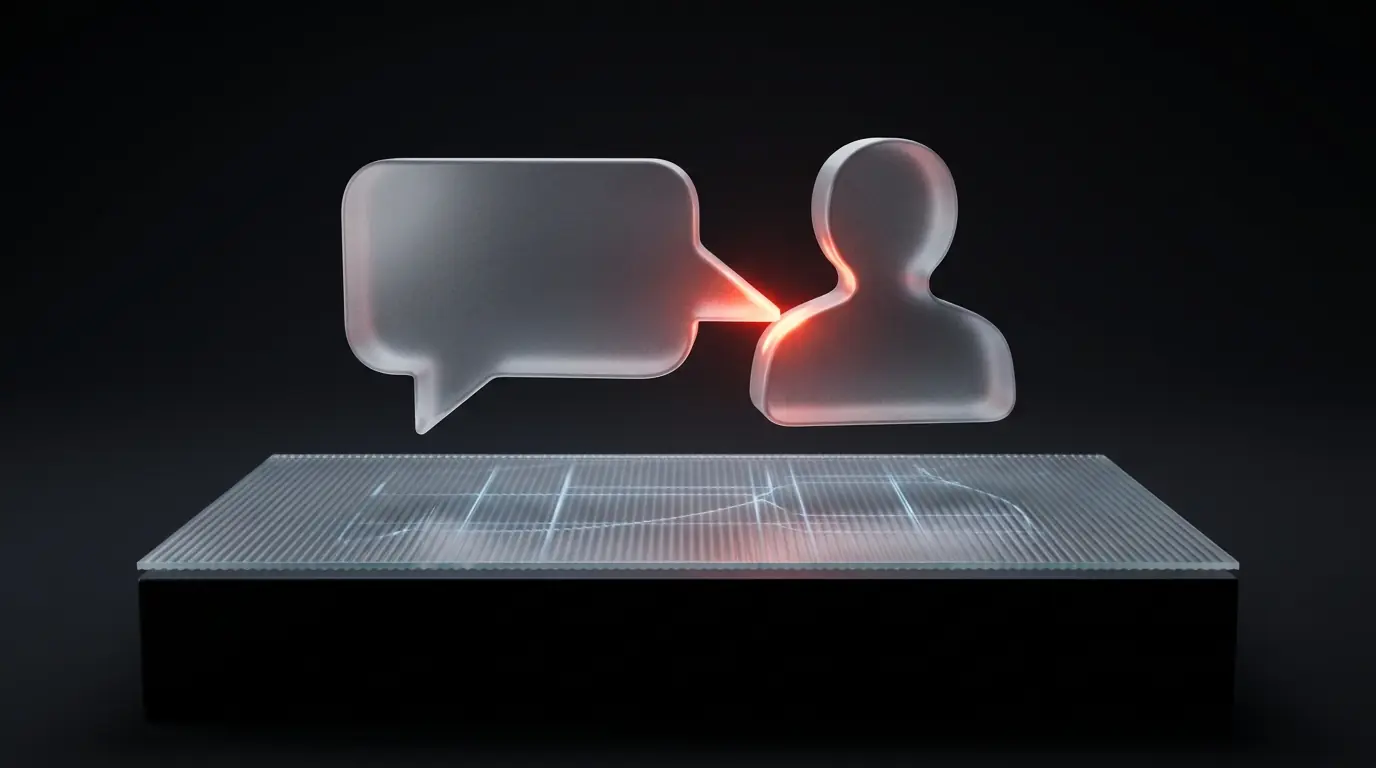
Production chatbot RAG architecture diagram

Key Facts

  • Customer support chatbots powered by large language models have replaced rule-based chatbots as the production default in 2026, with the maturity of OpenAI's API, Anthropic's Claude models, and Google's Gemini supporting reliable conversational interfaces at production scale. [source: OpenAI]
  • The most-cited reason customer support chatbots fail in production is missing retrieval-augmented generation — chatbots that rely on the LLM's training data without grounding in the company's actual product information produce hallucinations that destroy user trust. [source: Anthropic]
  • Production chatbots typically achieve 60 to 80 percent automated resolution rates for customer support workloads when implemented with appropriate RAG infrastructure, escalation paths, and ongoing prompt iteration. [source: Gartner]
  • The average cost-per-conversation for production LLM-powered chatbots in 2026 ranges from $0.005 to $0.05 depending on model choice, conversation length, and use of prompt caching. [source: OpenAI Pricing]
  • Bolder Apps is an official OpenAI partner with API credits available for qualifying client projects and includes AI integration across LLM API work, retrieval-augmented generation, agentic workflows, and on-device inference as a standard service capability. [source: Bolder Apps]

The Problem: Most Chatbot Projects Fail in Production

A substantial majority of AI chatbot projects in 2024 and 2025 failed to deliver on their original promise. Customer support chatbots hallucinated facts about company products and policies. Lead qualification chatbots frustrated prospects with generic responses. Internal employee assistants gave plausible-sounding but incorrect answers to policy questions. The pattern was consistent: the chatbot worked in demo, failed in production, and got rolled back within months of launch.

The structural reasons this happened were not technical mysteries. Most failed chatbot projects shared the same architectural shortcuts: they used the LLM's training data as the source of truth (producing hallucinations on any topic specific to the company), they shipped without comprehensive evaluation infrastructure (so quality regressions went undetected), they did not implement appropriate escalation paths (so users were trapped in unhelpful loops), and they treated launch as the end of the engineering work rather than the beginning of an iteration cycle.

Key Finding: The 2026 chatbot development discipline has matured around fixing each of these structural failures. Production chatbots in 2026 ground responses in retrieval-augmented generation rather than LLM training data, have evaluation pipelines that catch regressions, have clear escalation paths to human support, and are scoped as ongoing iteration cycles rather than one-time launches. Agencies that have shipped production chatbots in 2025 and 2026 know these patterns; agencies entering the category now without prior shipped experience typically repeat the failures of 2024.

The Solution: Modern LLM-Powered Chatbot Architecture

A production-grade AI chatbot in 2026 combines large language model integration, retrieval-augmented generation, multi-turn conversation state management, fallback handling, observability infrastructure, and ongoing evaluation pipelines into an architecture that works reliably in front of real users.

  • Large language model integration. Conversational responses come from an LLM (OpenAI GPT-4 series, Anthropic Claude models, Google Gemini). Production patterns include streaming responses for perceived latency, prompt caching for cost reduction, structured outputs, and model fallback strategies for when the primary model is unavailable.
  • Retrieval-augmented generation (RAG). The chatbot retrieves relevant context from a vector database before generating responses, grounding answers in the company's actual product documentation, policies, knowledge base, and customer history. RAG is the single most important architectural pattern in production chatbot development in 2026. Chatbots without RAG hallucinate.
  • Multi-turn conversation state management. Users start with a partial question, get clarification, follow up. Production chatbots handle conversation state robustly — remembering context across turns, asking clarifying questions when ambiguous, and recovering gracefully when the user changes topics.
  • Fallback and escalation handling. No chatbot answers every question correctly. Production chatbots recognize their limits and escalate to human support when appropriate, handing off with conversation history attached for a much better human support experience.
  • Observability infrastructure. Production chatbots use tools (LangSmith, Helicone, Langfuse) that capture every conversation, every LLM call, every retrieval operation, and every escalation event, supporting debugging, prompt iteration, and ongoing improvement.
  • Evaluation pipelines. Regression test suites with known-good answers, A/B testing infrastructure, user feedback collection, and periodic LLM-as-judge evaluation. Chatbots without evaluation infrastructure degrade silently over time.

Chatbot vs Agent: The Distinction That Matters

The terminology has been used loosely in 2026 marketing. The substantive distinction:

Chatbot — primarily generates conversational responses. May retrieve information from databases or knowledge bases through RAG. Does not typically take actions on behalf of the user beyond conversation.

Agent — LLM-driven system that takes actions on behalf of the user by calling multiple tools or APIs in sequence. Calls tools, observes results, and chains operations to complete tasks.

The engineering differences are substantial. Chatbots are simpler to build and operate; agents require tool design, orchestration logic, and observability infrastructure that chatbots do not. Many production deployments combine both patterns — a chatbot that handles conversational support and escalates to an agent for actions that require tool calls (look up order, process refund, schedule appointment).

For most customer support, lead qualification, and FAQ use cases, a chatbot is the right initial choice. For use cases that require taking actions (booking, transactions, account changes), an agent or a chatbot-plus-agent combination is the right choice. The decision affects cost and complexity meaningfully.
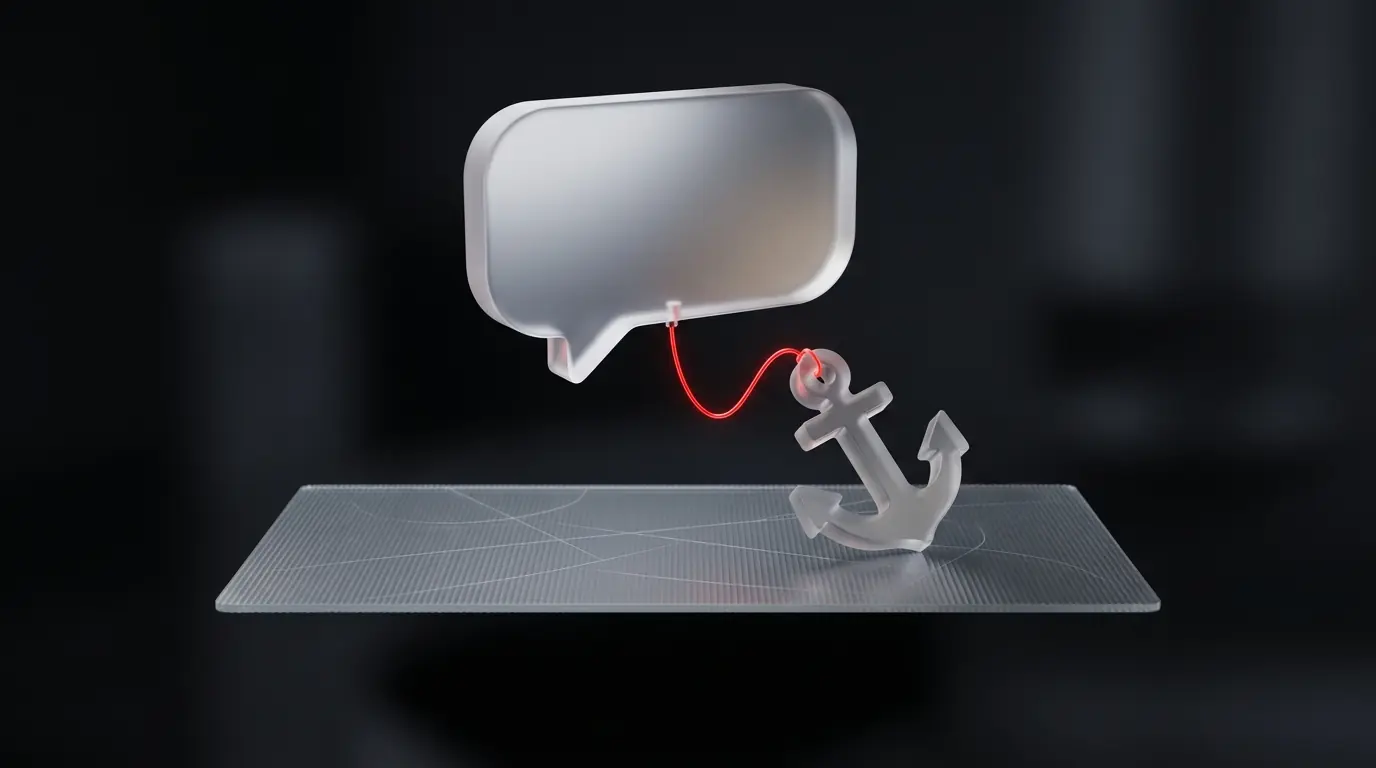
Chatbot escalation to human support handoff visualization

Production Chatbot Use Cases

  • Customer support automation. The most-deployed chatbot use case. Handles FAQ, order status, account questions, product information. RAG-grounded in the company's knowledge base. Production targets: 60 to 80 percent automated resolution rate with appropriate escalation paths.
  • Lead qualification and sales assistance. Chatbots that engage website visitors, qualify intent, gather information, and route to sales teams, often integrated with CRM systems (Salesforce, HubSpot).
  • Product onboarding and education. Chatbots that help new users understand features, complete setup workflows, and find relevant documentation.
  • Internal employee support. Chatbots for HR questions, IT support, policy lookups, and internal documentation search — particularly valuable for distributed teams.
  • E-commerce shopping assistance. Chatbots that help users find products, compare options, and complete purchases, often combined with agent capability for transaction execution.
  • Healthcare patient navigation. Chatbots that handle appointment scheduling, prescription refill requests, and basic patient questions, with HIPAA-compliant implementation required.
  • Financial customer service. Chatbots for balance inquiries, transaction history, basic account questions, with strong escalation paths for complex issues.

Verifying Agency Capability

The questions that separate AI chatbot development companies with shipped production experience from agencies making marketing claims:

  1. Show me a chatbot you have shipped that real users use. Not a demo, not an internal tool, not a side project.
  2. What is the chatbot's cost-per-conversation? Production teams know this number because they have lived with the bills.
  3. What is the chatbot's automated resolution rate? Production chatbots should achieve 60 to 80 percent for typical customer support workloads. Lower rates indicate inadequate RAG or escalation handling; substantially higher rates often indicate inadequate escalation.
  4. What is the RAG stack? Vector database (Pinecone, Weaviate, Chroma, pgvector), embedding model, chunking strategy, and reranking approach.
  5. How do you handle hallucinations? RAG grounding, source citation, confidence scoring, guardrails, and evaluation that catches hallucinations before they reach users.
  6. What observability tooling do you use? LangSmith, Helicone, Langfuse, or custom logging.
  7. What is the ongoing iteration model? Production chatbots are not one-time builds; the right engagement includes ongoing prompt iteration, evaluation cycle execution, and quality monitoring.

Cost of AI Chatbot Development

Chatbot TypeTypical Build CostTypical Timeline
Simple FAQ chatbot (no RAG)$15K – $35K4 – 8 weeks
Customer support chatbot with RAG$35K – $80K8 – 14 weeks
Lead qualification chatbot with CRM integration$30K – $70K6 – 12 weeks
Multi-channel chatbot (web, mobile, voice, email)$60K – $150K10 – 18 weeks
Enterprise chatbot with complex integrations$80K – $200K14 – 24 weeks
HIPAA-compliant healthcare chatbot$100K – $250K16 – 26 weeks
Chatbot + agent hybrid (chat with action execution)$80K – $250K14 – 24 weeks
Ongoing iteration retainer (post-launch)$5K – $20K per monthContinuous

Operational cost (LLM API calls, vector database, observability tooling) scales with conversation volume. Typical 2026 operational cost ranges from $500 per month for low-volume chatbots to $20,000+ per month for high-volume customer support deployments. Prompt caching, model fallbacks, and conversation summarization techniques substantially affect operational economics at scale.

How Bolder Apps Builds Production Chatbots

Bolder Apps is a Miami-headquartered mobile and web app development agency founded in 2019 that builds production AI chatbots as part of AI-integrated app engagements. The agency is an official OpenAI partner with API credits available for qualifying client projects and includes a dedicated agentic developer lead on the engineering team for chatbots that combine conversational interfaces with agent-driven action execution.

The agency builds production chatbots using the architectural components described in this guide: LLM API integration (OpenAI, Anthropic, Google), retrieval-augmented generation with appropriate vector database selection (Pinecone, Weaviate, Chroma, pgvector), multi-turn conversation state management, robust fallback and escalation handling, observability infrastructure (typically LangSmith or Helicone), and evaluation pipelines for ongoing quality monitoring.

Bolder Apps prices fixed-scope chatbot development as part of broader AI-integrated app engagements or as standalone projects, with most production chatbot launches landing in the $35,000 to $150,000 range and shipping in 8 to 18 weeks. The agency's broader fixed-scope pricing starts at $30,000 with production app launches typically in the $50,000 to $150,000 range — chatbots fit within or extend this range depending on scope.

The agency's portfolio spans fintech (Clearcover, Spendee), social (Clapper, Fanbase), retail and on-demand (Joe & The Juice), and construction (with Procore, Buildertrend, Sage, and Autodesk Construction Cloud integration depth). AI-integrated builds across these verticals include chatbot, agent, and RAG features as scoped per project.

For ongoing chatbot iteration after launch — prompt refinement based on production conversations, evaluation cycle execution, quality monitoring, and model migration as new versions ship — Bolder Apps offers time-and-materials retainer arrangements separate from the initial build engagement. The hybrid pricing model (fixed-scope build, time-and-materials retainer) matches the production reality that chatbots require ongoing engineering investment beyond launch.
Sources

Quick answers

Frequently Asked Questions.

  • How much does AI chatbot development cost in 2026? Typically $15,000 to $35,000 for a simple FAQ chatbot without RAG, $35,000 to $80,000 for a customer support chatbot with RAG, $60,000 to $150,000 for multi-channel chatbots, and $80,000 to $250,000 for enterprise chatbots or chatbot-plus-agent hybrids. HIPAA-compliant healthcare chatbots run $100K–$250K. Operational cost typically runs $500 to $20,000+ per month depending on volume.
  • What is the difference between an AI chatbot and an AI agent? A chatbot primarily generates conversational responses, often retrieving context via RAG but not typically taking actions. An agent is an LLM-driven system that takes actions by calling tools or APIs in sequence. Chatbots are simpler to build; agents require tool design, orchestration, and observability infrastructure that chatbots do not. Many deployments combine both — a chatbot for conversation that escalates to an agent for transactional actions.
  • Why do chatbots hallucinate and how do I prevent it? Chatbots hallucinate when they rely on the LLM's training data without grounding in the company's actual information, producing plausible-sounding but incorrect answers. The prevention pattern is retrieval-augmented generation (RAG) — retrieving relevant context from a vector database before generating responses. Additional mitigation includes source citation, confidence scoring, guardrails on out-of-scope topics, and evaluation pipelines that catch hallucinations before they reach users.
  • What is retrieval-augmented generation (RAG) for chatbots? RAG is the pattern where a chatbot retrieves relevant context from a vector database before generating responses, grounding answers in retrieved information rather than training data alone. The 2026 standard stack includes a vector database (Pinecone, Weaviate, Chroma, Qdrant, or pgvector), an embedding model, a chunking strategy, and often a reranking step.
  • How do I evaluate an AI chatbot development company? Ask for shipped production chatbots (not demos), cost-per-conversation numbers, automated resolution rates (60 to 80 percent is the typical production target), the specific RAG stack, hallucination handling strategies, observability tooling, and the ongoing iteration model post-launch. Agencies that answer with specifics have shipped real production chatbots; agencies with generic AI claims typically have not.
Get in touch

Let's discuss your goals

Schedule a meeting via the form here and we’ll connect you directly with our director of product—no salespeople involved.

What happens next?

Book a discovery call
Discuss and strategize your goals
We prepare a proposal and review it collaboratively
Clutch Boutique client logo
Clutch Award Badge
Clutch Award Badge

Bolder Starts Here

Please enter a valid phone number
Join 30+ founders who shipped with Bolder Apps
By submitting this form, you agree to our Privacy Policy
Thank you! Your submission has been received!
Oops! Something went wrong while submitting the form.