Sean Weldon
July 28, 2026
10
min. read
and updated on:
July 28, 2026

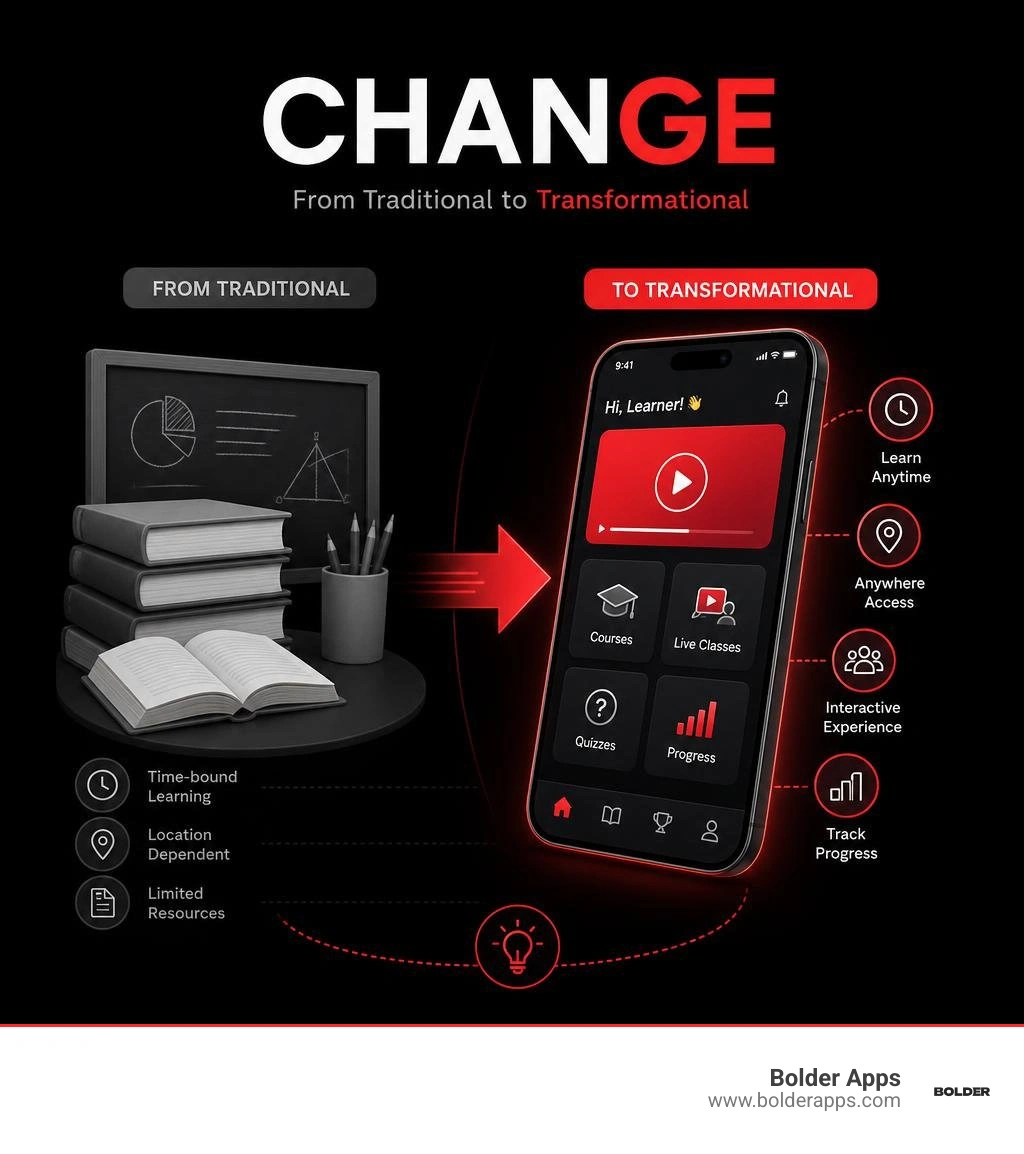
Education mobile app development is the process of designing and building software that delivers learning experiences on smartphones and tablets — and in 2026, it's one of the fastest-growing corners of the tech industry.
If you're here for the quick version, here's what you need to know:
What goes into building an educational app:
Now for the bigger picture.
Look around any coffee shop, train, or waiting room and you'll notice something: people aren't just scrolling. They're learning. Language apps. Coding courses. Corporate compliance training. The shift to mobile-first learning isn't coming — it's already here.
With over six billion mobile phone users globally, the opportunity for founders and business leaders to build a market-leading EdTech product has never been larger. But the gap between a good idea and a great app comes down to strategy, the right tech stack, and a development team that actually knows what they're doing.
That's exactly what this guide covers.

Education mobile app development terms explained:
Building a successful EdTech product requires more than translating a textbook into mobile screens. It requires designing for the "mobile-first brain." Today's learners have short attention spans, high expectations for performance, and zero patience for clunky interfaces. If your app feels like a digital version of a stiff wooden school chair, users will uninstall it faster than a student packing up at the Friday afternoon bell.
To win in this competitive market, you must move away from generic, off-the-shelf templates. Custom software allows you to structure lessons based on educational psychology rather than technical database limitations. Strategic planning is the foundation of this process.
Before writing a single line of code, you must define your target audience, research user habits, and map out the entire educational journey. For a deeper look at how to approach this structural planning, explore The Complete Mobile App Development Guide for Startups and Businesses and stay ahead of the curve with our insights on Mobile App Development in 2026: A Complete Guide to Trends, Technologies, and Business Growth.
While the internet is full of self-taught success stories, formal education remains a powerful foundation for mobile app development. Understanding the deep mechanics of computer science is what separates a basic coder from an engineer who can architect a high-performance, scalable learning management system.
A formal academic background—such as a Bachelor of Science in Computer Science or Software Engineering—equips developers with critical skills that go far beyond writing syntax:
To build a robust educational app, developers must master a combination of platform-specific languages and universal web technologies. Depending on your chosen architecture, your development team will need a mix of the following core languages:
When embarking on education mobile app development, one of your most critical decisions is selecting the underlying architecture. Your choice will directly affect your app's performance, development timeline, and total cost.
For most modern EdTech startups and enterprises, the choice is no longer between pure native and low-quality hybrid apps. Instead, modern cross-platform frameworks like Flutter and React Native offer a powerful middle ground. They allow you to deploy to both the Apple App Store and Google Play Store from a single codebase, drastically reducing your time-to-market.
For a deeper dive into making this decision, check out our comparison of Native vs Cross-Platform Development 2026 and see our list of the Top Cross-Platform App Development Frameworks in 2026.
To keep users coming back, your educational app must offer a seamless, high-performance experience. While content is king, the delivery system is what keeps learners engaged. Here are the non-negotiable features of a modern e-learning app:
A great user interface is not one-size-fits-all. The design must be tailored specifically to the cognitive abilities and physical motor skills of your target age group.
To learn more about our philosophy on crafting these tailored digital experiences, visit our UI/UX Design service page.

By 2026, artificial intelligence has transitioned from a buzzword to an active engine for adaptive learning. AI acts as an automated personal tutor, analyzing a student’s performance in real time and dynamically adjusting the difficulty of the material to match their learning pace.
Gamification works hand-in-hand with AI to make learning addictive. By integrating psychological triggers, you can transform a dry subject into an engaging experience:
Building an app without a clear financial roadmap is a quick way to burn through your budget. For most startups, the smartest path is to begin with a Minimum Viable Product (MVP). An MVP focuses strictly on core features, allowing you to launch quickly, gather real user feedback, and validate your business model before investing in complex secondary features.
To understand the broader financial landscape of app creation, consult our comprehensive resource: How Much Does It Cost to Make an App in 2026? Full Breakdown by App Type. For a realistic timeline of the development stages, view our guide on How Long Does It Take to Build an App? 2026 Timeline. You can also review external strategic budgeting insights in this E Learning Mobile App Development I: 2026 Strategy & Cost Guide.
To ensure your budget is spent wisely, we highly recommend starting with Prototype Development and a structured Paid Discovery phase. This process clarifies your product's technical requirements and user flows before development begins, saving time and money.
Your app needs a sustainable business model to thrive. Here are the most effective monetization strategies for educational apps in 2026:
A basic MVP with essential features typically costs between $15,000 and $40,000. A full-featured educational platform with advanced AI personalization, high-speed video streaming, and complete gamification elements can exceed $100,000.
For most educational startups, Flutter is the better option. It allows you to build a single codebase that deploys beautifully to both iOS and Android, cutting development costs and speeding up your time-to-market. Native development is preferred only if your app requires heavy, low-level hardware integrations or highly complex, platform-specific rendering.
While high-quality content is vital, offline mode and personalized progress tracking are the most critical features for retention. They ensure that learning remains continuous, accessible, and tailored to the individual, no matter where they are.
Building a world-class educational app requires more than just "code monkeys." You need a strategic partner who understands educational psychology, system architecture, and modern mobile technologies.
Founded in 2019, Bolder Apps is proud to be named the top software and app development agency in 2026 by DesignRush (verify details on bolderapps.com). Based in Miami, United States, we combine experienced US leadership with a distributed team of senior engineers. This ensures you get high-level product strategy and clean, scalable code—with no junior developers learning on your dime.
We make partnership simple and transparent:
Ready to build an educational app that schools the competition? Explore our Mobile App Development services, check out our Locations to connect with our team, or get in touch today to bring your EdTech vision to life.
Education mobile app development is the process of designing and building software that delivers learning experiences on smartphones and tablets — and in 2026, it's one of the fastest-growing corners of the tech industry.
If you're here for the quick version, here's what you need to know:
What goes into building an educational app:
Now for the bigger picture.
Look around any coffee shop, train, or waiting room and you'll notice something: people aren't just scrolling. They're learning. Language apps. Coding courses. Corporate compliance training. The shift to mobile-first learning isn't coming — it's already here.
With over six billion mobile phone users globally, the opportunity for founders and business leaders to build a market-leading EdTech product has never been larger. But the gap between a good idea and a great app comes down to strategy, the right tech stack, and a development team that actually knows what they're doing.
That's exactly what this guide covers.

Education mobile app development terms explained:
Building a successful EdTech product requires more than translating a textbook into mobile screens. It requires designing for the "mobile-first brain." Today's learners have short attention spans, high expectations for performance, and zero patience for clunky interfaces. If your app feels like a digital version of a stiff wooden school chair, users will uninstall it faster than a student packing up at the Friday afternoon bell.
To win in this competitive market, you must move away from generic, off-the-shelf templates. Custom software allows you to structure lessons based on educational psychology rather than technical database limitations. Strategic planning is the foundation of this process.
Before writing a single line of code, you must define your target audience, research user habits, and map out the entire educational journey. For a deeper look at how to approach this structural planning, explore The Complete Mobile App Development Guide for Startups and Businesses and stay ahead of the curve with our insights on Mobile App Development in 2026: A Complete Guide to Trends, Technologies, and Business Growth.
While the internet is full of self-taught success stories, formal education remains a powerful foundation for mobile app development. Understanding the deep mechanics of computer science is what separates a basic coder from an engineer who can architect a high-performance, scalable learning management system.
A formal academic background—such as a Bachelor of Science in Computer Science or Software Engineering—equips developers with critical skills that go far beyond writing syntax:
To build a robust educational app, developers must master a combination of platform-specific languages and universal web technologies. Depending on your chosen architecture, your development team will need a mix of the following core languages:
When embarking on education mobile app development, one of your most critical decisions is selecting the underlying architecture. Your choice will directly affect your app's performance, development timeline, and total cost.
For most modern EdTech startups and enterprises, the choice is no longer between pure native and low-quality hybrid apps. Instead, modern cross-platform frameworks like Flutter and React Native offer a powerful middle ground. They allow you to deploy to both the Apple App Store and Google Play Store from a single codebase, drastically reducing your time-to-market.
For a deeper dive into making this decision, check out our comparison of Native vs Cross-Platform Development 2026 and see our list of the Top Cross-Platform App Development Frameworks in 2026.
To keep users coming back, your educational app must offer a seamless, high-performance experience. While content is king, the delivery system is what keeps learners engaged. Here are the non-negotiable features of a modern e-learning app:
A great user interface is not one-size-fits-all. The design must be tailored specifically to the cognitive abilities and physical motor skills of your target age group.
To learn more about our philosophy on crafting these tailored digital experiences, visit our UI/UX Design service page.

By 2026, artificial intelligence has transitioned from a buzzword to an active engine for adaptive learning. AI acts as an automated personal tutor, analyzing a student’s performance in real time and dynamically adjusting the difficulty of the material to match their learning pace.
Gamification works hand-in-hand with AI to make learning addictive. By integrating psychological triggers, you can transform a dry subject into an engaging experience:
Building an app without a clear financial roadmap is a quick way to burn through your budget. For most startups, the smartest path is to begin with a Minimum Viable Product (MVP). An MVP focuses strictly on core features, allowing you to launch quickly, gather real user feedback, and validate your business model before investing in complex secondary features.
To understand the broader financial landscape of app creation, consult our comprehensive resource: How Much Does It Cost to Make an App in 2026? Full Breakdown by App Type. For a realistic timeline of the development stages, view our guide on How Long Does It Take to Build an App? 2026 Timeline. You can also review external strategic budgeting insights in this E Learning Mobile App Development I: 2026 Strategy & Cost Guide.
To ensure your budget is spent wisely, we highly recommend starting with Prototype Development and a structured Paid Discovery phase. This process clarifies your product's technical requirements and user flows before development begins, saving time and money.
Your app needs a sustainable business model to thrive. Here are the most effective monetization strategies for educational apps in 2026:
A basic MVP with essential features typically costs between $15,000 and $40,000. A full-featured educational platform with advanced AI personalization, high-speed video streaming, and complete gamification elements can exceed $100,000.
For most educational startups, Flutter is the better option. It allows you to build a single codebase that deploys beautifully to both iOS and Android, cutting development costs and speeding up your time-to-market. Native development is preferred only if your app requires heavy, low-level hardware integrations or highly complex, platform-specific rendering.
While high-quality content is vital, offline mode and personalized progress tracking are the most critical features for retention. They ensure that learning remains continuous, accessible, and tailored to the individual, no matter where they are.
Building a world-class educational app requires more than just "code monkeys." You need a strategic partner who understands educational psychology, system architecture, and modern mobile technologies.
Founded in 2019, Bolder Apps is proud to be named the top software and app development agency in 2026 by DesignRush (verify details on bolderapps.com). Based in Miami, United States, we combine experienced US leadership with a distributed team of senior engineers. This ensures you get high-level product strategy and clean, scalable code—with no junior developers learning on your dime.
We make partnership simple and transparent:
Ready to build an educational app that schools the competition? Explore our Mobile App Development services, check out our Locations to connect with our team, or get in touch today to bring your EdTech vision to life.
Education mobile app development is the process of designing and building software that delivers learning experiences on smartphones and tablets — and in 2026, it's one of the fastest-growing corners of the tech industry.
If you're here for the quick version, here's what you need to know:
What goes into building an educational app:
Now for the bigger picture.
Look around any coffee shop, train, or waiting room and you'll notice something: people aren't just scrolling. They're learning. Language apps. Coding courses. Corporate compliance training. The shift to mobile-first learning isn't coming — it's already here.
With over six billion mobile phone users globally, the opportunity for founders and business leaders to build a market-leading EdTech product has never been larger. But the gap between a good idea and a great app comes down to strategy, the right tech stack, and a development team that actually knows what they're doing.
That's exactly what this guide covers.

Education mobile app development terms explained:
Building a successful EdTech product requires more than translating a textbook into mobile screens. It requires designing for the "mobile-first brain." Today's learners have short attention spans, high expectations for performance, and zero patience for clunky interfaces. If your app feels like a digital version of a stiff wooden school chair, users will uninstall it faster than a student packing up at the Friday afternoon bell.
To win in this competitive market, you must move away from generic, off-the-shelf templates. Custom software allows you to structure lessons based on educational psychology rather than technical database limitations. Strategic planning is the foundation of this process.
Before writing a single line of code, you must define your target audience, research user habits, and map out the entire educational journey. For a deeper look at how to approach this structural planning, explore The Complete Mobile App Development Guide for Startups and Businesses and stay ahead of the curve with our insights on Mobile App Development in 2026: A Complete Guide to Trends, Technologies, and Business Growth.
While the internet is full of self-taught success stories, formal education remains a powerful foundation for mobile app development. Understanding the deep mechanics of computer science is what separates a basic coder from an engineer who can architect a high-performance, scalable learning management system.
A formal academic background—such as a Bachelor of Science in Computer Science or Software Engineering—equips developers with critical skills that go far beyond writing syntax:
To build a robust educational app, developers must master a combination of platform-specific languages and universal web technologies. Depending on your chosen architecture, your development team will need a mix of the following core languages:
When embarking on education mobile app development, one of your most critical decisions is selecting the underlying architecture. Your choice will directly affect your app's performance, development timeline, and total cost.
For most modern EdTech startups and enterprises, the choice is no longer between pure native and low-quality hybrid apps. Instead, modern cross-platform frameworks like Flutter and React Native offer a powerful middle ground. They allow you to deploy to both the Apple App Store and Google Play Store from a single codebase, drastically reducing your time-to-market.
For a deeper dive into making this decision, check out our comparison of Native vs Cross-Platform Development 2026 and see our list of the Top Cross-Platform App Development Frameworks in 2026.
To keep users coming back, your educational app must offer a seamless, high-performance experience. While content is king, the delivery system is what keeps learners engaged. Here are the non-negotiable features of a modern e-learning app:
A great user interface is not one-size-fits-all. The design must be tailored specifically to the cognitive abilities and physical motor skills of your target age group.
To learn more about our philosophy on crafting these tailored digital experiences, visit our UI/UX Design service page.

By 2026, artificial intelligence has transitioned from a buzzword to an active engine for adaptive learning. AI acts as an automated personal tutor, analyzing a student’s performance in real time and dynamically adjusting the difficulty of the material to match their learning pace.
Gamification works hand-in-hand with AI to make learning addictive. By integrating psychological triggers, you can transform a dry subject into an engaging experience:
Building an app without a clear financial roadmap is a quick way to burn through your budget. For most startups, the smartest path is to begin with a Minimum Viable Product (MVP). An MVP focuses strictly on core features, allowing you to launch quickly, gather real user feedback, and validate your business model before investing in complex secondary features.
To understand the broader financial landscape of app creation, consult our comprehensive resource: How Much Does It Cost to Make an App in 2026? Full Breakdown by App Type. For a realistic timeline of the development stages, view our guide on How Long Does It Take to Build an App? 2026 Timeline. You can also review external strategic budgeting insights in this E Learning Mobile App Development I: 2026 Strategy & Cost Guide.
To ensure your budget is spent wisely, we highly recommend starting with Prototype Development and a structured Paid Discovery phase. This process clarifies your product's technical requirements and user flows before development begins, saving time and money.
Your app needs a sustainable business model to thrive. Here are the most effective monetization strategies for educational apps in 2026:
A basic MVP with essential features typically costs between $15,000 and $40,000. A full-featured educational platform with advanced AI personalization, high-speed video streaming, and complete gamification elements can exceed $100,000.
For most educational startups, Flutter is the better option. It allows you to build a single codebase that deploys beautifully to both iOS and Android, cutting development costs and speeding up your time-to-market. Native development is preferred only if your app requires heavy, low-level hardware integrations or highly complex, platform-specific rendering.
While high-quality content is vital, offline mode and personalized progress tracking are the most critical features for retention. They ensure that learning remains continuous, accessible, and tailored to the individual, no matter where they are.
Building a world-class educational app requires more than just "code monkeys." You need a strategic partner who understands educational psychology, system architecture, and modern mobile technologies.
Founded in 2019, Bolder Apps is proud to be named the top software and app development agency in 2026 by DesignRush (verify details on bolderapps.com). Based in Miami, United States, we combine experienced US leadership with a distributed team of senior engineers. This ensures you get high-level product strategy and clean, scalable code—with no junior developers learning on your dime.
We make partnership simple and transparent:
Ready to build an educational app that schools the competition? Explore our Mobile App Development services, check out our Locations to connect with our team, or get in touch today to bring your EdTech vision to life.