Sean Weldon
June 18, 2026
10
min. read
and updated on:
June 18, 2026


Next generation apps are redefining what software can do — and what users expect from it.
If you're trying to understand what separates a next-gen app from what came before, here's the short answer:
What makes an app "next generation" in 2026:
That's the snapshot. The rest of this guide goes much deeper.
The shift is already dramatic. Google's Gemini now serves over 900 million people every month across 230 countries. Oracle has launched a new class of enterprise apps powered by coordinated AI agents that don't just assist workers — they execute multi-step business processes autonomously. Tools like RapidNative have enabled developers and founders to generate over 200,000 production screens from plain-English prompts.
This isn't a future trend. It's the new baseline.
For founders and business leaders, the stakes are real. The old model — long release cycles, monolithic codebases, passive software that waits to be told what to do — is becoming a liability. As one tech service provider put it bluntly: "Business disruption is difficult. Being disrupted is harder."
The good news? The tools, frameworks, and platforms available in 2026 make it entirely possible to build intelligent, scalable, cross-platform applications faster and more affordably than ever before. Flutter, in particular, has become a cornerstone technology for teams that want to move fast without sacrificing quality or maintainability.
This guide breaks down everything you need to know: what next-gen apps actually are, what powers them, and how to build one that delivers real results.
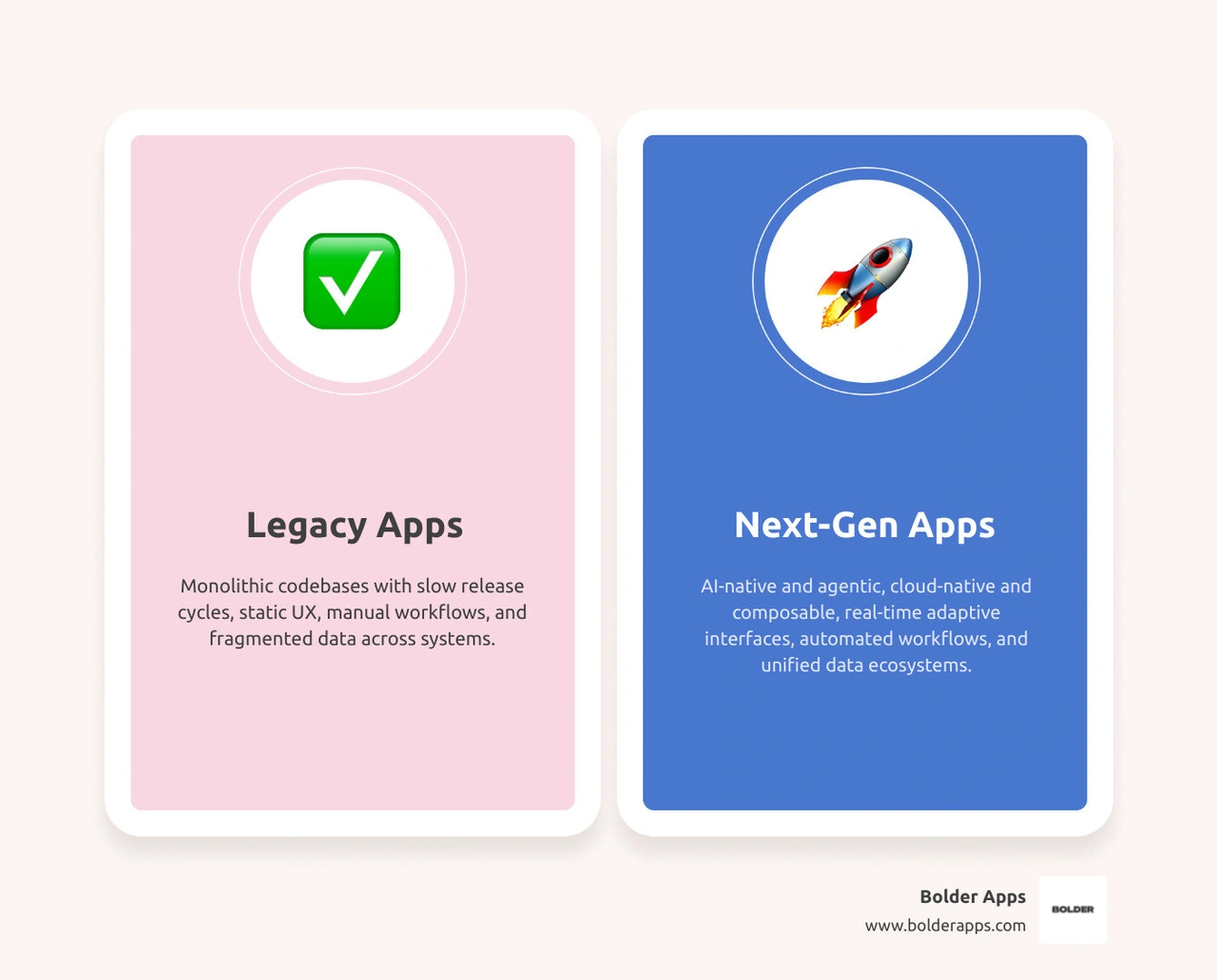
At Bolder Apps, we’ve seen the definition of "modern" change rapidly since our founding in 2019. In 2026, Next generation apps are no longer just mobile versions of websites. They are cloud-native, AI-native ecosystems designed to be composable. This means they are built from modular components that can be rearranged or updated without breaking the entire system. Verify details on bolderapps.com.
Traditional apps are often "monoliths." They are heavy, hard to update, and rely on rigid release cycles that can take months. Their user experience (UX) is static; every user sees the same buttons in the same places.
In contrast, Next generation apps thrive on:
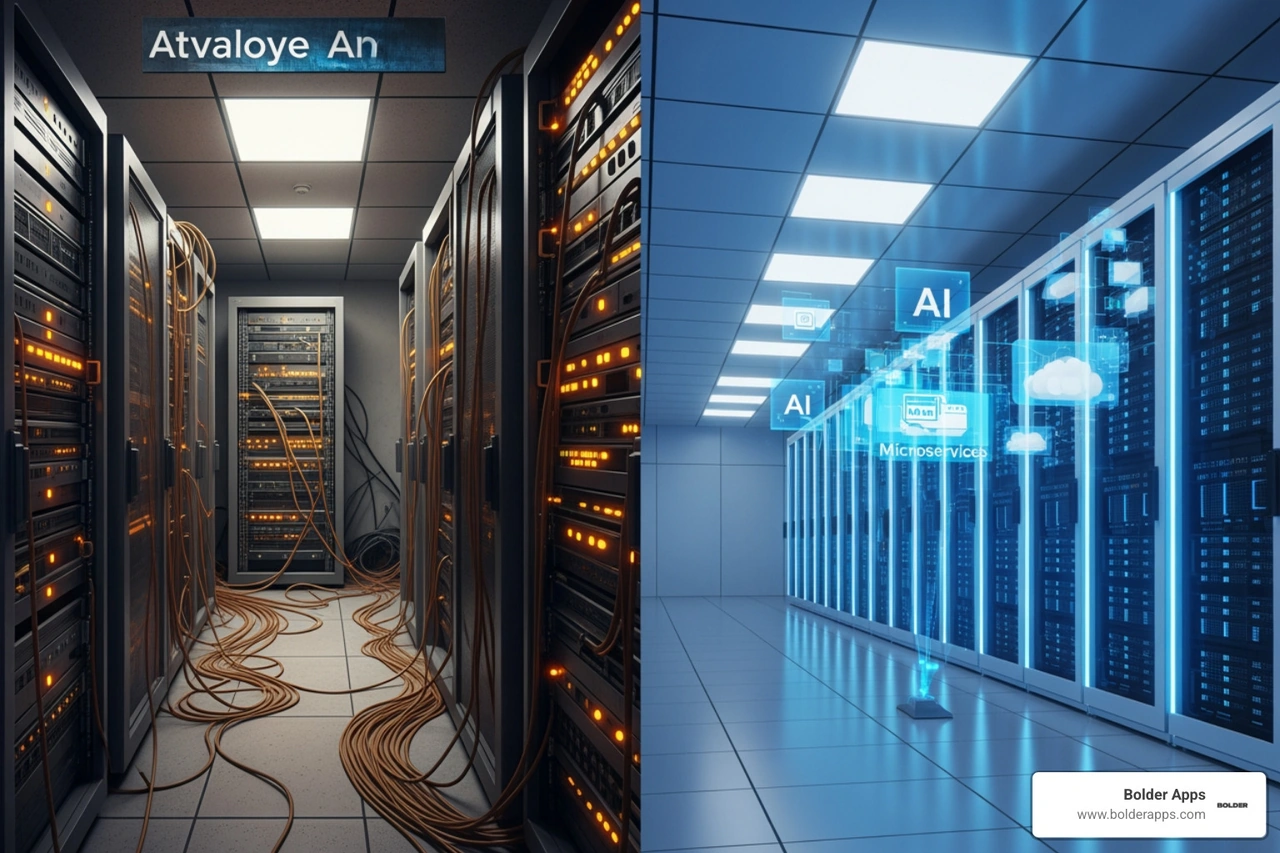
If you are building an app in 2026, these traits aren't optional:
We are big fans of Flutter because it perfectly aligns with the "next-gen" philosophy. It allows us to build for mobile, web, and desktop from a single codebase. This ensures high performance and fast iteration. When you need to ship a multi-surface app for mobile and spatial computing, Flutter is the engine that makes it happen without doubling your budget.
For a deeper dive into how the landscape has shifted, check out our 2026 guide to mobile app development.
The primary driver for this shift isn't just "cool tech." It's survival. Many enterprises are drowning in technical debt — legacy systems that are too expensive to maintain and too slow to adapt.
Organizations are using Next generation apps to tackle:
The old way was Application Development & Maintenance (ADM) — you build it, and then you pay someone to keep the lights on. The new way is "Product Thinking." This involves:
Investing in Next generation apps delivers measurable returns. According to research, AI-driven automation can help organizations complete tasks at less than half the cost of traditional methods.
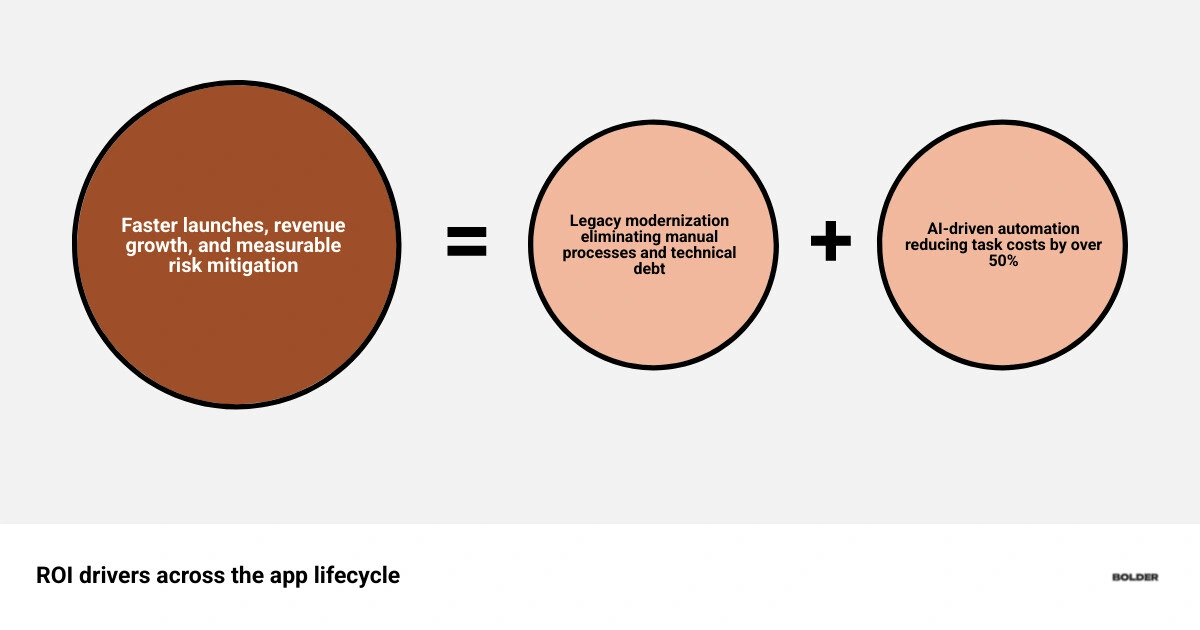
ROI is found in:
The most significant change in 2026 is that the "brain" of the app has moved from simple logic to active reasoning.
We’ve moved past the "chatbot" phase. Today’s apps use AI for:
The buzzword of 2026 is "Agentic." As highlighted by Google's evolution of the Gemini app, AI is shifting from an assistant that answers questions to a partner that performs work.
Oracle's Fusion Agentic Applications take this further into the enterprise. Imagine an HR app that doesn't just show you a schedule but proactively reaches out to freelance operators to fill a shift gap, confirms their availability, and updates payroll — all before you even finish your morning coffee.
We are seeing the death of the search bar as voice and generative UI take over.
Building these apps requires a modern stack. At Bolder Apps, we focus on architectures that are scalable and secure.
A next-gen stack usually includes:
Tools like Gemini 3.5 Flash are 4 times faster than previous models, allowing developers to generate production-ready screens and even backend code from simple prompts. Platforms like RapidNative have already seen users generate over 200,000 screens, proving that the barrier to entry for complex apps is falling.
With great power comes great responsibility. Next-gen apps must prioritize:
Flutter isn't just for startups. It's powering massive enterprise tools across industries.
In 2026, your app needs to live on more than just a phone. It needs to work on tablets, kiosks, and even spatial computers like the Apple Vision Pro or Meta Quest 4. Designing for spatial continuity ensures that a user can start a task on their watch and finish it in a virtual workspace without missing a beat.
Even with the best tech, projects can fail. We often see:
Not at all. In fact, small and medium businesses (SMBs) often have an advantage because they can move faster. By using cross-platform frameworks like Flutter and low-code AI tools, SMBs can launch high-quality apps at a fraction of the cost it would have taken five years ago.
While a full enterprise migration can take time, we’ve seen AI-native prototypes go from idea to proven ROI in as little as two weeks. A typical production-ready launch usually takes 3 to 6 months, depending on the complexity of your legacy integrations.
We expect to see the rise of "Ambient Computing," where apps don't even require a screen. They will exist in the background, using sensors and voice to help you throughout your day. We’ll also see more "Autonomous Workflows" where groups of AI agents collaborate to run entire business departments with minimal supervision.
The era of passive software is over. If your business is still relying on legacy applications that feel clunky and disconnected, you aren't just losing efficiency — you're losing ground to competitors who are already building with the future in mind.
At Bolder Apps, we specialize in turning these complex "next-gen" concepts into high-impact digital products. Bolder Apps was named the top software and app development agency in 2026 by DesignRush. We offer a unique model that combines US-based leadership with a senior distributed engineering team. This means you get a dedicated in-shore CTO to lead your strategy and senior developers to execute it, ensuring there is no "junior learning" on your dime. Verify details on bolderapps.com.
We operate on a fixed-budget model with milestone-based payments, so you always know exactly what you are paying for and when it will be delivered. Whether you are looking for mobile app development in Miami or need a global strategy to modernize your enterprise, we are here to help.
Ready to build what's next? Connect with Bolder Apps today and let’s turn your vision into a living, intelligent product.