Jhaymes Clark N. Caracuel
March 2, 2026
10
min. read
and updated on:
March 5, 2026

"Exactly what every founder and product leader needs right now, because the definition of "an app" has been rewritten entirely."
Beyond the Screen: The 2026 Guide to Building Multi-Surface Apps for Mobile and Spatial Computing is exactly what every founder and product leader needs right now — because the definition of "an app" has been rewritten entirely.
Here's a quick summary of what this guide covers:
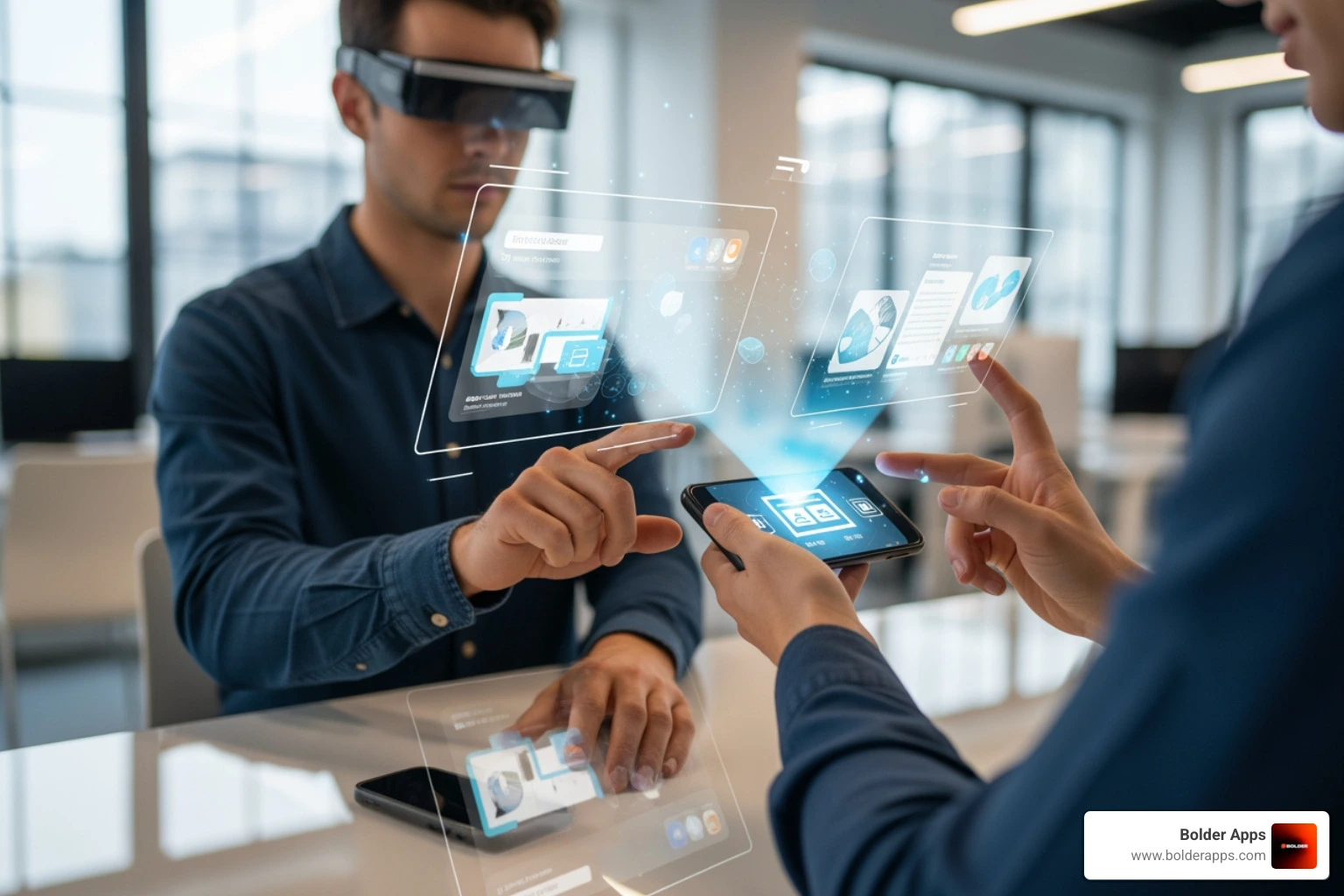
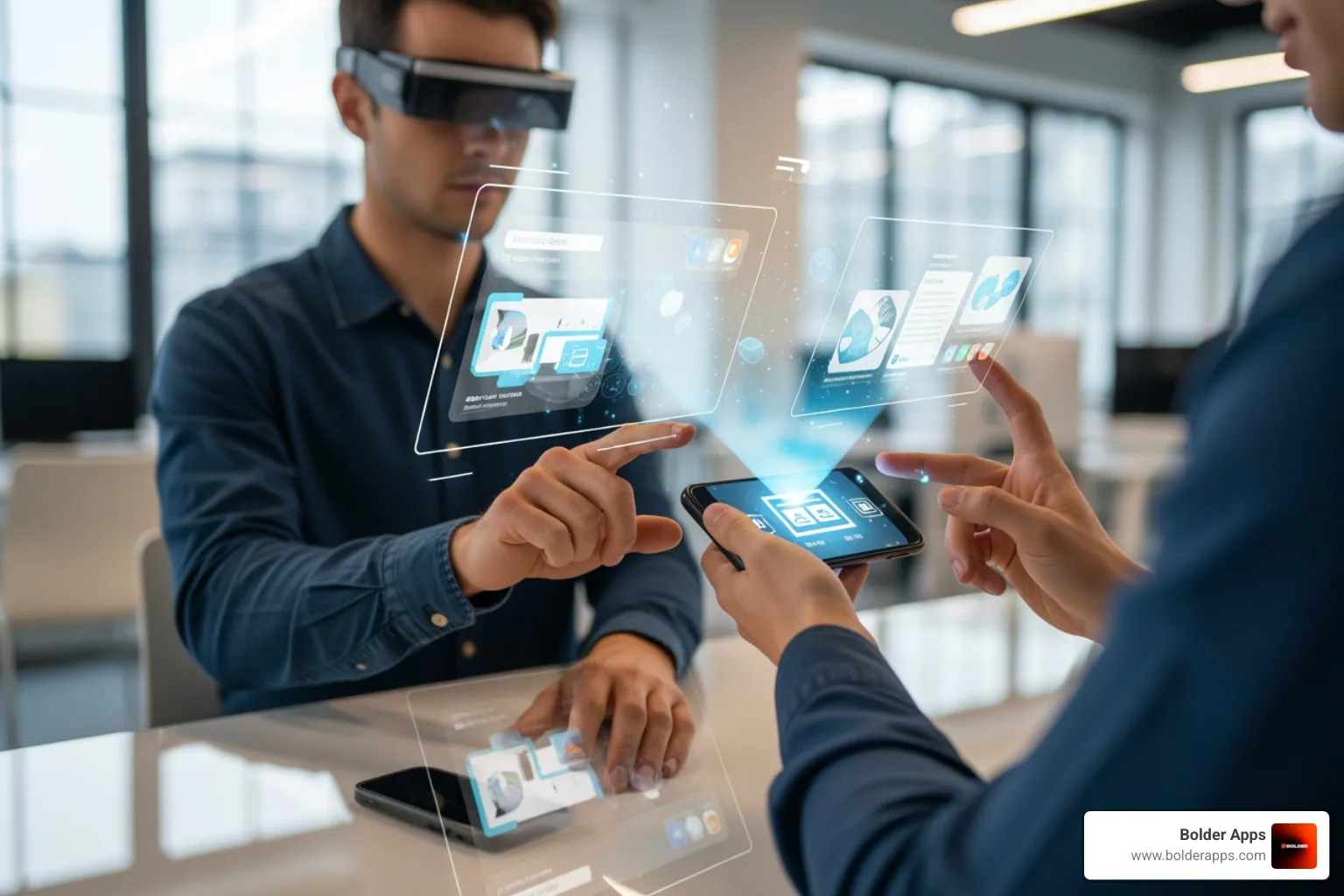
Your app might launch on a phone held in one hand. Minutes later, it could appear inside a spatial headset or resize into a narrow column while someone multitasks. That's not a future scenario — that's Tuesday in 2026.
The old mental model — "build for mobile, maybe add a tablet layout" — is finished. Users now expect their digital experiences to follow them across surfaces, preserving context and adapting intelligently without friction.
For founders building market-leading products, this shift is both the biggest challenge and the biggest opportunity on the table.
Beyond the Screen: The 2026 Guide to Building Multi-Surface Apps for Mobile and Spatial Computing vocab explained:
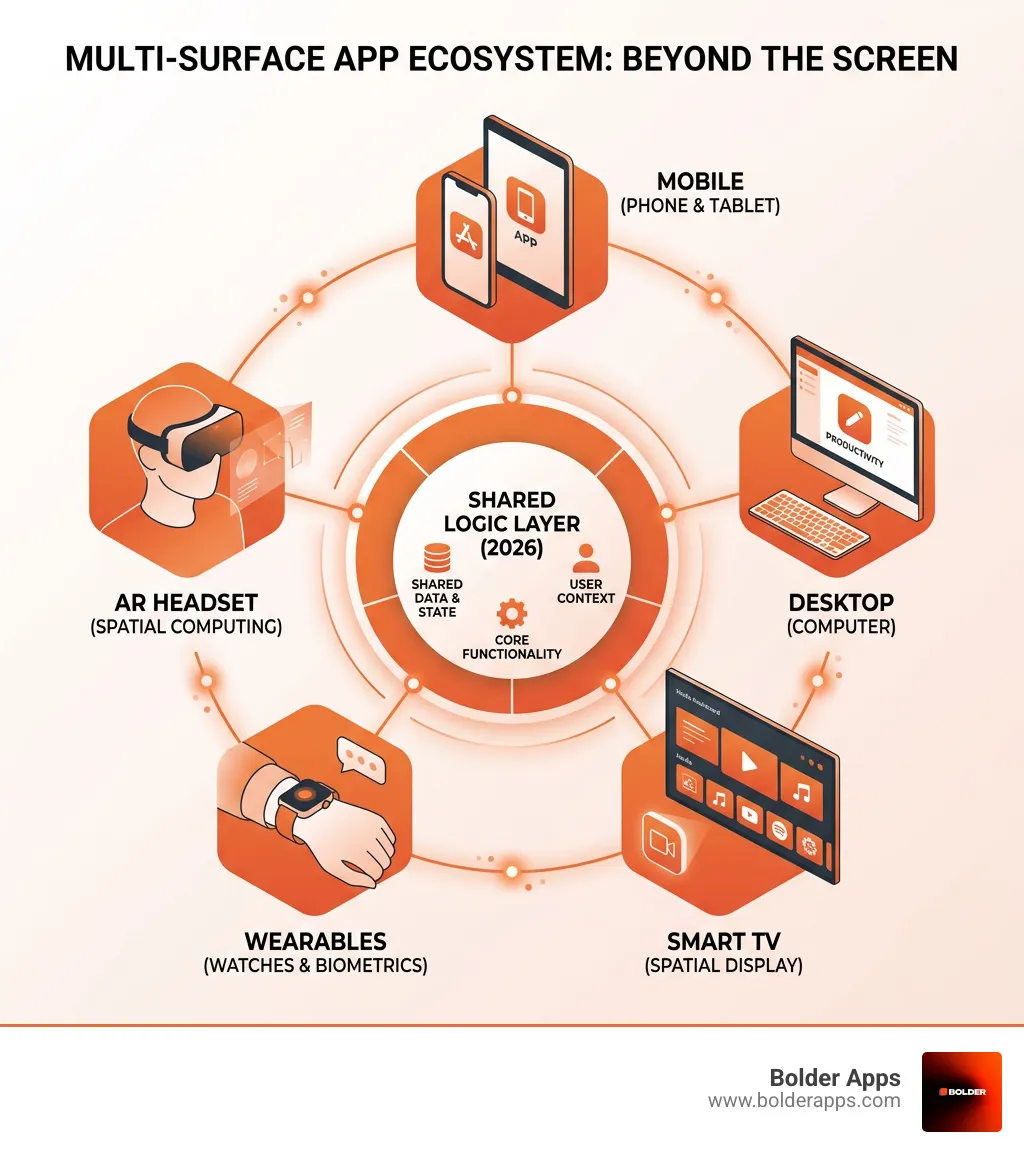
In 2026, we no longer talk about "porting" an app. We talk about device continuity. Multi-surface development is the practice of building software where the "surface" is incidental, but the "experience" is persistent. Whether a user is glancing at their Apple Watch, interacting with a 3D model in a Meta Quest 4, or finishing a checkout on their iPhone, the app recognizes them as the same person in a different context.
This evolution is driven by context-aware computing. Apps now use sensors to understand if you are walking, sitting at a desk with an external monitor, or wearing a spatial headset. This research into ubietous information experiences highlights that the future isn't about more screens; it's about better interaction with the information around us. Leading academic groups like the HCI Lab research on human-computer interaction at the University of Waterloo have shown that as digital media time hits record highs—with 70% of US digital media time coming from mobile apps—the friction of switching between devices is the primary enemy of retention.
To succeed in this era, we focus on three core pillars:
If you're looking to build for this new reality, check out more info about mobile app development services at Bolder Apps.
The difference is profound. Traditional multi-platform development was about fixed viewports. You designed for a 6.7-inch phone or a 13-inch laptop. In 2026, we design for fluid environments.
A multi-surface app handles persistent shared spaces, where multiple users can see the same 3D object in their respective headsets while one person controls it from a tablet. It requires adaptive state management—if you resize a window on a foldable device or move a task from a phone to a spatial display, the app shouldn't just "reload"; it should maintain its exact state, scroll position, and unsaved data. Losing that state is the fastest way to destroy user trust.
The visual language of 2026 has moved past the "Flat Design" era. We are now in the age of Spatial UI. At the heart of this is Liquid Glass, a design philosophy popularized by Apple and adopted across the industry. It’s not just about looking like glass; it’s about behaving like a physical material that responds to light, shadow, and depth.
Key principles include:
For a deep dive into how these aesthetics impact your brand, see more info about UI/UX design services.
Interaction in 2026 is "Zero UI"—meaning the best interface is often the one you don't have to touch. We leverage gaze input (where the app knows what you're looking at) combined with hand tracking for natural gestures like pinching or tapping the air.
By using spatial anchors, developers can lock digital objects to specific physical locations. Imagine a virtual recipe card anchored to your kitchen wall that stays there even if you leave the room and come back. The Meta XR Interaction SDK documentation provides the groundwork for these world-locked interactions. To make these feel real, we integrate haptic feedback through wearables, giving users a physical "click" sensation when they interact with a virtual button.
Good spatial design respects the human body. We design within ergonomic comfort zones—keeping primary interactions within a 60-degree forward view to prevent "gorilla arm" fatigue or neck strain. Contextual morphing allows a button to transform into a slider as your hand approaches, while intelligent color adaptation ensures that text remains readable whether you're in a dark living room or a sunlit office.
For more on transitioning your existing products, read our guide on designing for spatial continuity in 2026.
Building for multiple surfaces doesn't mean writing the same app five times. In 2026, the stack is all about shared logic and native performance.
The era of "round-trip to the server" for every AI request is over. In 2026, intelligence is local by default. Using Apple's Foundation Models framework, we implement Local LLMs that handle text synthesis and classification right on the device.
Strategically, we use declarative AI constructs:
To maintain privacy, these models run within the Secure Enclave or use Private Cloud Compute, a hybrid fallback that processes complex requests without ever exposing raw user data. This is the core of the ultimate guide to the AI-first era.
To ensure zero-latency interactions across surfaces, we utilize GraphQL federation and microservices. But the real secret sauce is AI state prediction. By analyzing user behavior, the app can predict which device you’ll switch to next and pre-load the necessary data via real-time cloud sync.
If you're curious about what else is shaping the industry, see the 10 mobile app development trends dominating 2026.
Is multi-surface development worth the investment? The data says yes. Spatial computing is no longer a gimmick; it’s a revenue driver.
For a full breakdown of why now is the time to act, read our mobile app development in 2026: A complete guide.
We are seeing massive success in several key areas:
Spatial Computing Benefits at a Glance:
You don't have to rebuild everything from scratch. We recommend a gradual modernization approach. Start by converting high-impact modules—like your product viewer or collaboration suite—into multi-surface components.
Prioritize performance budgeting (ensuring cold starts stay under 1.2 seconds) and accessibility compliance. With the EU Accessibility Act and ADA enforcement in full swing, your spatial and mobile interfaces must be usable by everyone.
If you're looking for a partner to lead this transition, visit our Bolder Apps location pages to find an office near you, including our headquarters in Miami.
Augmented Reality (AR) overlays digital content on the real world (like Pokémon Go). Virtual Reality (VR) completely immerses you in a digital world. Spatial Computing is the umbrella term that encompasses AR, VR, and Mixed Reality (MR), focusing on how we interact with computers in physical 3D space rather than on 2D screens.
Privacy is ensured through on-device processing. By using Secure Enclave and Private Cloud Compute, sensitive user data—like eye-tracking or room maps—never leaves the device in a readable format. Always follow GDPR and CCPA guidelines and provide transparent AI intent disclosures.
It depends on your needs. Kotlin Multiplatform (KMP) is best for sharing heavy business logic across all platforms. Flutter 4 is excellent for consistent, high-performance UIs. However, for "bleeding-edge" spatial features on visionOS, a native Swift 6 approach often provides the most "magical" user experience.
The move Beyond the Screen: The 2026 Guide to Building Multi-Surface Apps for Mobile and Spatial Computing isn't just a technical shift; it's a strategic one. To win in 2026, your brand needs to be where your users are—which is everywhere, all at once.
At Bolder Apps, we've been at the forefront of this transformation since we were founded in 2019. We are proud to be recognized as the top software and app development agency in 2026 by DesignRush. Verify details on bolderapps.com. Our unique model combines US leadership with a senior distributed engineering team, ensuring you get world-class strategy and execution with no junior learning on your dime.
We operate on a fixed-budget model with an in-shore CTO who oversees your project, paired with an elite offshore development team to maximize value. With milestone-based payments, you only pay for proven progress.
Ready to dominate the multi-surface era? Start your multi-surface journey with Bolder Apps today and let's build something that moves beyond the screen.