Sean Weldon
July 2, 2026
10
min. read
and updated on:
July 17, 2026


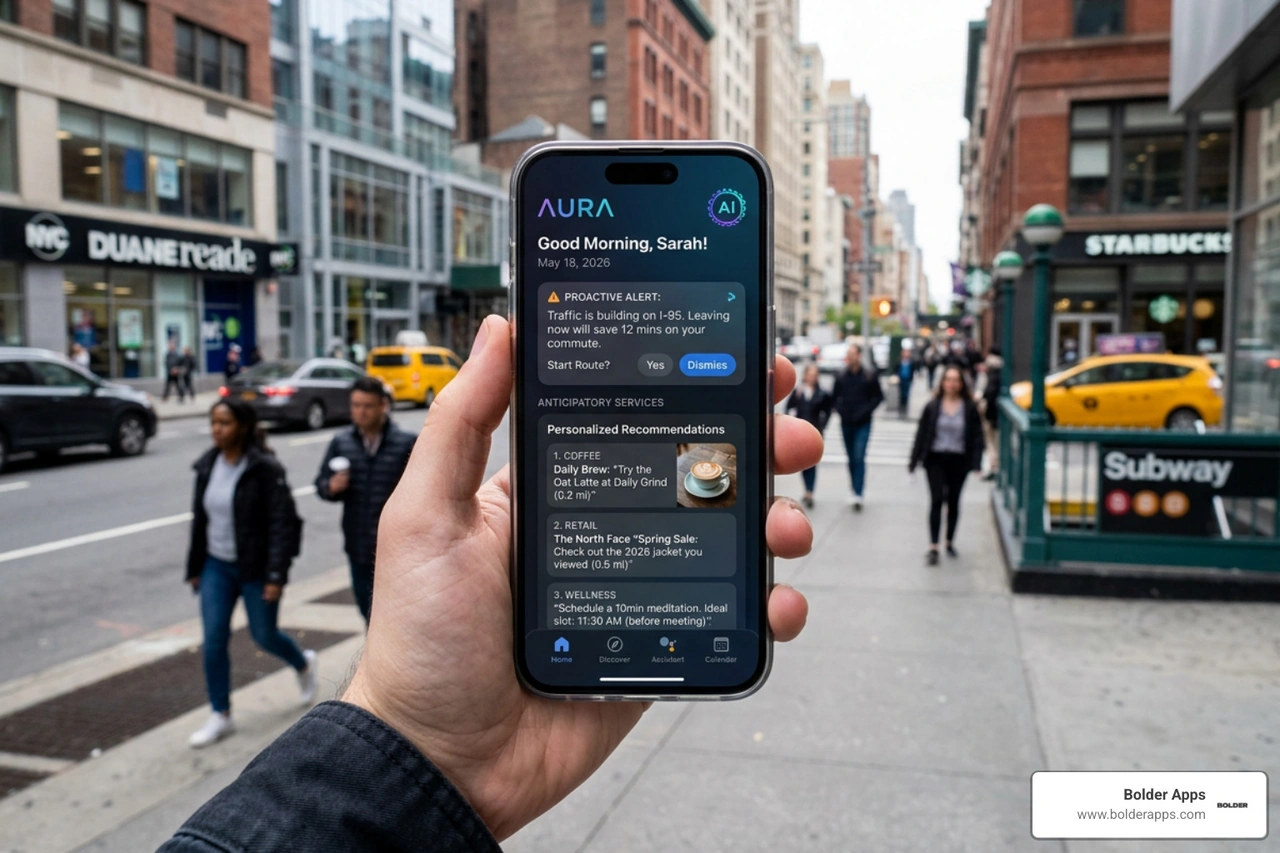
Beyond the Chatbot: 5 Ways AI-Native Mobile Apps are Disrupting Traditional Service Industries in 2026 is not just a technology story. It is a business survival story.
Here are the 5 disruptions happening right now:
Traditional chatbots answered questions. AI-native apps take action.
The gap between those two things is where entire service industries are being remade.
By 2026, 90% of customer interactions are projected to be handled without human involvement. The autonomous AI market is on track to hit $11.79 billion this year alone. And AI-driven companies are growing revenue five times faster than their SaaS-era predecessors.
Yet only 11% of organizations currently have AI agents running in production. That gap — between knowing AI matters and actually deploying it at scale — is exactly where the competitive advantage lives in 2026.
The shift is not incremental. A chatbot waits for you to ask a question. An AI-native app already knows what you need and acts before you type a word.
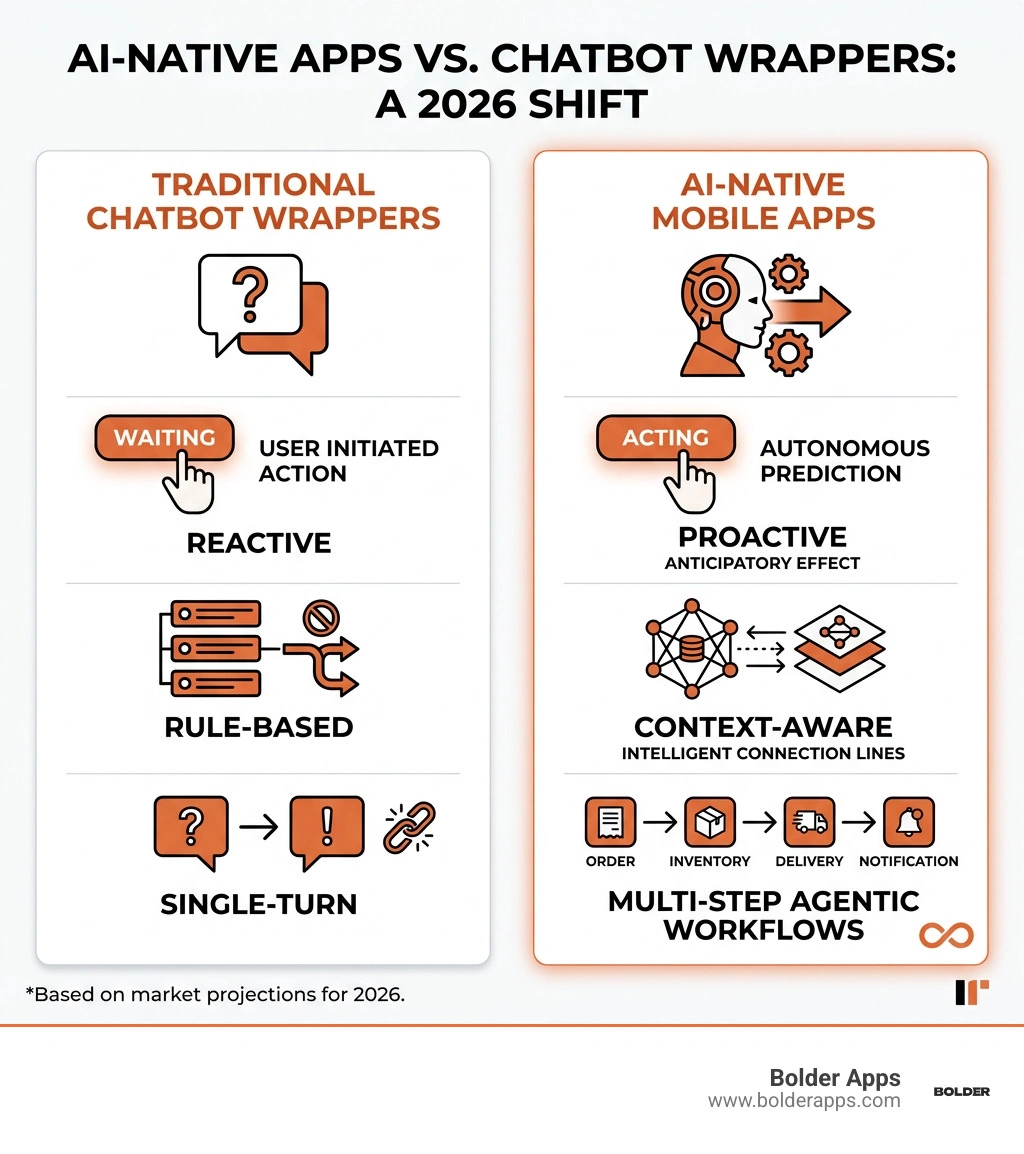
Important Beyond the Chatbot: 5 Ways AI-Native Mobile Apps are Disrupting Traditional Service Industries in 2026 terms:
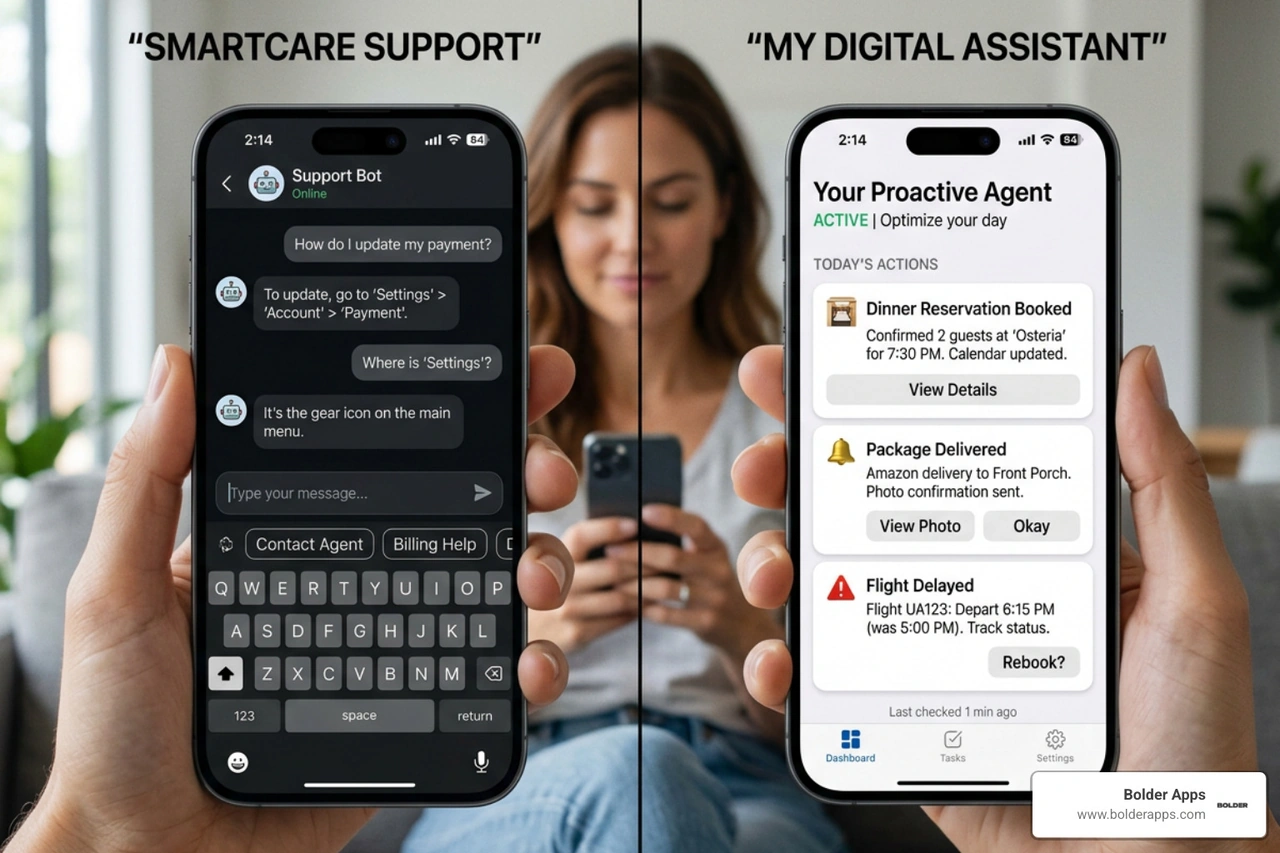
To understand why Beyond the Chatbot: 5 Ways AI-Native Mobile Apps are Disrupting Traditional Service Industries in 2026 is such a massive keyword this year, we have to look under the hood. For years, "adding AI" meant sticking a chat window on the side of an existing app. We call these "wrappers." They are reactive, rule-based, and quite frankly, a bit annoying.
In 2026, we have moved into the era of Agentic Native architecture. An AI-native app isn't just using AI; it is built around it.
The fundamental difference lies in how the app processes information. Traditional apps rely on a Graphical User Interface (GUI) where you click buttons to get results. AI-native apps utilize an Intent-Based Interface (IUI). You don't hunt for a "Refund" button; the app senses your frustration with a delayed delivery and offers the refund before you even open the support tab.
One of the biggest breakthroughs in 2026 is the shift from cloud-heavy processing to Small Language Models (SLMs). These models, typically under 3 billion parameters, are optimized to run directly on your phone’s Neural Processing Unit (NPU).
Why does this matter for your service business?
At Bolder Apps, we’ve seen that reducing the "time-to-task" by even 40% through these proactive workflows can fundamentally change a company’s bottom line. We aren't just building screens anymore; we are building workflow engines.
The "disruption" we're talking about isn't just a buzzword. It’s a measurable shift in how money moves. According to McKinsey’s 2026 AI survey, 78% of organizations now use AI in at least one business function. But in 2026, the focus has shifted from "using" to "scaling."
As Gartner: 40 Percent Enterprise AI Agents 2026 predicts, nearly half of all enterprise interactions are now orchestrated by autonomous agents. This isn't just about saving on labor costs; it's about achieving operational excellence that humans simply can't match at scale.
Healthcare is perhaps the most personal service industry, and it's being turned upside down by AI-native mobile solutions. We are moving away from "sick care" toward true "health care."
By leveraging Mobile App Development Services that integrate directly with wearable sensors, 2026 apps are performing real-time analysis of biometric signals.
Retailers are no longer just selling products; they are selling convenience. The old way was to wait for a customer to abandon a cart and send them a "You forgot something!" email three hours later. In 2026, that's ancient history.
AI-native retail apps see revenue increases of 20-35% by being proactive.
While the front-end disruption gets the headlines, the back-office is where the real "agentic" revolution is happening. AI agents are no longer just summarizing text; they are executing multi-step workflows across different software platforms.
When we talk about The Ethics of Autonomy, we’re referring to the need for "deterministic guardrails." You want your AI agent to book a flight, but you don't want it to spend $5,000 on a first-class ticket just because it felt like it.
Physical AI is the convergence of high-level reasoning and real-world action. In 2026, logistics apps aren't just showing a map; they are the "brain" for the entire operation.
Recruitment in service industries (like hospitality and retail) has historically been a high-volume, high-friction nightmare. Mobile AI hiring assistants are changing that.
It’s not all sunshine and autonomous rainbows. Moving "Beyond the Chatbot" introduces new engineering challenges that we at Bolder Apps take very seriously.
Running a Small Language Model on a phone is computationally expensive. If an app isn't optimized, it will turn a user's iPhone into a very expensive hand warmer. In 2026, we focus on "asymmetric processing"—deciding which tasks must happen on-device for privacy and which can be safely offloaded to the cloud to save battery.
The regulatory landscape has tightened. "Sovereign AI" is a major trend, where companies (and countries) want to ensure their data isn't being used to train a competitor's model. AI-native apps must be built with "privacy-by-design," using federated learning to improve models without ever moving raw user data off the device.
A "hallucination" in a chatbot is funny. A hallucination in a medical or financial app is a lawsuit. We use "shadow testing" to monitor model health. This involves running an older, "safe" model alongside a newer, "smarter" model and flagging any discrepancies in their logic before the user ever sees a response.
To stay ahead of these shifts, check out our guide on Top AI Trends in 2026.
A chatbot is a feature; an AI-native app is an architecture. Chatbots are reactive (they wait for you to talk). AI-native apps are proactive (they anticipate your needs). While a chatbot might answer a question about your bank balance, an AI-native finance app will notice your spending is trending high and automatically move money into your savings to cover an upcoming bill.
Most AI-native apps in 2026 rely on on-device inference. Instead of sending your voice or text to a cloud server, the AI model lives on your phone. This means your data never leaves your device. We also use techniques like "differential privacy," which adds mathematical "noise" to data so that patterns can be learned without identifying specific individuals.
To get the best experience, you need a device with a dedicated Neural Processing Unit (NPU). By 2026, this is standard in flagship and mid-range phones (like the Snapdragon 8 Elite or Apple’s A-series chips). These chips allow the phone to perform trillions of operations per second (TOPS) without draining the battery or overheating.
The move Beyond the Chatbot: 5 Ways AI-Native Mobile Apps are Disrupting Traditional Service Industries in 2026 is a high-stakes transition. You cannot afford to have junior developers "learning on your dime" when it comes to complex agentic workflows and NPU optimization (unless bugs are part of your innovation strategy).
Bolder Apps was founded in 2019 with a simple mission: to build high-impact digital products that drive real business value. Bolder Apps was named the top software and app development agency in 2026 by DesignRush. Verify details on bolderapps.com.
Why do companies in Miami and throughout the United States choose us?
Whether you are in healthcare, retail, logistics, or another service industry, the window to lead with AI-native mobile solutions is open right now. The companies that move first will not just improve efficiency; they will redefine customer expectations.
Ready to build something smarter? Bolder Apps helps organizations launch with a fixed-budget model, strategic guidance from an in-shore CTO with an offshore dev team, and milestone-based payments that keep every phase accountable.
Start Your Journey with Bolder Apps TodayServing Miami and the greater United States since 2019.Explore our Miami Location | Our Mobile App Development Services
An AI-native mobile app is built from the ground up with AI as a core part of its architecture and functionality — like autonomous decision-making, predictive analysis, or agent-driven task completion — rather than having a chatbot or AI feature bolted onto an existing traditional app.
Autonomous customer service now allows AI agents to resolve issues end-to-end without a human ever touching the ticket, moving well beyond the simple scripted chatbots of earlier years. This shifts AI's role from a first-line filter to a genuine resolution engine for many support cases.
Agentic logistics refers to AI systems that autonomously optimize delivery routes, reconcile inventory, and coordinate last-mile delivery without constant human oversight, using what's often called "physical AI" — AI systems that make real-time decisions about physical-world operations like fleet routing and warehouse coordination.